Twitter Updates

    follow me on Twitter
    Showing posts with label ukraine. Show all posts
    Showing posts with label ukraine. Show all posts

    Friday, April 10, 2009

    What colour for Chisinau?


    Tbilisi: As I write this, students have just been evicted from the parliament building in the former Soviet republic of Moldova, a day after storming it to show their despair at the idea of four more years of Communist rule there.

    I’ve seen a few such popular revolts in my time (Georgia, Ukraine, Lebanon), and happen to have spent last week hopping through the post-revolutionary capitals of Kiev and Tbilisi on vacation.

    The simple conclusion: these uprisings, even when they’re successful, rarely mark a wholesale change from the past.

    In Ukraine, tents still occupy part of the Maidan (otherwise known as Independence Square), just as they have almost continuously since the Orange Revolution in late 2004. But the politicians the world fell in love with back then – the brave Viktor Yushchenko, with his face bearing the scars of a poisoning attack, and the glamorous Yulia Tymoshenko, with her golden Princess Leia-like braids – quickly turned on each other after the people put them in power, and politics quickly returned to the dirty old status quo in Kiev.

    What looked like a popular revolution back then (albeit one with plenty of outside support) turned out to be more about one clan of oligarchs ousting the other.

    My closest Ukrainian friends, who five years ago were heavily politicized and energized by what had happened on the streets of Kiev, were disheartened and interested in talking about anything but Ukrainian politics when we had dinner last week. On the Maidan, you can still buy KGB T-shirts and Lenin paraphernalia, but not one vendor bothers to sell anything orange anymore. There’s just no interest, not even from tourists.

    Other than a single column in front of the main post office – which has been encased in plexiglass to protect the revolutionary graffiti painted there five years ago – it’s as if the Orange Revolution never happened.

    Georgia, despite last year’s disheartening war with Russia, provides more reason for optimism. Tbilisi in 2009 is a completely different place than the city I first visited back in the fall of 2002.

    Collapsing buildings in the historic Old Town have been replaced by sidewalk cafés and jazz bars. The old Intourist hotel – which for more than a decade had been overflowing with refugees from the early 1990s war in Abkhazia – is now an almost-complete five-star Radisson. (The refugees were given compensation to move elsewhere in town.)

    But, like Moldova, the country is held back because large chunks of Georgian territory are de facto Russian protectorates. Last summer’s war over South Ossetia proved a disastrous miscalculation by President Mikhail Saakashvili (that's him looking alternately frazzled and amorous in the posters I saw in downtown Tbilisi), and now tens of thousands of Georgians are back on the streets demanding that he step down, just as he forced Eduard Shevardnadze aside back in 2003. (Check out reporting from the scene by my longtime friend Michael Mainville of Dowling, Ont. – now the Caucasus bureau chief for Agence France-Presse.)

    Neither the Rose Revolution in Georgia nor the Orange Revolution in Ukraine brought the people on the streets the change they were seeking. The change in governments only began a whole new cycle of instability and overt Russian intervention in both countries.

    That’s something the angry students in Chisinau should probably keep in mind.

    Thursday, January 22, 2009

    Please look after this bear


    An article I wrote about the Russia-Georgia war and what it could mean for Ukraine appeared in this month's issue of This magazine.

    Here's a snippet:

    While these conflicts aren’t completely about oil, the media shouldn’t buy the simplistic democracy-versus-authoritarianism line the State Department is flogging either. It’s a clash of empires, one falling from the height of its power, the other rising from the rubble of defeat. In this increasingly overt battle, national prestige and natural resources trump the will of Georgian and Ukrainian voters.

    This isn’t a call for appeasement. If Russia interferes in Ukraine’s elections, it needs to be confronted with tough diplomacy or even sanctions. But the same rules should apply to Western governments, who in 2004 not only unequivocally backed President Viktor Yushchenko, but also poured money (as they did during Georgia’s revolt a year earlier) into youth groups that led street protests against the pro-Russian regime. Unlike in 2004, we shouldn’t seek to vanquish Russia and its allies in the country. Instead, Ukraine’s leaders should be coaxed toward a power-sharing arrangement that reflects the truly divided nature of the country.


    You can buy This on Canadian newsstands for $6.

    Or, sigh, read the whole piece for free here.

    Let me know what you think.

    Thursday, May 29, 2008

    Yushchenko in Canada


    Ukrainian President Viktor Yushchenko just wrapped up a three-day visit to Canada. I had a chance to sit down with him in Toronto before he left. Check out the story here on The Globe and Mail website. There's a link beside the story to an audio of the entire interview.

    We had a particularly interesting chat about Ukraine's NATO aspirations and the future of the port of Sevastopol and Russia's Black Sea Fleet.

    Let me know what you think of the interview.

    Wednesday, April 23, 2008

    Why the Kremlin is pulling for Hillary


    Who do Russians want to see in the White House? What do the looming changes in leadership, both in Moscow and Washington, likely mean for the increasingly confrontational relatioship between the Kremlin and the West?

    Both questions were put to me by an astute and concerned audience in London this week who came out to hear me chat about The New Cold War during a pleasant night at The Gallery in Farringdon. Both issues will again be hotly debated at the Eurasian Media Forum, which begins tomorrow here in Almaty, Kazakhstan.

    The short answer to the first question is that none of the remaining U.S. presidential contenders are particularly palatable to the Kremlin.

    Broadly speaking, most Russians would prefer to see a Democrat in the White House. But neither Hillary Clinton nor Barrack Obama comes without baggage on the Russia front.

    Clinton, who would likely win the Russia primary if the world were given a chance to vote, reminds Russians, of course, of her husband Bill's era. While Mr. Clinton was personally popular - his extramarital shenanigans played much better in laissez-faire Russia than they did back home - Russians also harbour resentment at him for the way he ignored Moscow's concerns during the last Kosovo crisis and the 1999 bombing campaign against Serbia.

    Ms. Clinton also embarrassed herself when she tried, and failed, repeatedly to remember the name of Russia's president-elect ("Meh, uh, Medevedeva - whatever"). Like presumptive Republican nominee John McCain, Clinton has dismissed Medvedev on the campaign trail as a Putin puppet and been harsh in her condemnation of Russia's sitting president, saying that as a KGB agent, Putin "by definition he doesn’t have a soul."

    Harsh words that will hardly serve to defrost relations if Clinton suprises pundits and manages to win the presidency. But to the Kremlin, she's someone they feel they know and understand - thereby easier to deal with than either Barrack Obama or John McCain.

    It's not just the Kremlin - an opinion poll conducted in February by the All-Russian Public Opinion Research Center (better known by its Russian acronym, VTsIOM) found that if they were given a chance to vote in the Democratic primary, Russians would choose Clinton over Obama by a nearly five-to-one margin.

    Part of that, sadly, can likely be chalked up to rampant racism in Russian society. Very few Russians could fathom a chorniy, a black, being the most powerful person on the planet.

    Obama has actually said little about what his Russia policy might be, but we can draw conclusions from the company he's decided to keep. His top Russia advisor is Michael McFaul, a respected Stanford University academic and a harsh critic of both Vladimir Putin and the system of "managed democracy" the Kremlin has installed over the past eight years.

    On the other hand, he's called for Russia to be included in NATO as a way of resolving trans-Atlantic tension. On that point, I think he's ahead of his time.

    More ominous, to many Russians, is the presence of Zbigniew Brzezinski, Jimmy Carter's former National Security Advisor, on Obama's foreign policy team. Brzezinski is an Old Cold Warrior who was among the first to call for the West to confront Putin. He also played a key role in both promoting the Baku-Tbilisi-Ceyhan pipeline (which expensively serves the sole purpose of getting Caspian Sea crude to markets in the West without ever crossing Russian soil) and in rallying diplomatic support for Ukraine's pro-Western Orange Revolution in 2004.

    But even the presence of Brzezinski doesn't mean Obama will necessarily abandon his pledge to be a less confrontational U.S. president than the outgoing George W. Bush. In fact, both Democrats have made clear that they favour diplomacy over confrontation when it comes to Russia.

    John McCain promises to take the opposite tack. In fact, he's frequently been critical of the Bush Administration for being too soft on Russia.

    “I looked into Putin’s eyes, and I saw three things, a “K’ a “G’ and a “B,’” is a line McCain has pulled out more than once during his push for the presidency. It's a pointed jab at Bush's palsy relationship with Putin, and Bush's famous remark after his first meeting with the Russian leader that after looking in Putin's eyes he "got a sense of his soul."

    While in the Senate, McCain was the most outspoken U.S. politician in calling for the West to confront Putin and Putinism. He also headed the USAid-funded International Republican Institute at a time when it played a key background role supporting both the 2003 Rose Revolution in Georgia and Ukraine's popular uprising a year later. (That's him in the picture with buddy Joe Lieberman sporting orange scarves during the Orange Revolution. Hillary seems to have forgotten hers. At least she's not wearing blue...)

    McCain, who has called for Russia to be expelled from the G-8, was charateristically harsh after Medvedev handily won the March 2 presidential elections:

    "In an election that was uncontested, where opposition candidates were either suppressed or arrested, where the result was foreordained by the manipulations of a corrupt and undemocratic regime, the one thing that was never in doubt was the result. It is a tragedy of history that at this moment, when the democratic tide has reached more nations than ever before, the Russian people be again deprived of the opportunity to choose their leaders in a free and open contest," McCain said in the statement.

    "It is obviously an election that did not pass the smell test … These elections were clearly rigged."


    Can't argue with much of that. But you have to wonder how that first McCain-Medvedev summit would go. The Moscow News suggests that a McCain presidency would mean "the end of U.S.-Russian diplomatic niceties."

    (As an aside, McCain's speechwriter is Robert Kagan, one of the architects of the argument for invading Iraq. How do these people manage to stick around after being so monumentally, disastrously, wrong?)

    So the Kremlin, if it had a ballot, would vote for Hillary, and would take Obama over McCain.

    The other side of the equation, of course, is Medvedev. What kind of president would he be, and how might he alter the course of Russian-American relations?

    Analyst Andrei Piontkovsky, who I have a lot of respect for, believes that the fact Medvedev was chosen to succeed Putin over the more hawkish Sergei Ivanov, means that "we have reached the end of the latest negative confrontational cycle."

    I'm less sure. It seems to me that Putin - who in addition to becoming Medvedev's prime minister has "agreed" to take over the leadership of the United Russia party - has now made it abundantly clear that he will remain the real authority. Medvedev's reported pro-Western bent will mean nothing if Putin and the siloviki are maintaining control of foreign and defense policy as the Vedomosti newspaper recently speculated.

    Gleb Pavlovsky, who as one of the architects of managed democracy is in a position to know, suggested that the new Russian power system will be a trifecta of the presidency, the parliament and the cabinet of ministers. I don't think it escaped him that Putin controls two of those three power centres to Medvedev's one.

    So the odds are that, no matter who wins the White House, we'll see the same escalating confrontationalism that has marked the past eight years.

    Incidentally, I'm sharing the stage with both Brzezinski and Pavlovsky tomorrow morning at the Eurasian Media Forum. I'll let you know if I get a word in edgewise...

    Wednesday, April 2, 2008

    A crucial summit in Romania


    Leaders of the 26 members of the North Atlantic Treaty Organization have just arrived in Bucharest, for what may prove to be one of most important summit meetings the alliance has held since the end of the Cold War.

    What the debate should be focused on is NATO's ongoing mission in Afghanistan, which currently lacks the men and equipment it needs to succeed. Canada - which has 2,500 soldiers deployed in the volatile, Taliban-friendly Kandahar region - has borne a disproportionate share of the fighting and the casualties thus far, and has threatened to withdraw its forces unless other alliance members step up and contribute an extra 1,000 troops, as well as additional drones and helicopters.

    So far, no member nation has stepped up and offered the needed forces, raising the possibility that the NATO alliance may be sliding towards ignominious defeat in the Afghan mountains, just as the Soviet Union did 20 years ago.

    But as crucial as the Afghan debate is to the alliance's future, the war against the Taliban is not even the top item on NATO's agenda. Instead, the wobbling alliance is debating the merits of taking on Ukraine and Georgia as new members. (U.S. President George W. Bush continues to praise the idea, while France and Germany have wisely made their opposition plain.)

    Adding the two ex-Soviet states to NATO is dangerous for many reasons. First and foremost is the possibility that it could put the alliance on a military collision course with Russia over the future of two breakaway regions of Georgia, Abkhazia and South Ossetia.

    As I've written before, the West's poorly examined decision to back independence for Kosovo has heartened the Moscow-backed separatists in Abkhazia and South Ossetia, pushing them closer to their own unilateral declarations of independence. If the Abkhaz and the South Ossetians choose to follow Kosovo's path, look for Russia (and Serbia) to quickly support them and for Georgian President Mikhail Saakashvili to threaten military measures to keep his country together.

    If that happens today (which it could), the crisis could be defused by international mediation, even if a few shots are fired. But if a fragmented Georgia is made a NATO member before Abkhazia and South Ossetia are brought back into the fold, any standoff between Tbilisi and the separatists suddenly becomes a crisis between Moscow and the West that could have serious implications.

    Former British defense secretary Malcolm Rifkind put it succinctly in an opinion piece published in today's London Telegraph:

    If Ukraine or Georgia become full members, Britain and other members could find themselves required to contemplate war or other forms of military intervention if either of these countries faced armed attack.

    This cannot be considered a hypothetical concern. For some years, Georgia has been unable to enjoy full territorial integrity because of the de facto secession of Abkhazia and South Ossetia. Both secessionist regions enjoy strong Russian support and there have already been clashes between Georgian troops and those of the two breakaway regions.

    Would it really be wise for Nato member states to accept a legal obligation, not just an option, to come to the aid of Georgia if either or both of these secessionist regimes, with or without the support of Moscow, continued to use armed force against the Georgian government?


    There are similar reasons to tell Ukraine that now is not the time for it to join NATO either. Not only is the Kremlin even more heatedly opposed to seeing Ukraine join NATO than it is Georgia (President Vladimir Putin has repeatedly raised the possibility of targeting its neighbour with nuclear weapons if Kyiv joins), most Ukrainians are themselves either opposed or indifferent to the alliance, raising the possibility of further internal strife if President Viktor Yushchenko pushes ahead without public opinion fully on his side.

    And, it has to be said again that NATO's relentless eastward expansion (Croatia, Albania and Macedonia are expected to join this week) - while never inviting Russia to join - raises questions of what the alliance's purpose is in the 21st century.

    NATO, on paper, has always a defensive coalition. Does adding a few Balkan states, Ukraine and Georgia make the other members safer against any external threat? Or does it increase the likelihood of its members being drawn into an armed conflict?

    NATO's previous waves of expansion into the former Communist bloc (including the 2004acceptance of the former Soviet states of Estonia, Latvia and Lithuania) have nutured the Kremlin's suspicion that NATO remains an anti-Russia bloc, thus feeding the growing paranoia and surliness in Moscow. In the minds of the ex-KGB agents who now run the country, NATO's push east demands a response.

    We've already seen how this goes. NATO pushes east, ignoring Russia's concerns; Russia responds by investing more money in its military, testing new weapons systems, and doing all it can to thwart Western interests around the globe. The West's conviction that Russia is hostile necessitates Russia behaving in a hostile manner. Eventually, the damage done to the relationship between Russia and the West will become irreversible.

    There's a new president on the way to the Kremlin, and while I hold little hope that Dmitriy Medvedev will be anything more than Putin's loyal second-in-command, I also once believed that Yeltsin would control Putin. Until we see what Medvedev's Russia looks like, perhaps this is a time to put the escalations on hold.

    So here's a vote against expanding the Old Cold War alliance in hopes of calming the new one. NATO has other things to worry about right now. So do Ukraine and Georgia.

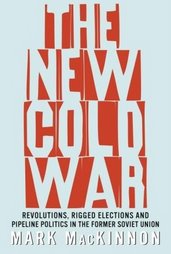
    P.S. The New Cold War has just been published in Turkey and Estonia. That's the Turkish cover top left. Can't say I'm a fan, but maybe orange is the new black in Istanbul.

    Tuesday, December 18, 2007

    A tale of two prime ministers

    It's fitting that Yulia Tymoshenko should finally become prime minister of Ukraine one day after Vladimir Putin declared he would be Russia's prime minister under a President Dmitry Medvedev.

    Both have been prime minister before, Tymoshenko for a short and tumultuous period in 2005 before she was fired by President Viktor Yushchenko, Putin for a controversial six months in 1999 before Boris Yeltsin stepped aside to hand him the presidency. They have open distaste for each other stemming from the long and ongoing Russia-versus-the West struggle for Ukraine's soul, in which Tymoshenko has played (at least in the Western media) Princess Leia to Putin's Darth Vader.

    The way the two old foes were named to the PM's chair this time around says much about the comparative state of democracy in their respective countries today.

    For all Ukraine's instability, Tymoshenko's dramatic return to power - establishing herself as a third power centre beyond both President Yushchenko and his rival Viktor Yanukovich - shows how vibrant and pluralistic Ukraine's political scene now is. Yes, all of the main parties are tinged with corruption and are too close to big business, but Tymoshenko's election victory two months ago stands as proof that no politician can rule Ukraine without the consent of the people.

    More good news: even though her party emerged as the de facto winner of the Sept. 30 elections, Tymoshenko only became prime minister after a long process of bartering and coalition-making. No one force can dominate Ukraine on its own anymore, as Leonid Kuchma and his allies did until the 2004 Orange Revolution.

    None of the above can be said about Russia. Vladimir Putin stands alone in Russia as the sole centre of power. If he says the unheralded Dmirty Medvedev shall be president, then Mr. Medvedev it will be. If Putin says he wants to be PM, only a fool would bet against him achieving that aim.

    As I have frequently pointed out in the past, Putin does all this largely with the consent of the Russian people. But that doesn't make it any more democratic. The institutions needed to make and keep Russia great - a free media, serious opposition and a real parliament - have been systematically eliminated during his eight years in power. For all its oil-fuelled economic growth and new swagger on the international stage, the country is inherently weaker as a result.

    Today may look like a triumph for Putin and Putinism. But one day, when he's gone, Russians will come to rue the system they watched him build.

    In the meantime, at least future summits between the Russian and Ukrainian prime ministers will have a touch of drama to them.

    Monday, November 26, 2007

    Master and Margarita elections, part two


    This is Behemoth, or at least an unknown artist's conception of the fast-talking, hell-raising black cat who was the hero (at least in my reading) of Mikhail Bulgakov's classic novel The Master and Margarita.

    The book revolves a visit by the devil himself (in the company of his nefarious furry friend) to officially atheist Soviet Russia. Following his arrival, a Moscow that doesn't believe in the devil's existence rapidly descends into surrealist chaos, a place where Satan wows the crowd with magic shows and naked witches fly over the city.

    Marat Gelman, the spin doctor who was involved in both bringing Vladimir Putin to power and making sure he stayed there, once told me that the 2003 Duma elections that marked the rise of United Russia and the 2004 presidential campaign that secured Putin's second term were, in his mind, Russia's "Master and Margarita elections."

    Gelman called them that because he understood well the kind of system he had helped to create. He had been personally responsible for shaping the message on state-run television - hailing Putin and United Russia while either ignoring the oppoistion completely or portraying them as dangerous extremists - and knew the goal was never to test the public's support for what was going on.

    Putin was always going to win a landslide with something close to 70 per cent support, not too much more but certainly nothing less (he ended up with 71.3 per cent). United Russia was going to emerge as the first party to completely dominate the country since the Communist Party of the Soviet Union.

    In the system Gelman and his colleagues would come to call "managed democracy," there would be elections every four years, but no real chance that anyone but a Kremlin-appointed candidate could win. The appearance of choice, but no one to choose between.

    "After the elections, our politicians stopped being able to influence anything. There remained only one politician in the country - Putin," Gelman told me when I visited him afterwards at the art gallery he runs in Moscow's trendy Zamoskvareche neighbourhood. The elections, he said, marked "the end of politics" in post-Soviet Russia.

    But shortly afterwards, even Gelman and his colleagues started to question the stability of the system they had helped to build. The Orange Revolution in neighbouring Ukraine jolted that country out of its semi-authoritarian stupor, and many were wondering whether the same thing couldn't happen in Russia itself.

    The "democracy promoters" funded by the U.S. State Department began to investigate the possibility, and opposition leaders like Boris Nemtsov and Garry Kasparov began investing their hopes in the idea that the wave of pro-Western uprisings that had washed over Belgrade, Kiev and Tbilisi in recent years could eventually hit Red Square too.

    But the three years since the Orange Revolution have given the Kremlin plenty of time to prepare. First we saw the rise of groups like Nashi and now Zaputina, which serve the purpose of imitating and confronting the pro-Western civil society that was so critical to mobilizing popular opinion in Serbia, Georgia and Ukraine.

    More dangerously, we've seen the complete suppression of the media and nearly all dissent, as evidenced again by the heavy handed police response to this weekend's marches by The Other Russia opposition movement.

    I used to argue with my friends over whether the revolutions in Georgia and Ukraine were good news for Russia's democrats. They believed in the "wave of freedom" theory, and thought Russia too would eventually be hit by it.

    Perhaps. But my fear was always that the pro-American non-government organizations who helped fund and fuel those uprisings were so partisan in their behaviour (it's a "free and fair election" if Washington's candidate wins, a disturbing backslide on the country's commitment to democracy if they don't) that the response in Russia and other post-Soviet countries that were already tipping towards authoritarianism would be to tighten the screws on the things that made the "colour revolutions" possible - namely free media and civil society.

    In 2003, with the exception of the Baltic States, Eduard Shevardnadze's Georgia and Leonid Kuchma's Ukraine were the freest and most open of the states that emerged from the collapse of the USSR. By using the political space that Shevardnadze and Kuchma gave to their opponents and critics to push for rapid radical upheavals, the revolution-makers scared the bejesus out of the authorities in other former Soviet republics.

    The lesson people like Belarus's Alexander Lukashenko and Uzbekistan's Islam Karimov took away from the Rose and Orange revolutions was that Shevardnadze and Kuchma had spent too much time worrying about where they ranked on the Freedom House list, and it had cost them control of their countries. Better to crack down fast and hard, take the international tsk-tsking that comes with a "not free" rating from Washington, and keep your job and all the loot that comes with it.

    Putin, it's now very clear, has drawn the same conclusion. Who cares what the Organization for Security and Co-operation in Europe election monitors have to say? They're all tools of the State Department, after all. The opposition? They're all dangerous thugs who belong in jail. The media? Some die, some live. It's really not worth investigating why that is.

    So here comes another round of elections without a choice. Behemoth walks the streets of Moscow again.

    Friday, October 26, 2007

    Reflections from a land (almost) without wireless

    I've been unable to blog for almost two weeks now, hit by the double-whammy of being busy reporting on the crisis along the Iraq-Turkey border (as always, you can find my latest reports at The Globe and Mail website) and the fact that Turkey's telecommunications sector has gone on strike, making Internet access scarce in some of the places I've been the last little while.

    To catch up quickly, short notes on a few things that caught my eye this week:

    New rhetorical heights: Putin is banging the drum lounder than ever today, warning the United States (and Poland and the Czech Republic) against the planned missile defense system for Europe. This time he's comparing the situation to the Cuban Missile Crisis that almost started a nuclear war between the U.S. and the USSR back in 1962. "I would remind you how relations were developing in an analogous situation in the middle of the 1960s," Putin said in a press conference at the end of today's Russia-EU summit. "Analogous actions by the Soviet Union when it deployed rockets on Cuba provoked the Cuban missile crisis.... For us, technologically, the situation is very similar."

    An overstatement, perhaps, given that the Soviet Union was deploying offensive weapons in the Carribean back in 1962, while the White House is contemplating a defensive shield today. But Putin's point is valid: George W. Bush's provocative plan to set up a missile defense network in in Eastern Europe, like Nikita Khrushchev's decision to sneak missiles into Cuba, would have the effect of changing the nuclear balance-of-power. Russia, as Putin has repeatedly made clear, would have to do something to counter that, likely by restarting the Cold War arms race and developing new missiles and warheads that could overwhelm any system the U.S. builds.

    Does the world need this? Given that any Iranian nuclear threat is still theoretical at this stage, why is Bush so determined to go ahead with the shield plan when it delivers few strategic benefits and is so provocative to the Kremlin?

    If a vote is cast in Siberia and nobody monitors it, is anybody elected? The Moscow Times has an interesting front-page report today on the troubles international election monitors are facing getting registered ahead of the looming Duma elections.

    No surprise here - you can argue (as I do in my book) that without international monitors from the OSCE and other organizations, the authorities in Georgia and Ukraine would have gotten away with their election tampering and there would have been no Rose or Orange Revolution.

    When Kremlin aide Sergei Yastrzhembsky says "we do not want to listen to any lectures," he's hinting at what everybody already knows will happen:

    1) there will be electoral manipulation (either through physical means at the ballot box, or through the use of "administrative resources" to tilt the playing field before voting day) to ensure that Putin and United Russia win by an acceptably large margin.

    2) the West, and more specifically monitors from the OSCE and other groups, will complain about it, providing fuel to those who are planning to take to the streets on and after election day.

    Election monitors provided a causus belli and the moral high ground to pro-Western demonstrators in Belgrade in 2000, Tbilisi in 2003 and Kiev in 2004. The Kremlin is doing everything it can to ensure that it doesn't happen in Moscow in 2007.

    Prepare the way for PM Yulia, Take 2: Ukraine's High Administrative Court has finally validated the results of the Sept. 30 election, meaning that an already negotiated power-sharing deal between on-again Orange Revolution allies Yulia Tymoshenko and President Viktor Yushchenko can finally kick in. Tymoshenko will be prime minister, while the cabinet posts will be split between her party and Yushchenko's Our Ukraine movement.

    When I interviewed The Braided One back in April at her Kiev office, I asked her why the Orange team deserved another chance after she and Yushchenko squandered the mandate the people gave them back in 2004, spending more time publicly dquabbling over the spoils of power than they did tackling the country's endemic problems. Yushchenko eventually fired her, setting the stage for Viktor Yanukovich's startling political comeback.

    Tymoshenko correctly predicted that the reformed Orange team would win the vote, and promised that the pro-Westerners had learned from their mistakes and deserved another chance to govern. "I firmly believe that ... these early elections will give us a new chance that we will not misuse or lose," she told me.

    I hope so.

    Alisher Saipov, 1981-2007: Another journalist brutally murdered, this time an Uzbek reporter who had recently founded a newspaper called Siyosat. The paper's name means "Politics" - a dangerous thing to report on in that part of the world. Saipov also reported for the Institute for War and Peace Reporting, as well as the Uzbek-language services of Voice of America and Radio Liberty.

    No question it was an assassination: he was shot three times as he walked the main street of Osh, in southern Kyrgzstan, on Wednesday night.

    Read the IWPR's tribute to Saipov here.

    Wednesday, October 3, 2007

    Gazprom weighs in on Ukraine power struggle

    With voting still going on in Ukraine - and results close between those who support the Russian-backed Viktor Yanukovich's bid to remain prime minister and those likely to pick the pro-Western, pro-NATO Yulia Tymoshenko - the Kremlin has predictably sent the energy giant Gazprom into the fray.

    (With the last results trickling in, Yanukovich's Party of Regions led with just over 34 per cent of the vote, with potential coalition allies the Communists and the Lytvyn bloc together pulling in about another 10 per cent. Tymoshenko had just under 31 per cent, with President Viktor Yushchenko's Our Ukraine movement, which has said it will back her as premier, receiving 14 per cent of the vote. The evolving dead heat can be viewed in a handy little graph on the main page of the Ukrainska Pravda website. A key remaining question is whether the Socialist Party of Aleksandr Moroz will cross the 3 per cent threshold needed to win seats in the Rada. If he does, that likely puts Yanukovich over the top.)

    In what looks a lot like an attempt to influence the coming fight over who will be PM, Gazprom - which provides nearly all the natural gas used in Ukraine - yesterday to reduce supplies if by the end of the month it didn't receive some $1.3 billion it claims it's owed by the Ukrainian government. While Gazprom's business case may be entirely justified, the company has long coordinated its goals with the Kremlin (unsurprising, given that deputy prime minister and potential Putin successor Dmitriy Medvedev is Gazprom's chairman).

    Gazprom, of course, denied that it's statement had anything to do with the election, but it looks a lot like 2006 all over again. Back then, Gazprom briefly switched off the gas right in the middle of another parliamentary election campaign, reminding Ukrainian voters that severing ties with Moscow came with a cost. Many credit the Gazprom cutoff with helping propel Yanukovich's unlikely political comeback after the disaster of the 2004 Orange Revolution.

    Volodymyr Bronnikov, a parliament member with the Party of the Regions, made the connection Gazprom wouldn't. If Tymoshenko is prime minister, and her goal is to move Ukraine away from Russia and towards the West, then Russia is justified in charging Ukraine the same price for natural gas that it does other European countries, he said yesterday. (Ukraine, like most other former Soviet republics, currently receives discounted supplies from Gazprom, a holdover from the days of the USSR.)

    "If Ukraine is an ordinary European country, then it must pay ordinary European prices for gas," Bronnikov was quoted as saying by The Moscow Times.

    This one looks like a warning shot, intended this time for President Yushchenko himself. The message seems clear: make a grand coalition with Yanukovich (something one Ukrainska Pravda report suggested he was considering), and the last two years of your presidency will go relatively smoothly in terms of relations between Ukraine and its larger neighbour to the east. Put Tymoshenko back in power and the Kremlin will make sure it's a cold winter in Kyiv.

    Monday, October 1, 2007

    Tymoshenko wins big in Ukraine?


    IF the exit polls that are being reported out of Ukraine come anywhere close to reflecting the official vote count in today's parliamentary elections (never an assumed thing in Ukraine), then Yulia Tymoshenko is today's big winner, and likely Ukraine's next prime minister.

    Exit polls, conducted by a trio of Ukraine's top firms, led by the Democratic Initiatives Foundation, show incumbent Prime Minister Viktor Yanukovich's Party of Regions coming out on top, but with a narrower margin than expected. The exit poll gave the Regions 35.5 per cent, with the Bloc Yulia Tymoshenko right behind at 31.5 per cent.

    The Regions result is roughly in line with expectations. But while opinion polls had Tymoshenko running second, most had her at around only 23 per cent.

    According to the poll (you can see the full results here at the Orange Ukraine blog), President Viktor Yushchenko's Our Ukraine party finished, as predicted, a distant third at 13.4 per cent. But that's enough to make sure that a reconstituted "orange" alliance between he and Tymoshenko controls the next Rada.

    Which means Tymoshenko, not Yanukovich, is likely the next premier. If the exit polls come anywhere close to matching the official results. If.

    Already there are quite different numbers appearing on the homepage of the Central Election Commission, the much-maligned official body that was implicated in the 2004 presidential election fraud that fueled the Orange Revolution.

    At last click, the CEC had Tymoshenko in front with about 34 per cent, followed by Regions with 27 per cent and Our Ukraine with just over 19. However, that was with less than 1 per cent of votes cast.

    Any differences between the pre-election opinion polls, today's exit polls and the official results can potentially be used as fodder by the quarrelling camps. (It should be noted here that the Democratic Initiatives Foundation has received grants from the United States and other Western governments, making it untrustworthy in the eyes of Yanukovich's team and much of the Russified east of the country.)

    As I noted yesterday, the followers of both Tymoshenko and Yanukovich are already camping (separately) in the streets, ready to begin rolling demonstrations at the first word from their leader.

    According to the Kyiv Post Yanukovich's supporters have already alerted police that they intend to gather 150,000 people tonight for a demonstration "in support of democratic and transparent elections." AFP says a pro-Yanukovich protest is planned for tomorrow.

    Sunday, September 30, 2007

    Early reports of violations in Ukraine

    Just a quick note to pass on a report I got from a friend who is an international monitor observing today's Ukrainian parliamentary elections. He's in the Crimea (a stronghold of the pro-Russian Prime Minister Viktor Yanukovich) and passed along these notes:

    (Bits in square brackets are my additions for clarity's sake. My source can't be named at this point.)

    The most egregious rule breaking I've witnessed and documented to date:

    1) Voters lists being added to during the course of Election Day. I took a photo before I was prevented from taking any more pictures, interference [with the election monitoring team] which is also contrary to regulations.

    2) Russian citizens using their Russian passports to vote. Despite commision head's denial I stopped a voter who had just finished casting her ballot and admitted she was not a Ukrainian citizen.

    3) Two polling stations in which contrary to the rules thousands of ballots not fully distributed and held back in a safe to which only Party of Regions [Yanukovich's party] official had access.


    Sounds to me like more of the usual shenanigans. I'd like to hear from an observer in the west of the country if there's one out there who happens to be reading this.

    The Committee of Ukrainian Voters, an American-funded non-government organization, is also posting reports (in English and Ukrainian) throughout the day.

    Through the early hours they had observed "critical" problems with the voters lists, "occasional" instances of open bribery and, perhaps most significantly, the barring of some 570,000 Ukrainians who had recently travelled abroad because the State Border Service had not updated the voters list when they returned to the country. Despite all this, the CVU also declared that "no gross violations" had been registered as of this morning (Ukraine time).

    Turnout was on pace for 65 to 70 per cent, the CVU said. Should be an interesting day.

    Saturday, September 29, 2007

    Street theatre season begins


    In the Soviet era, questions of power and politics were decided by a small group of men, meeting in private within the red walls of the Kremlin in Moscow. The masses in far-flung places like Tbilisi and Kiev played no role whatsoever in deciding whether Nikita Khrushchev should remain in power in 1964, or who would replace Leonid Brezhnev as their leader after his death in 1982.

    These days, however, the masses rule. Or at least whoever can get the masses out on his side does.

    Protests against Georgian President Mikhail Saakashvili began today in Tbilisi. Duelling demonstrations by the supports of Ukrainian President Viktor Yushchenko and his archrival, Prime Minister Viktor Yanukovich, could begin as early as Sunday (I'll be on CTV's flagship morning program Canada AM Monday morning to talk about why).

    And Russia's Duma elections this December, as well as the presidential elections coming in the spring, are expected to be marked by some of the largest protests (both for and against the current establishment) that country has seen since the Soviet Union collapsed in 1991.

    The Georgian protests (pictured) were sparked by a chain of events that first saw former defense minister Irakli Okruashvili make astonishing allegations that Saakashvili was not only corrupt, but had once ordered him to kill businessman Badri Patarkatsishvili. (He also suggested a government cover-up in the mysterious 2005 death of former prime minister Zurab Zhvania, saying Zhvania had died somewhere besides where his body was found.)

    Two days later, on Thursday, Okruashvili was arrested and charged with extortion, money laundering, misuse of power and criminal negligence. Yesterday, his supporters took to the streets, 6,000 to 7,000 of them, according to Georgia's The Messenger newspaper.

    Even without the usual Washington-versus-Moscow overtones, it would be a pretty complicated drama. But as Olga Allenova wrote in Russia's Kommersant newspaper, it's likely Moscow that encouraged Okruashvili to take on Saakashvili head-on. Whatever the truth of the back-and-forth allegations of criminality, the Kremlin has tired of Saakashvili, who came to power through the American-backed Rose Revolution in 2003, and is supporting Okruashvili's push to oust him. Post-Rose Revolution, the way to do that is to make it appear as though the streets are with your man.

    A similar dynamic is playing out in Ukraine, where both the Kremlin-backed Yanukovich and the Western-friendly Yushchenko are each accusing the other side of election fraud before the first ballots are even cast.

    The elections are so close that some tampering seems inevitable. "Half of Ukraine supports Orange [Yushchenko and his Orange Revolution ally Yulia Tymoshenko], and the other half Blue [Yanukovich], so a tiny additional margin added by cheating could make all the difference," Roman Koshovi, Lvov chairman of the Committee of Ukrainian Voters, an election-monitoring group, told my friend and colleague Fred Weir of the Christian Science Monitor. "The temptation to fix some ballots will be very strong on all sides," Koshovi added.

    And when the cheating happens, people like Committee of Ukrainian Voters and the election monitoring team sent by the Organization for Security and Cooperation in Europe will be there to catch them and tell the world (or at least the Western media).

    Which is why Canadian politician Gerard Kennedy got in trouble with the Donetsk cops today. With the stakes so high and the race so close (polls put Yanukovich ahead, but with the "orange team" attracting roughly the same amount when Yushchenko and Tymoshenko's support is combined), international monitors are seen not as arbiters, but as potential instigators. What they say could influence how big, and how motivated, the crowds in the streets are the next day.

    As an aside, Canadian monitors are also seen as highly partisan, after some of them were spotted wearing orange during the 2004 showdown.

    Whoever wins in Ukraine, the other side is likely to try and reverse the result on the streets of Kiev. Both Yanukovich and Tymoshenko already have their tent cities set up.

    Yanukovich's people are already camping on Independence Square, the site of the Orange Revolution three years ago. Tymoshenko's followers on Sofievsky Square, a few blocks up the hill.

    Stay tuned. Just like in Georgia and Russia, the Ukrainian elections won't end when the voting does.

    Wednesday, September 26, 2007

    Zero hour approaches in Ukraine

    Election day is just four days away in Ukraine. The protests about the fairness of the vote, it seems, will begin as soon as the polling stations close.

    Two bits of news today that make some sort of repeat of the street theatre of 2004 seem almost inevitable.

    First, Prime Minister Viktor Yanukovich told regional television in the eastern oblast of Poltava that he would be bringing his supporters to the streets of Kyiv on Sunday night to protest what he says will be electoral fraud perpetrated by the erstwhile "team" of Viktor Yushchenko and Yulia Tymoshenko.

    "We see that orange team (Yushchenko) and white brotherhood (Tymoshenko) will not win the election honestly. And they feel this. Their rating is falling. They see they will lose, that is why they are preparing for the falsifications," Mr. Yanukovich said. "We have enough power not to allow this."

    Forget the absurdity of Yanukovich - who was behind the spectacular election fraud of three years ago that sparked the Orange Revolution - accusing anyone else of planning to rig an election. What's important here is that he does have enough money and support to make a mess of the coming election.

    Yushchenko, for his part, sees the trouble coming, and has rightfully pointed out that it's up to the prime minister and his government to oversee the vote. He alleged that it's Yanukovich (again) who is plotting to defile the results of the vote.

    "I want to make it clear to Mr. Yanukovych and his team: the government bears personal responsibility for holding honest, transparent and democratic elections," the president said on a visit to Sumy. "Why does Mr. Yanukovych speak about fraud? This is because he is planning it."

    What can we draw from all the threats and acrimony, so close to voting day? My conclusion is the same as Eugene Ivantsov's, who wrote this in Ukrainska Pravda.

    "The Parliamentary election will not be over after polling stations close in the evening. This election will most likely begin after that."

    Pity the ordinary Ukrainians who are trapped in this never-ending tug-of-war.

    Friday, September 21, 2007

    The failures of Viktor Yushchenko


    When Ukrainian President Viktor Yushchenko this week told my friend Ron Popeski (the Reuters correspondent in Kyiv) that he could envision Yulia Tymoshenko as prime minister following the Sept. 30 parliamentary elections, he was admitting two things:

    1) That he erred (although he rightly suggests there's plenty of blame to go around) in firing Tymoshenko back in 2005, thereby rupturing the "orange" coalition that brought him to power. Although he doesn't go on to say it, Yushchenko surely knows he made an even bigger error by replacing her with his old enemy Viktor Yanukovich - a move that led directly to the current political crisis. (As an aside, and proof that Yanukovich never changed his stripes, read this tale about how three years later, the prime minister still can't stand to even look at the colour orange.)

    2) That his own Our Ukraine movement is now a spent political force, meaning there's virtually no chance the premier will be coming from its ranks. It's Tymoshenko or Yanukovich. (The latest polls show Yanukovich's Party of Regions leading with about 31 per cent of the vote, with the Yulia Tymoshenko Bloc running second at 19 per cent. Our Ukraine trails with just under 16 per cent, with the Communists and perhaps one other party looking likely to crawl over the 3 per cent barrier needed to win seats in the Rada)

    How did we get here?

    Ask a Ukrainian who lives west of the Dnipr River what they think of Viktor Yushchenko and they'll likely respond with a sigh and a shake of their head. After putting so much blind faith in him during the heady days of the Orange Revolution, they feel incredibly let down. Even betrayed.

    Two unsolved mysteries have come to symbolize how quickly the air went out of the orange balloon: the 2000 murder of investigative journalist Heorhiy Gongadze (pictured) and the near-fatal poisoning of Yushchenko himself during the 2004 presidential campaign.

    When I met with the president at his office in Kyiv earlier this year, he told me that "certain progress" was being made in the poisoning investigation. "The investigators have received sufficient data on how this poison works, and what’s the technology of its application. Where the poison could be produced, in which lab, and how it could be delivered to Ukraine," he told me. (To read a complete transcript of the interview, click here.)

    Yushchenko made it sound like investigators were closing in on the truth, but since then we've heard nothing. We've heard even less about the investigation into Gongadze's killing, a case that's nearly as important to Ukrainians. Gongadze's murder, and the evidence pointing to former president Leonid Kuchma's office, ignited the groundswell of protest that culminated in the 2004 uprising. Many who stood on the streets during the Orange Revolution cited their disgust at the poisoning of Yushchenko and the grisly Gongadze killing as reasons they decided to take action.

    They want the culprits - whether they be in Kyiv or Moscow, part of the current administration or the last one - identified and brought to justice. But it's looking increasingly unlikely that will ever happen.

    Earlier this month, the International Federation of Journalists criticized the Ukrainian government for lacking the "political will" to pursue the Gongadze case to its conclusion.

    Unfortunately for Yushchenko, many Ukrainians are looking at the two cases and concluding that perhaps he also lacks the political will to lead.

    Thursday, September 13, 2007

    More election dirt in Ukraine

    Just a quick post to highlight a pair of worrying articles in the Kyiv Post.

    The first is a warning from the Committee of Ukrainian Voters that the Sept. 30 parliamentary vote looks likely to be "dirtier" than the rigged 2004 presidential race that sparked the Orange Revolution.

    The KVU, as it's known by its Ukrainian acronym, is an American-backed NGO that played a key catalyst role three years ago, publicly highlighting the fraud perpetrated by the Yanukovich side and inciting Ukrainians to take to the streets to "defend" their vote. It's not hard to interpret the press conference by KVU head Ihor Popov as a clear indication he thinks the country is headed for yet more street theatre after the parliamentary vote.

    “Further escalation of societal tension can lead to direct action of the losing side that does not recognize defeat and use all resources to prove it is right,” Popov is quoted as saying.

    The other article of note is a report by Stephen Bandera on the alleged doctoring of opinion polls by the various camps. "Rumors continue to spread that many pollsters fudge figures for a fee to boost voter confidence in the party that paid," Bandera writes.

    Paid-for polling (by both the pro-Western and pro-Russian camps) was another feature of the dirty 2004 vote. It's astonishing how quickly Ukraine appears to be tumbling back into the same trap.

    Thursday, August 16, 2007

    Ukrainian déjà-vu


    Another Ukrainian election campaign, another farce.

    The Central Election Commission - perhaps Ukraine's least-respected institution after being caught aiding Viktor Yanukovich's attempted theft of the 2004 presidential elections - started the 2007 parliamentary campaign in ignominious style last week by refusing register candidates from Bloc Yulia Tymoshenko.

    Their reasoning was as scurrilous as anything offered up three years ago: Tymoshenko's slate of candidates, the CEC said, was illegitimate because while they had submitted the names of their home towns to the registrars, they hadn't given their actual street addresses. It somehow escaped the noble commission's attention that BYuT had registered its candidates the exact same way during last year's parliamentary elections and nobody saw a problem then.

    While the CEC yesterday backed down from its decision and registered BYuT - which polls suggest is the No. 1 contender to Yanukovich's front-running Party of Regions - the early chicanery doesn't exactly inspire hopes that this will be a free and fair election. Instead, it's looking more and more likely that the 2007 parliamentary elections will be a carbon copy of the 2004 presidential vote - a tooth-and-nails, anything-goes struggle for power between the Kremlin-backed Yanukovich and the Western-friendly team of Tymoshenko and President Viktor Yushchenko, whose Our Ukraine movement is currently running third.

    (A recent poll by the Socioizmerenie research centre suggested that the Party of Regions had 26.3 per cent of the vote, compared to 21.4 for BYut and 14.1 for Our Ukraine. The Communist Party, which usually lines up with the pro-Kremlin Yanukovich, trailed at 4.7 per cent.)

    As Nina Khrushcheva wrote in a column that appeared in Lebanon's Daily Star newspaper, we could be heading for an Orange Revolution re-run:

    By seeking to cling to power by hook or by crook, Yanukovich is likely to bring on the deluge. In Ukraine that means not only violent unrest, but economic decline and renewed repression. At the end of the day it could lead to the sort of huge street protests that marked the Orange Revolution, and their attempted violent suppression. Recent history is replete with alarming examples of dictators and would-be dictators who refuse to recognise when their time has run out.


    The truth is that both sides - the pro-Kremlin bloc and the off-again, on-again Yushchenko-Tymoshenko alliance - have the support of about 30 per cent of the public, which is the reason neither group has been able to vanquish the other during a decade of political quarrelling. The hundreds of millions of dollars spent by the Kremlin and the White House in recent years to promote their favoured candidates has done little to solve the perpetual gridlock.

    The elections, I'll be so bold as to predict now, won't be decided at the ballot box on Sept. 30, but in the streets of Kyiv in the days that follow.

    The people I truly feel sad for are the 40 per cent of Ukrainians who are caught in the middle, badly disillusioned with both sides and fed up with the disputed elections and street theatre that have kept the country captive almost since the day it won independence 16 years ago.

    But with Moscow and Washington now openly antagonistic towards each other, Ukraine looks doomed once more to serve as their battleground.

    Tuesday, June 12, 2007

    Me and Viktor Andriyovych


    As promised, the full transcript of my interview yesterday with Ukrainian President Viktor Yushchenko (that's me on the far right in the photo, looking studious, courtesy of the presidential press service):

    MM: The question that a lot of people in the West are wondering is, do you believe Ukraine’s political crisis is now over, or is it on hold until the elections when it will begin again?

    VY: I’ll start with the following: the plan has already been adopted regarding all the issues to solve the political crisis.

    After the events that took place… in March, the political corruption, the only constitutional way to settle the crisis was early elections. All the political participants in the crisis acknowledged that, and all the political parties approved the date of Sept. 30 [for the elections]. All the decisions are made to hold the elections, from the standpoint of funding, as well as the amendments necessary to the legislation. So this is the essence of the answer: the political crisis is over.

    There was a way to settle it through means of early elections. On the basis of this concept, there is some occasional speculation [that elections will not be held], triggered by some political parties, for instance the Socialists and the Communists. The key task for them is to use the parliamentary tribune as much as possible.

    Even though they acknowledge the fact that it is an illegitimate parliament, they’re still ready to attend the sessions because this is the only way for them to keep at least some kind of support in Ukrainian society. And they are threatening, blackmailing the Party of Regions to leave the coalition [government] because they are against [early elections].

    I’ve sent a verbal note to embassies around the world that the parliament is invalid, and all its decisions are also invalid. It has no impact on domestic or international relations.

    This is only a political show, and nothing more.

    The main thing is that all Ukrainian politicians have managed to settle probably one of the most complicated political crises ever in Ukrainian history, in a democratic way. I think this is the main victory.

    MM: Why did you feel it was necessary, in the middle of this crisis, to take over the Interior Ministry’s troops?

    VY: I haven’t given a single instruction to reign in any internal troops beyond the demands of the current situation.

    At the end of May, Kyiv was celebrating City Day with activities that involved a lot of people in town, and also there was the Ukrainian soccer final the same day. As a rule, when such events take place, normally 2,000 to 3,000 Interior Ministry troops are brought into the city to maintain order.

    It’s normally done without the President, and this is done every single year. The fact that 2,000 troops was sent here to Kyiv was just due to that.

    But somebody started a rumour that it was the President’s instructions. You should know that all instructions from the President to the military forces should be in writing, and I have not taken any written decisions.

    The case was the following: I was meeting with law enforcement officers and military people almost every day, and persuaded them to keep their distance from any political events.

    My main goal was to use any kind of military resistance or any application of force. This is not the way to resolve the crisis, and there’s nothing to it. This was only political rumours and speculation.

    MM: In the elections on Sept. 30, what question is Ukraine facing? Is it similar to 2004, West versus East, or is it democracy versus something else?

    VY: I think the key issues will be around yesterday’s versus today’s politics…. In the essence of it, democratic values and the establishment of political order on democratic principles, this is the package that the democratic parties are going with.

    MM: And what’s the other side offering, in your mind?

    VY: The preservation of what exists, and what has been in the past. Untransparent markets and privatizations. The political control over the system of justice, and the prosecutor’s office. It’s also the politicization of the Central Elections Commission and the Constitutional Court. It’s the refusal of pro-Western policy.

    MM: Do you, in this struggle, still see the hand of Moscow, the hand of the Kremlin, behind the Communists, the Socialists and the Party of Regions, as in 2004?

    VY: I would say that the left forces, the left parties, are pretty much oriented to Moscow’s position. But in any case, this has already passed. Whether somebody wants to accept it or not, this is the old take.

    Moscow also needs a predictable Ukraine, and Ukraine’s future is not now decided by Socialists and Communists.

    Although, through activation of those forces you can break the process. But this has nothing to do with returning Ukraine back to what it was.

    MM: Do you think Moscow wants to break the process now? Or are they more hands-off than in the past?

    VY: I don’t exclude the fact that there are some political forces in Russia that want to keep the old political order in Ukraine…. But I emphasize that we are an independent state, a sovereign country. It is us who determine our domestic and foreign policies.
    We respect their international role and traditions, but this is actually our politics…. I’m all for building good neighbourly relations with Russia, on the basis of equality and respect for the sovereignty of the state.

    MM: Last week, our newspaper was one of those that met with President Putin in Moscow and he, among other things, threatened to target Europe with missiles in response to the American missile shield. Do you think these sort of comments should be taken seriously? Are they rhetoric? Are you worried about the new breach between Russia and the West?

    VY: I think the President of Russia is not kidding. But I wouldn’t like to make any further comment than that. It’s beyond my competence.

    I’d like to express my own position… The recent events, I think, show to everyone that we have quite a creaky security balance and this really triggers some concerns and could be really painful.

    It’s becoming more and more apparent that the best response to all the challenges regarding defense and security policy can only be given through a collective system of defense. And it’s becoming more apparent that leaders of states have to pay more attention to this fact, particularly building the common system of collective defense.

    MM: Just to be clear, are you speaking there of including Russia in this collective?

    VY: Frankly speaking, I would not exclude it, for this is only about the entrance of a certain country.

    I remember from history when the Soviet Union was applying to join the North Atlantic bloc. I think that any model that will have resistance behind it will trigger concerns. It will very hard to build any stability on such a basis.

    MM: Do you agree with the missile shield currently proposed for Eastern Europe, based in Poland and the Czech Republic, or would you rather see a system based in a place that includes Ukraine in the shield?

    VY: Our defense and security doctrine is formally determined in law. And a key aspect of this doctrine is to provide Ukraine’s accession to the European Union and the North Atlantic bloc.

    If there’s one thing it emphasizes, it’s Ukraine’s intention to be integrated into the collective security system within the framework of the North Atlantic bloc.

    MM: Are you worried about Russian objections to that? They, of course, view NATO as an anti-Russian alliance still.

    VY: I’m sure that Ukraine is ready to give all the necessary responses to any of the questions that might arrive, and to emphasize that this is a policy that is not against somebody, this is not a policy that is determining any threat.

    According to national legislation, this is the policy that is most suitable for the security and defense of this nation.

    MM: Next year, of course, there are presidential elections in both Russia and Ukraine. I guess I should first ask whether or not you intend to run again, and secondly if you have any contacts with like-minded politicians in Russia, like Mikhail Kasyanov and Garry Kasparov?

    VY: When speaking about the internal elections in Russia, both parliamentary and presidential, this is purely a domestic affair. It is the right of the people to choose which force they want to align their future with.

    For us, as neighbours, what’s important is that [the elections] are performed on a democratic basis and in public. This is the main thing. To preserve people’s right to vote…

    This process should go in a democratic way.

    MM: I was here, or course, during the Orange Revolution, and just speaking with colleagues and friends of mine who were among your supporters in the streets at the time, there’s a certain amount of disillusionment three years on. I’m wondering if you understand the people who feel they were let down, and where you put the blame for what hasn’t gone right?

    VY: Saying that Ukraine has not changed in the last two years is telling lies. Today we have the [fastest growth rate] in Europe. We didn’t have that before. As a whole we were in depression for 13 years.

    Today the GDP growth is estimated at 8 per cent. The industrial growth is 13. Agriculture growth is 6.

    For the past two years, Ukraine received $10-billion in [foreign direct investment]. More than the previous 15 years altogether. For the last two years, we’ve had our lowed unemployment rate ever.

    The real incomes of the population have increased by 21 and 18 per cent respectively. Salary growth is estimated at around 34 per cent. Every year, we’re creating a million new [jobs], and not a single social strike has taken place in the past two years.

    Ukrainian pensions are now higher than Russia, Belarus and Moldova. Three years ago it was a different case. We had the lowest salaries, the lowest pension out of all the [Commonwealth of Independent States] countries, except for Armenia and Uzbekistan.

    Speaking about social and economic indicators, we have just immense success in two years. It should be mentioned that the reserves of the Central Bank have doubled and now are estimated at $23-billion. We have a stable currency and stable prices. We have one of the most dynamic European economies at the moment, which is developing a lot faster than our neighbours’, including Russia.

    Speaking about the political agenda, there are still problems here. These problems are mainly related to the system of political power.

    I never had a pro-presidential majority in parliament while I’ve been President. I work in a regime where the political majority is on the other side. When this majority determines the law enforcement institutions, the prosecutor’s office…

    Among other issues, I can say that relations between democratic parties are very complicated as well. Uniting two political forces is not an easy task to do. When we were going to the parliament [elections] back in 2002, I had to make a joint bloc which contained 12 political parties. That makes keeping efficient dialogue very complex.

    In the course of the last parliamentary elections, if no betrayals took place, like [Socialist leader Oleksandr] Moroz’s, it would have been the first time in the history of Ukraine when the majority in parliament was [controlled] by democratic parties.

    It’s necessary to pay considerable attention to the dialogue of democratic forces, which is the biggest political challenge.

    I believe the biggest disappointment is related to this very fact. The last election to parliament was not won by the Party of Regions, it was lost by the democratic forces, because of their internal relations.

    The President is not always able to settle these issues. We’re speaking of inter-party cooperation, which has been quite complex…

    It’s not an easy task.

    MM: I have one last, very personal, question for you. One of my friends, again a supporter of yours, says that one of the big signs for him that things haven’t gone as he’d hoped, was that no one has been charged in your poisoning. Do you expect that will happen any time soon?

    VY: This is one of the problems, in the context of the political fight between the past and the future.

    Ukraine is just about to build an unpoliticized and independent prosecutor’s office…

    It has [caused] everyday fighting and disputes, but it is necessary to make the prosecutor-general’s office distant from power and political orders.

    Different very loud cases are being seized because of somebody’s wish. Unfortunately, this is the reality Ukraine has faced over the last 10-15 years.

    In this very case, I can tell you the following.

    There is certain progress in this case. The investigators have received sufficient data on how this poison works, and what’s the technology of its application. Where the poison could be produced, in which lab, and how it could be delivered to Ukraine.”

    All the chain is related to when the meals were put on the table, and the people who have done it are already determined.

    Right now there is an international search for those people. In my opinion, this case is promising.

    Monday, June 11, 2007

    Interview with President Yushchenko

    I interviewed Ukrainian President Viktor Yushchenko this afternoon about his country's political crisis and the coming elections, as well as his intention to bring Ukraine into NATO and his country's relations with Russia. We met at the Presidential Administration building in Kyiv.

    The headlines will be in tomorrow's The Globe and Mail, and I hope to eventually post the full transcript of our discussion here.

    Friday, June 8, 2007

    The missing ingredient


    This post is published as part of the Russian media "Blog-Carnival" hosted by my friends at Krusenstern.

    Russia’s notoriously fractious opposition has finally settled on a single candidate for the 2008 elections in former prime minister Mikhail Kasyanov. As I wrote before, I think Kasyanov is the right choice – someone who can claim credit for some of the good done in terms of stabilizing the country during Vladimir Putin’s early years in office, while able to distance himself from the authoritarian slide that followed.

    Kasyanov’s nomination moves the opposition one step closer to their goal – which is not the electoral victory over Sergei Ivanov or Dmitriy Medvedev (or whomever the Kremlin puts forward next spring) that Kasyanov and friends claim to be seeking. With the Kremlin in full control of the electoral machine, and known to be willing to dump a few thousand ballots in a pit in Dagestan if it comes to that, no one expects the official results of the vote to yield anything other than a convincing victory for Vladimir Putin’s hand-picked successor. (If Putin goes at all, I should add here. See poll at bottom right.)

    The real aim is an Orange Revolution-style uprising on the streets of Moscow next spring, something that Kremlin strategists like Sergei Markov and opposition figures like Boris Nemtsov have told me both sides are actively preparing for.

    In preparing the country for such an uprising, putting aside pride and personal ambitions to rally around a single leader like Kasyanov is crucial for the opposition. The Orange Revolution would never have happened if Viktor Yushchenko and Yulia Tymoshenko hadn’t been prodded (by the USAID-backed National Democratic Institute, among others) into ignoring the fact they agreed on little else, and focusing on their shared desire to see the end of Leonid Kuchma and Russian tutelage in Ukraine. The same goes for Mikhail Saakashvili and Zhurab Zhvania in Georgia before that, as well as Vojislav Kostunica and Zoran Djindjic in Serbia back in 2000.

    This is no conspiracy theory, just the way politics works across the former Soviet Union in this new cold war between Russia and the West. Putin and his coterie see the ex-republics of the USSR as still being Russia’s sphere of influence, and invest heavily in leaders like Viktor Yanukovich and Nursultan Nazarbayev who share that worldview.

    The West – predominantly America, but increasingly Europe too – recognize that Russian meddling in the internal affairs of its neighbours has corrupted the politics of those countries, giving the Kremlin an unsettling amount of control over the energy basin of Central Asia and the Caspian Sea (which worries the White House far more than, say, the lack of democracy in Western-friendly Azerbaijan). Since the success of the Western-sponsored uprising against Slobodan Milosevic seven years ago, they’ve actively been trying to export the model that worked there to other countries in the region. It worked in Ukraine and Georgia, it’s failed twice in Belarus.

    What’s missing in the opposition's plan so far is an independent national broadcaster that can put the its message out across the vast Russian hinterland and rouse public anger with the authorities by letting ordinary Russians know that they’ve been deceived by the current Kremlin. B-92 in Serbia and Rustavi-2 television in Georgia (both supported by American billionaire George Soros) played key roles in popularizing the pro-Western opposition and demonizing the old authorities in those countries. Petro Porashenko’s 5th Channel rallied Ukrainians to Independence Square, and provided 24-hour coverage of the demonstrations that played a part in convincing Kuchma and Yanukovich not to disperse the crowd by force.

    Russia, under Putin, has no national broadcaster that can (or is willing to) play such a role. Himself partially a creation of the oligarchs and their media empires, Putin understood early on that he could just as quickly be undone by them, and in his first years in office he systematically brought all the main television channels under direct or indirect Kremlin control. Bringing the once feisty media to heel was a key step towards establishing the system that cynically came to be known as “managed democracy”: giving people the appearance of choice, with little in fact to choose between.

    Newspapers like Novaya Gazeta and the unmatched Echo of Moscow radio station continue to bravely buck the Kremlin, and thereby provide some outlet for the opposition and its message. But neither has national reach. No one in Chelyabinsk or Pskov or Perm is going to hear their coverage of Mikhail Kasyanov’s attacks on Ivanov/Medvedev, let alone reports about missing ballot boxes or the discrepancies between the official results and the Western-sponsored exit polls.

    Barring a major change in the political landscape, most Russians, just as they did during the 2004 elections, will receive only a single line from the Kremlin and its media outlets - one that will be mandated through government-issued “themes”, or temnyki sent to editors across the country. The essence will be: Ivanov/Medvedev is the choice of the people. The other candidates are an unpatriotic bunch of creeps. Everything is getting better. Trust us.

    Tight media control by Alexander Lukashenko’s regime in Belarus was one of the major reasons that attempted pro-Western uprisings have twice failed in Minsk (in 2001 and 2006). In Ukraine, the state’s use of temnyki turned half the population against the Orange Revolution before it even began.

    But all is not yet lost for the opposition, as demonstrated by how quickly government control of the media cracked in Ukraine in 2004 after a single, extremely symbolic act of defiance by Nataliya Dmytruk, a sign-language presenter at the state-run UT-1 television station.

    “The results announced by our Central Election Commission are rigged. Do not believe them,” she signed to her audience in the first days after the rigged presidential run-off between Yushchenko and Yanukovich, an orange ribbon rebelliously tied around her wrist.

    Her Ukrainian-language colleagues carried on with their coverage president-elect Yanukovich, unaware of Dmytruk's one-woman uprising. “Our president is Yushchenko," she went on. "I am very disappointed by the fact I had to interpret lies. I will not do it anymore. I do not know if you will see me again.”

    Within days, Dmytruk’s lone act of defiance had spread into a wider journalists’ revolt against the authorities and their temnyki. They started telling the truth to their audience and angry at the deception, thousands Ukrainians more joined the orange-waving crowds in the streets. It was a breakthrough that no amount of Western funding could have bought.

    These are dark days for the Russian media. The murder of Anna Politkovskaya made clear the risks that independent minded journalists run when they try to tell the truth about their country and the people who run it. According to Reporters sans frontières, she was the 21st journalist murdered in circumstances seen as likely related to her work since Putin came to power in 2000.

    The Russian opposition has its Yushchenko now in Mikhail Kasyanov. But what will determine the country’s future is whether it has enough Dmytruks and Politkovskayas to tell the country about him.

    One can't help but worry that too many have been scared into silence.

    Thursday, May 31, 2007

    The New Cold War


    What a day. Spies and double agents. New ballistic missile tests. A threatening speech by the Russian President. More political turmoil in Ukraine. Gunfights in a breakaway region of Georgia. The gloves, it seems, are truly off between the Kremlin and the West.

    Take today's allegations by Andrei Lugovoi that Alexander Litvinenko was a British agent who tried to recruit him, and that either the British secret service or exiled oligarch Boris Berezovsky was behind Litvinenko's murder-by-polonium. Whatever the truth of his charges, he couldn't have made them at the Interfax press centre without approval from very, very high up in the Kremlin. It tells you that relations between London and Moscow have now officially reached the abysmal stage.

    The same goes for Washington. A few hours after Lugovoi finished his jaw-dropping press conference, Vladimir Putin held one of his own to announce that American actions - specifically moves to establish an anti-missile shield in Eastern Europe - had forced Russia to begin a "new round of the arms race" in order "to maintain the strategic balance in the world." Putin's remarks came two days after Russia tested a new intercontinental ballistic missile, which is capable of carrying up to 10 warheads (thereby easily overwhelming the limited defenses the U.S. wants to establish in Poland and the Czech Republic). It suddenly feels very 1980 around here.

    In this context, the sudden backtracking by Kremlin ally Viktor Yanukovich in Ukraine (who is footdragging on promises to pass legislation for a fall election there), as well as the shelling of Georgian positions this week by Russian-backed separatists in South Ossetia, look like part of a broader message from Moscow.

    Don't back us into a corner, the Kremlin is bearishly saying. If you do, we can cause no end of trouble.