Just a quick note to explain my recent silence - I'm in Baghdad these days, and things like President Dima and Abkhaz separatism are too far away to give proper thought to.
I'll resume this blog as soon as I'm out of Iraq.
In the meantime, I'm blogging from Baghdad for The Globe and Mail. Please give it a look if you have time.
I've also just published an assessment of what the Iraqi capital is like five years after the war began.
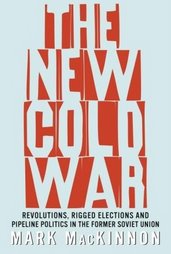
The only Russia-themed thing I have to point you to is a rather nice review of The New Cold War by Kim Zigfield of La Russophobe fame that she published over at Pajamas Media. Edward Lucas's Recently Reborn Frozen Conflict also gets a nice write-up.
Sunday, March 16, 2008


Friday, February 29, 2008
The elusive 72 per cent

Stop the presses! The Guardian is reporting the shocking news that the Kremlin is planning to tamper with the results of Sunday's election.
The Guardian (Tom Parfitt, one of the story's authors, is a friend and a hell of a reporter) quotes election officials around the country who say they've been told that they need to deliver anywhere from 65 per cent to 88 per cent of the vote to Dmitriy Medvedev, with the overall national figure landing somewhere around 72 per cent for Vladimir Putin's sidekick.
For months, ever since Putin announced that he was backing his long-time aide Medvedev to succeed him, the only question about the election was how big a margin President Medvedev would win by. Now we know.
Bizarrely, the target is exactly the same as the one the Kremlin set in 2004. After Vladimir Vladimirovich won a second term with a resounding 71.3 per cent of the vote, several of his spin doctors confirmed to me that the 72 per cent had been the officially mandated target (tsk-tsk to those who let down the nation by failing to deliver the additional 0.7 per cent).
Why? Because it was a wide enough win to make clear to the Kremlin's enemies at home and abroad that Putin was a juggernaut: 72 per cent made it clear that Putin embodied the will of the nation, and those who opposed him were unpatriotic. The lunatic fringe.
But quietly conscious of criticisms that Russia was sliding away from democracy, the puppet masters (Gleb Pavlovsky, Marat Gelman, Vyacheslav Nikonov, Sergei Markov et al) determined that a higher figure - Putin had been flirting with 80 per cent in some pre-election polls - would seem improbable.
To their minds, 72 per cent would show the world that a real vote had taken place, and the Kremlin's man had defeated his weak and divided opponents. Eighty per cent smacked of the bad old days where there was only one name on the ballot.
I'm impressed the Kremlin is still working this hard to try and pretend that democracy is alive and well in its realm.
My question is, what happens if Medvedev does reach 72 per cent, or (gasp!) 71.4? Does that mean he's more popular than aspiring Prime Minister Putin? Is that allowed?
A nation holds its breath.
Saturday, February 16, 2008
The Kosovo conundrum
It sounds increasingly like Kosovo is going to unilaterally declare independence from Serbia tomorrow.
Whatever you think of the arguments for and against Kosovo becoming an independent state, it's a dangerous step that could provoke fresh violence not only in the Serbian areas of Kosovo (if Serbia is divisible, why isn't Kosovo?), but in ethnically divided Bosnia-Herzegovina as well. Leaders of the "Respublika Srpska" could be forgiven for wondering why - if Kosovo is allowed by the international community to go its own way - they can't also declare independence or push again for union with Serbia.
Russia's foreign ministry once more earned itself the enmity of Georgian President Mikhail Saakashvili last week when it linked the fate of Kosovo with Abkhazia and South Ossetia, Georgia's two breakaway regions. But the Russian stance has some merit: Why are the Kosovars more worthy of independence than the Abkhaz or the South Ossetians?
(It's worth noting here that many Georgians see the logic in what the Kremlin is saying: "Today there is no bigger problem for Georgia than possible recognition of Kosovo," Kakha Dzagania of the opposition Labor Party was quoted as saying yesterday. "That may become a precedent for recognition of Abkhazia and South Ossetia.")
There are those who will argue that the Abkhaz and South Ossetian separatism movements are not genuine, that they are manufactured by the Kremlin as a way of maintaining influence over its former colony. While there's certainly some truth to this, you could say the same about Kosovo, which has been nurtured and protected by NATO since 1999.
My point here is not to argue for or against independence for Kosovo. But I do find myself wondering how the United States and the European Union find it reasonable to argue that the Kosovars deserve the right to determine their own fate, Serbia be damned, but other peoples of Eastern Europe in similar situations do not.
If Kosovo's unilateral declaration of independence is going to get the support of the international community, let's make the right of national self-determination the new global standard. Let's set about determining the real will of the Abkhaz and the South Ossetians and back open and fair (not Russian-sponsored) referendums on whether they want to remain in Georgia. Then let's help them enforce the results.
Hell, while we're at it, let's do the same for the Transdniestr, the Respublika Srpska , Chechnya and the Crimea. If we're going to open this Pandora's Box in Eastern Europe, let's open it all the way.
Anything less looks like the West is picking favourites to suit its geopolitical agenda. And that's just begging for trouble.
Whatever you think of the arguments for and against Kosovo becoming an independent state, it's a dangerous step that could provoke fresh violence not only in the Serbian areas of Kosovo (if Serbia is divisible, why isn't Kosovo?), but in ethnically divided Bosnia-Herzegovina as well. Leaders of the "Respublika Srpska" could be forgiven for wondering why - if Kosovo is allowed by the international community to go its own way - they can't also declare independence or push again for union with Serbia.
Russia's foreign ministry once more earned itself the enmity of Georgian President Mikhail Saakashvili last week when it linked the fate of Kosovo with Abkhazia and South Ossetia, Georgia's two breakaway regions. But the Russian stance has some merit: Why are the Kosovars more worthy of independence than the Abkhaz or the South Ossetians?
(It's worth noting here that many Georgians see the logic in what the Kremlin is saying: "Today there is no bigger problem for Georgia than possible recognition of Kosovo," Kakha Dzagania of the opposition Labor Party was quoted as saying yesterday. "That may become a precedent for recognition of Abkhazia and South Ossetia.")
There are those who will argue that the Abkhaz and South Ossetian separatism movements are not genuine, that they are manufactured by the Kremlin as a way of maintaining influence over its former colony. While there's certainly some truth to this, you could say the same about Kosovo, which has been nurtured and protected by NATO since 1999.
My point here is not to argue for or against independence for Kosovo. But I do find myself wondering how the United States and the European Union find it reasonable to argue that the Kosovars deserve the right to determine their own fate, Serbia be damned, but other peoples of Eastern Europe in similar situations do not.
If Kosovo's unilateral declaration of independence is going to get the support of the international community, let's make the right of national self-determination the new global standard. Let's set about determining the real will of the Abkhaz and the South Ossetians and back open and fair (not Russian-sponsored) referendums on whether they want to remain in Georgia. Then let's help them enforce the results.
Hell, while we're at it, let's do the same for the Transdniestr, the Respublika Srpska , Chechnya and the Crimea. If we're going to open this Pandora's Box in Eastern Europe, let's open it all the way.
Anything less looks like the West is picking favourites to suit its geopolitical agenda. And that's just begging for trouble.
Friday, February 8, 2008
It's not always Russia's fault

Here it is - that one one big issue on which I wholeheartedly agree with Vladimir Putin: there is a New Cold War, it didn't have to happen, and Russia didn't start it.
There. I said it.
Russia and the West are strategic adversaries again because:
1) During the 1990s, the West treated Russia as a weakling (it was) whose interests it didn't need to pay attention to.
2) Since 2000, the West has treated Russia like a hostile entity. It was a self-fulfilling prophesy.
The second point is the one the New Cold Warriors in Washington and Brussels are most likely to take issue with. But the common Western narrative - that Putin is KGB to the soul and was always going to be hell-bent on avenging the collapse of the USSR - overlooks Putin's initial moves to befriend the West after taking office, particularly his overt willingness to help after the Sept. 11, 2001 attacks.
True, he was motivated by his own interests - getting the West to see his dirty war in Chechnya as part of a wider "war on terror" - but the steps he took were genuine. By easing the way for the U.S. to establish airbases in the former Soviet republics of Uzbekistan and Kyrgyzstan, he greenlighted the first-ever NATO military presence in an area that had been Russia's zone of influence since the time of the Tsars. Russia also offered to share its intelligence and advice on Afghanistan, something that perhaps should have been of more interest to the U.S. and its allies, since we now find ourselves just as bogged down there as the Red Army was in the 1980s.
What did Russia get in return? American troops in Georgia. The eastward expansion of NATO all the way into the Baltic states, with talk of Ukraine being eventually added as well. The planned missile defense shield based in Poland and the Czech Republic.
None of these moves is necessarily threatening until you combine them with the West's refusal to talk seriously about including Russia in NATO, or the White House's stubborn refusal to contemplate a missile shield based in Azerbaijan (the country closest to the alleged Iranian threat) instead of Eastern Europe.
"It's not our fault, we didn't start … funnelling multi-billions of dollars into developing weapons systems," Putin said today in announcing that Russia would join what he defined as "a new arms race."
He went on: "We drew down our bases in Cuba and in Vietnam. What did we get? New American bases in Romania, Bulgaria. A new third missile defence region in Poland." That's not just how the Kremlin and its ultranationalist friends view it - that's how most Russians see things.
It's worth noting that as Putin gave his speech, NATO was meeting in Vilnius, the capital of ex-Soviet Lithuania. If NATO is not an anti-Russian alliance, why does it expand up to the Russian border without inviting Moscow to join? If the missile shield is not directed against Russia, why not base it in Azerbaijan?
The West - after the fall of the Berlin Wall and the collapse of communism - laughed at its defeated adversary and ignored its concerns. Now that Russia is resurgent and has the funds to rejoin the fight, that arrogance comes home to roost. We treated it as an enemy until it became one.
It didn't have to be this way.
Thursday, January 31, 2008
The Baltic Times reviews The New Cold War(s)
Just a quick note to highlight a new review of The New Cold War (now available in paperback!) that was just published in The Baltic Times.
As I've said before, it's nice to get a flattering write-up a newspaper in Canada or the United States, but I think it means more when it comes from a newspaper like The Baltic Times or The Georgia Messenger (or Itar-Tass) because it was written by those living on the front lines of this new conflict.
"When reading through this well-researched work, it’s hard not to think of two sides engaged in a chess match, or better still, a game of Risk," is my favourite line in this review.
The Baltic Times also has some nice things to say about Edward Lucas and his own similarly titled book.
We're both now bracing (well I am, anyway) for the judgement that Kim Zigfield of La Russophobe fame has promised to deliver .
As I've said before, it's nice to get a flattering write-up a newspaper in Canada or the United States, but I think it means more when it comes from a newspaper like The Baltic Times or The Georgia Messenger (or Itar-Tass) because it was written by those living on the front lines of this new conflict.
"When reading through this well-researched work, it’s hard not to think of two sides engaged in a chess match, or better still, a game of Risk," is my favourite line in this review.
The Baltic Times also has some nice things to say about Edward Lucas and his own similarly titled book.
We're both now bracing (well I am, anyway) for the judgement that Kim Zigfield of La Russophobe fame has promised to deliver .
Sunday, January 27, 2008
A sign of the falsified times
Sigh.
Predictably, former prime minister Mikhail Kasyanov has been disqualified from running for president by Russia's Central Elections Commission. The move clears the way for a nice smooth run for Vladimir Putin's chosen successor, Dmitriy Medvedev. He will now run virtually unopposed in the Russian Federation's fifth presidential elections since the fall of the Soviet Union.
Yes, there will be opposition, but only of the token sort. Medvedev's remaining "opponents" are a pair of multi-time losers in Communist leader Gennady Zyuganov and ultranationalist Vladimir Zhirinovsky, as well as a virtual unknown, Andrey Bogdanov. Kasyanov was the only figure Russia's fractured liberal opposition could potentially have rallied around.
Opinion polls showed him trailing badly with less than 2 per cent support (compared to somewhere between 60 and 82 per cent for Medvedev, if the numbers are to be believed), but Kasyanov and his supporters never expected to win power through the Kremlin-controlled ballot boxes.
Though the odds were long, their aim was always to replicate Ukraine's Orange Revolution, with masses crowding Red Square on election day to peacefully protest a vote that everyone knows in advance will be deeply flawed. For that to have any chance of working, they needed a Viktor Yushchenko, a popular candidate to rally around.
One by one the other potential Yushchenkos dropped out or were forced out of the race by the Kremlin: Garry Kasparov, Vladimir Bukovsky, Boris Nemtsov. Now Kasyanov's gone too. So, by and large, is any lingering hope of peaceful democratic change in Russia in the near future.
(It's worth noting here that even Belarus's tyrannical Alexander Lukashenko at least allows an opposition candidate or two to run for president every five years... as did Putin in 2004 when he was confident of his personal popularity. It appears that despite the opinion polls, the Kremlin is less sure than it's letting on about Medvedev's real popular appeal.)
The Kremlin understood the stakes, which is why it pulled out one of the most farcical excuses in their playbook: the falsified signatures charge.
Anyone who doubts this is a canard only has to look back at how it's been used in Russia and across the former Soviet Union over the last 17 years. Either there's a very organized ring of international signature forgers at work (usually in league with those opposed to oppressive regimes) or the autocrats are scared to put their so-called popular support to a real test.
Here's an incomplete list of the invalid signatures phenomenon in post-Soviet elections:
November 1993: The Russian All-People's Union, which included elements of the old Communist Party, is barred from running in the first post-Soviet Duma elections due because of 20,000 falsified signatures.
July 1995: Eight parties barred from Armenia's first post-Soviet parliamentary vote because of falsified signatures.
March 2000: Konstantin Titov, Yevgeny Savostyanov, Ismail Tagi-Zade, and Umar Dzhabrailov are all barred from running for president over allegations of, well, falsified signatures. The elections, you may have heard, were eventually won by a Vladimir Putin.
October 2000: Citing falsified signatures, Azerbaijan's Central Election Committee bans the National Democratic Party from taking part in parliamentary elections .
September 2003: Malik Saidullayev disqualified from Chechnya's presidential elections over falsified signatures. Eventually all serious candidates are forced out of the race, clearing the way for the pro-Kremlin Akhmat Kadyrov (the deceased father of Ramzan) to run almost unopposed.
July 2004: Belarussian human rights group Viasna-96 (or Spring-96) loses its legal standing over charges that it falsified signatures on its registration papers.
December 2004: All opposition parties (all the real ones, anyway) in Uzbekistan are barred from parliamentary elections over signature issues.
November 2006: Opposition candidate Andrei Safonov is barred from running for the post of "president" in Moldova's pro-Russian breakaway province of Transdniestria. Wanna guess the reason?
March 2007: The liberal Yabloko party is barred from running in St. Petersburg municipal elections over falsified signatures.
October 2007: Russia's Green Party, along with the People’s Union and the Party for Peace and Unity, is barred from running in Duma elections over illegal John Hancocks.
January 2008: Kasyanov disqualified.
The list speaks for itself. Managed democracy, indeed.
Ah hell, why not take credit on this rare instance that it's due? As the Why Democracy? website notes in its weekly news roundup, "Canadian journalist Mark MacKinnon predicted Putin's falsified signatures approach a week ago." (See last post.)
I wish it hadn't been so easy. Like I said at the start - sigh.
Predictably, former prime minister Mikhail Kasyanov has been disqualified from running for president by Russia's Central Elections Commission. The move clears the way for a nice smooth run for Vladimir Putin's chosen successor, Dmitriy Medvedev. He will now run virtually unopposed in the Russian Federation's fifth presidential elections since the fall of the Soviet Union.
Yes, there will be opposition, but only of the token sort. Medvedev's remaining "opponents" are a pair of multi-time losers in Communist leader Gennady Zyuganov and ultranationalist Vladimir Zhirinovsky, as well as a virtual unknown, Andrey Bogdanov. Kasyanov was the only figure Russia's fractured liberal opposition could potentially have rallied around.
Opinion polls showed him trailing badly with less than 2 per cent support (compared to somewhere between 60 and 82 per cent for Medvedev, if the numbers are to be believed), but Kasyanov and his supporters never expected to win power through the Kremlin-controlled ballot boxes.
Though the odds were long, their aim was always to replicate Ukraine's Orange Revolution, with masses crowding Red Square on election day to peacefully protest a vote that everyone knows in advance will be deeply flawed. For that to have any chance of working, they needed a Viktor Yushchenko, a popular candidate to rally around.
One by one the other potential Yushchenkos dropped out or were forced out of the race by the Kremlin: Garry Kasparov, Vladimir Bukovsky, Boris Nemtsov. Now Kasyanov's gone too. So, by and large, is any lingering hope of peaceful democratic change in Russia in the near future.
(It's worth noting here that even Belarus's tyrannical Alexander Lukashenko at least allows an opposition candidate or two to run for president every five years... as did Putin in 2004 when he was confident of his personal popularity. It appears that despite the opinion polls, the Kremlin is less sure than it's letting on about Medvedev's real popular appeal.)
The Kremlin understood the stakes, which is why it pulled out one of the most farcical excuses in their playbook: the falsified signatures charge.
Anyone who doubts this is a canard only has to look back at how it's been used in Russia and across the former Soviet Union over the last 17 years. Either there's a very organized ring of international signature forgers at work (usually in league with those opposed to oppressive regimes) or the autocrats are scared to put their so-called popular support to a real test.
Here's an incomplete list of the invalid signatures phenomenon in post-Soviet elections:
November 1993: The Russian All-People's Union, which included elements of the old Communist Party, is barred from running in the first post-Soviet Duma elections due because of 20,000 falsified signatures.
July 1995: Eight parties barred from Armenia's first post-Soviet parliamentary vote because of falsified signatures.
March 2000: Konstantin Titov, Yevgeny Savostyanov, Ismail Tagi-Zade, and Umar Dzhabrailov are all barred from running for president over allegations of, well, falsified signatures. The elections, you may have heard, were eventually won by a Vladimir Putin.
October 2000: Citing falsified signatures, Azerbaijan's Central Election Committee bans the National Democratic Party from taking part in parliamentary elections .
September 2003: Malik Saidullayev disqualified from Chechnya's presidential elections over falsified signatures. Eventually all serious candidates are forced out of the race, clearing the way for the pro-Kremlin Akhmat Kadyrov (the deceased father of Ramzan) to run almost unopposed.
July 2004: Belarussian human rights group Viasna-96 (or Spring-96) loses its legal standing over charges that it falsified signatures on its registration papers.
December 2004: All opposition parties (all the real ones, anyway) in Uzbekistan are barred from parliamentary elections over signature issues.
November 2006: Opposition candidate Andrei Safonov is barred from running for the post of "president" in Moldova's pro-Russian breakaway province of Transdniestria. Wanna guess the reason?
March 2007: The liberal Yabloko party is barred from running in St. Petersburg municipal elections over falsified signatures.
October 2007: Russia's Green Party, along with the People’s Union and the Party for Peace and Unity, is barred from running in Duma elections over illegal John Hancocks.
January 2008: Kasyanov disqualified.
The list speaks for itself. Managed democracy, indeed.
Ah hell, why not take credit on this rare instance that it's due? As the Why Democracy? website notes in its weekly news roundup, "Canadian journalist Mark MacKinnon predicted Putin's falsified signatures approach a week ago." (See last post.)
I wish it hadn't been so easy. Like I said at the start - sigh.
Thursday, January 17, 2008
S Novom Godom!

Я желаю Вам хорошее здоровье, удачу и успех в новый год!
Now back to business. I went silent for a little while. Very, very silent. Largely because my day job has been all-consuming of late, what with President Bush's tire-spinning visit to my current home, the Middle East.
That said, I'm off to Baku tomorrow for a weekend of pure relaxation by the Caspian Sea. The thought of returning to even the edge of the old USSR has me thinking:
Candidate Kasyanov - He's got the two million signatures. Does the Kremlin have the courage - and the barest commitment to democracy - to let him run against their man, Dmitriy Medvedev? Or are we going to see another "falsified signatures" charge in the coming days that will again prove that Russia is not inching towards democracy, but sliding back towards authoritarianism.
While we're at it, will Yavlinsky, Nemtsov and co. have the good sense to put their egos aside and back the only man with a hope of giving the Kremlin machine a run for its oil money?
Oleg Kozlovsky - His story is a warning, not only about fading freedom of speech in Russia, but about the biggest peril that many talented young Russians face - the draft. Many of my Russian friends spent most of their 20s doing anything - anything - to avoid being sucked into the dark and dangerous pit that is the Russian army. I've seen kids press-ganged off the streets of St. Petersburg while out walking with friends, and met soldiers in Chechnya whose parents didn't even know they were in the army, let alone stationed in Grozny. I'll wholeheartedly sign on to the Free Kozlovksy campaign, but add a note that there are thousands more like him, leading lower-profile lives, who also deserve our concern.
Much More Misha - Four more years of Saakashvili starts off with his government laying charges against tycoon Badri Patarkatsishvili. Patarkatsishvili's no saint, but neither are Vladimir Gusinsky, Boris Berezovsky and Mikhail Khodorkovsky. If this was Putin laying charges against another oligarch, wouldn't we all be asking questions about whether the President isn't really just trying to quash all political opposition?
British Council tomfoolery - If the Russian government thinks the British Council is a den of spies, it should produce the evidence and expel those it no longer wants in the country. Otherwise, it should sending spooks to follow Council staff around St. Petersburg. It's an embarrassing saga, and not for the British.
Kosovo: I've asked the question before: why is the West so insistent that Serbia is divisible, but not Kosovo? (And not Georgia or Moldova?)
Azerbaijan 2016 - C'mon, really? This what President Ilham Aliev wants to spend all the oil money on? An expensive, sure-to-fail Olympics bid? What about the hundreds of thousands of Azeris who live in poverty, just outside the Baku bubble?
February 5: If it was the $26.95 that was keeping you from buying The New Cold War, never fear. The paperback edition hits bookshelves Feb. 5.
Subscribe to:
Posts (Atom)