Twitter Updates

    follow me on Twitter

    Friday, April 27, 2007

    An ominous growl from Moscow


    Vladimir Putin's last (he promises) state-of-the-union speech was a disturbingly hawkish one, announcing that Moscow would suspend its participation in the Treaty on Conventional Armed Forces in Europe as a response to the U.S. plan to deploy a missile defense shield in Eastern Europe.

    Putin effectively announced that Russia was joining a new arms race, and declared the old fears about a nuclear confrontation may no longer be a thing of the past. If the missile shield goes ahead, he said today, "the threat of causing mutual damage and even destruction increases many times."

    Pulling out of the 1990 treaty is a largely symbolic gesture since it's 1999 update was never ratified by NATO countries because of Russia's failure to comply with conditions that it pull its soldiers out of Georgia and Moldova. Nonetheless, it's a strong declaration of how far relations between Moscow and the West have deteriorated under Putin.

    The treaty regulates the number of tanks, aircraft and artillery pieces each side can deploy in Europe, and its signing 17 years ago was one of the biggest signs that the (first) Cold War was coming to an end.

    As I noted in a previous post, the expansion of NATO and particularly the deployment of the missile shield are viewed in as hostile encirclement by the Kremlin. "This is not just a defence system, this is part of the US nuclear weapons system," Putin said today.

    It will be interesting to see the American response. To date, Condoleeza Rice has ridiculed the Russian suggestion that the the shield poses any kind of risk to Moscow. She points out, correctly, that Russia has thousands of warheads that would overwhelm the small system that the U.S. wants to set up in Poland and the Czech Republic.

    This has all the makings of the most serious crisis in U.S.-Russian relations since the fall of the USSR.

    Another interesting and ominous note in Putin's address yesterday: while he promised that next year's address will be delivered by another head-of-state - suggesting that he still intends not to break the constitution and run for a third term in office - he added that "it is premature for me to declare a political will."

    The last remark drew the loudest applause of the day.

    Tuesday, April 24, 2007

    Yeltsin spurns the Communists one final time

    So Boris Yeltsin will be buried at the Novodevichy cemetary, not along the Kremlin walls. It's a fitting resting place - alongside dissident writers like Mikhail Bulgakov, rebellious figures like General Alexander Lebed, and Nikita Khrushchev, the Soviet leader who denounced Stalinism and was never forgiven by his peers in the Politburo.

    It's a lot more fitting for the man who broke the USSR than the row of "heroes" graves behind Lenin's tomb on Red Square. I'm not sure Boris Nikolaevich would have slept well beside Stalin and Brezhnev.

    For those who are interested, I'll be narrating some of the coverage of the funeral on CTV Newsnet tomorrow.

    The struggle to define how Yeltsin should be remembered is already on. Liberal leaders like Boris Nemtsov have been quick to recall Yeltsin as the hero who stood up to the hard-line coup attempt in 1991, bringing about the fall of the Soviet Union. "We should fight for freedom in the memory of Boris Yeltsin because there is none left now," he told The Moscow Times.

    More subtly, the Kremlin-run Itar-TASS news agency is emphasizing Yeltsin's later years as a bumbling, often drunk, figure. It's telling that only Putin is quoted in the story, reminding Russians that Yeltsin asked him to "take care of Russia."

    The turnout and the tenor at the funeral tomorrow will be interesting to see.

    Monday, April 23, 2007

    Boris Yeltsin dies

    Boris Yeltsin died this morning at the age of 76, it's being reported. Heart failure is said to be the cause.

    The debate over how he should be remembered will begin immediately. Was he the great democrat who stared down the hard-line Communist coup in 1991? Or was he the weak, often drunk, leader who sold off the state's assets for a song to the oligarchs and presided over the 1998 financial collapse? Or the cynical deal-maker who handed the Kremlin keys back to the KGB in 1999 to spare himself prosecution?

    Turns out he was all of these, to the disillusionment of millions. I know many in Russia who will mourn Yeltsin's death today not because they'll miss the man (he has largely disappeared from public life since Putin took office), but because they attach his name to the exhilirating hope they felt in 1991 when the Soviet Union finally broke apart at the seams. That's him aboard a tank in the photo to the left, on the day it became clear that the USSR was finished.

    The hope then was that Russia was on its way to becoming a normal, free, country that would soon integrate with its new friends in Europe and the West. And for all his failings, the system Yeltsin presided over was remarkable as the freest Russians have experienced in their history. The media said what it wanted, the Duma was a place of genuine debate.

    After seven years under Vladimir Putin, the man Yeltsin chose to succeed him, all that is gone.

    Yeltsin largely refrained from commenting on the actions of his successor, something that was widely perceived to be a condition of the pact he struck to avoid prosecution. But in the aftermath of the 2004 school massacre in Beslan, and Putin's subsequent moves to use the incident to strengthen his personal power, Yeltsin gave us a hint of what he felt in a statement he gave to the Moscow News.

    "We will not give up on the letter of the law, and most importantly, the spirit of the Constitution our country voted for at the public referendum in 1993," he wrote. "If only because the stifling of freedom and the curtailing of democratic rights is a victory for the terrorists. Only a democratic country can successfully resist terrorism and count on standing shoulder to shoulder with all of the world’s civilized countries."

    I wish he'd said that more loudly and more often in the last seven years. Rest in peace, Boris Nikolaevich.

    Sunday, April 22, 2007

    Paul Wells on The New Cold War (review of a review)

    The latest issue of Macleans magazine features a full-page review of The New Cold War by premier columnist Paul Wells. (Oddly, it appears to only have run in the print edition, I can't find it online.)

    Paul's impression is, uh, mixed. He compliments my "formidable reporting" in the book, then sharply takes me to task for the "moral failure" of not saying "America good, Russia bad" often enough.

    I hardly think that I let the Kremlin off easily - the book opens by once more raising the question of whether the FSB carried out the 1999 apartment block blasts that killed more than 300 people, and goes on to chronicle the country's rapid descent towards dictatorship under Vladimir Putin.

    "By using mass murder to convince Russians that they needed to put their trust in the secret agents that they had so long despised, the old KGB had effectively carried out a coup in the Kremlin." I write that on page 3. Roughly half the rest of the book is spent despairing at what Russia has become and where it's headed.

    Paul's complaint is that even though I establish that Putin and Putinism are dangerous, I don't go the extra step and on cheer freedom-loving America as it helps topple governments that the State Department doesn't like. And I don't.

    A large part of the book is dedicated to exposing how America uses supposedly non-partisan "democracy promotion" groups to advance its interests. American-funded NGOs played essential roles in bringing down Slobodan Milosevic in Serbia, Eduard Shevardnadze in Georgia and Leonid Kuchma in Ukraine.

    My argument is not that this is entirely a bad thing - only that the revolutions in Serbia, Georgia and Ukraine need to be understood (along with the more recent streetfights in Minsk and Moscow) for what they were: the first battles in a renewed struggle for influence between America and a resurgent Russia. And both sides are more concerned with who controls the lucrative oil and gas fields of ex-Soviet Central Asia and the Caucasus than the will of the people.

    Paul rightly points out that the current occupants of the Kremlin are prone to thuggery and have even been known to start wars based on false premises when it suits their grander political aims. What he oddly neglects to consider is that the George. W. Bush's White House is guilty of the same charges, and is no more deserving of our trust and admiration than the current Russian government.

    Paul's a great writer and I appreciate his interest in the topic.

    But his complaint is an odd one: I as a journalist stand accused of failing to take sides.

    In this business, that's usually a compliment.

    Wednesday, April 18, 2007

    They're coming for ya, Vladimir

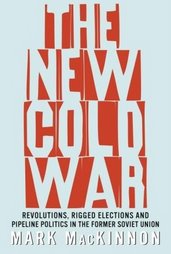
    It's still a well-kept secret in the West, but Russia and the United States are now very definitely - as one recently published author put it - in the throes of a New Cold War.

    The latest proof can be found in the 2007-2012 strategic plan released this week by the U.S. State Department and its grant-giving arm, USAID.

    Listing off the challenges America expects to face in the next five years, "relations with Russia" are given a section all of their own. The list of American concerns is a long one:

    ...increasing centralization of power, pressure on NGOs and civil society, a growing government role in the economy, and restrictions on media freedom have all emerged as clear and worrisome trends. Russian weapon sales to such states as Iran, Syria, and Venezuela are also cause for great concern throughout the international community. Russia’s policy toward its neighbors is another major challenge, especially Moscow’s support for separatist regions in Georgia and Moldova, its political and economic pressure against Georgia, and its monopolistic use of energy to pressure neighboring states and gain control of infrastructure and strategic assets.

    The proposed remedy won't sit well in Moscow - a continuation of the interventionist policies that helped spur the recent pro-Western revolutions in Serbia, Georgia and Ukraine.

    We seek to consolidate new democracies in Georgia, Ukraine, and Moldova by fighting corruption and assisting economic reforms. As these countries break with their Soviet past and move closer to European and Euro-Atlantic institutions, we need to continue to provide our support, encouragement, and technical advice. Elsewhere in Eurasia, people yearn for the hope kindled by the “color revolutions” of 2003 – 2005, while the dictatorial regime in Belarus faces unprecedented pressure from both the West and Russia. To promote reform and democratic development, we are sustaining support for civil society and independent media, bilaterally, in conjunction with the EU, and through multilateral fora such as the OSCE.

    "Sustaining support for civil society" sounds a lot nicer than it is, but USAID isn't talking about helping Greenpeace here. What they mean is that they will contiune backing groups like Otpor, Kmara and Pora (see last post) that will butt heads with the regime and get out the anti-Kremlin vote.

    "Independent media" meanwhile is also code. USAID is not interested in helping some kid in Krasnoyarsk set up ilovevladimirputin.com. They're looking for anti-Kremlin (and anti-Lukashenko) outlets that can play the anti-regime role that B-92 did in Serbia, Rustavi-2 did in Georgia and Fifth Channel did in Ukraine.

    What the State Department and USAID are talking about is setting the table for more "colour revolutions" in the post-Soviet space. Only this time the Kremlin knows they're coming - hence the harsh crackdowns in Moscow and St. Petersburg this weekend.

    Monday, April 16, 2007

    Oborona rising


    During this weekend's opposition rally in Moscow, it was impossible to miss the clenched-fist flag that some protestors were waving.

    The Russian youth group Oborona has arrived, based on Otpor, the Serbian student movement that led the successful push to topple Slobodan Milosevic in 2000 (that's their symbol at left - Oborona's is identical). Oboron is the Russian word for "defense."

    Otpor's success spawned copycat groups like Georgia's Kmara and Ukraine's Pora, which played key roles in the 2003 Rose Revolution and the 2004 Orange Revolution respectively.

    Crucially, all three groups received financial and other aid from the U.S. government's National Endowment for Democracy and George Soros's various non-governmental organizations. These are the battlegrounds that "the new cold war" (plug, plug) is fought on.

    The fact that the clenched-fist flag is now regularly seen in central Moscow is the clearest sign yet that the opposition is gearing up to follow the Serbian-Georgian-Ukrainian model (falsified elections, followed by mass protests) around the coming Duma and presidential elections.

    The Kremlin, which got its nose badly scraped in Ukraine, knows that too, which partly explains the harsh response this weekend.

    A bad day for democracy

    Two seemingly minor incidents in the past 24 hours that say a lot about the rapidly tightening political space in the post-Soviet area.

    On Sunday, Russian riot police violently cracked down on another peaceful anti-Putin rally, this time in St. Petersburg. Though no candidates have yet been declared, we can now say that the 2008 presidential election campaign has begun, and the Kremlin is serving angry notice that it won't tolerate anything resembling an Orange Revolution in Russia. I expect the protests, and the repressions, will continue to grow in the months ahead.

    And this morning, news from Uzbekistan - arguably the darkest corner of ex-Soviet Central Asia - that Human Rights Watch is being forced out of the country. HRW was one of the last international organizations with an office in Tashkent, and one of the few remaining checks on the power and abuses of President Islam Karimov.

    His regime has been known to boil its political opponents alive. Literally.

    Five years ago, both Putin and Karimov were labelled allies by the Bush Administration in the so-called "war on terror." In exchange for their support of the U.S. campaign in Afghanistan, both regimes were given a carte blanche domestically.

    We're seeing the fruits of that short-sighted policy now in St. Petersburg, Moscow and Tashkent.