Just a quick post to highlight a pair of worrying articles in the Kyiv Post.
The first is a warning from the Committee of Ukrainian Voters that the Sept. 30 parliamentary vote looks likely to be "dirtier" than the rigged 2004 presidential race that sparked the Orange Revolution.
The KVU, as it's known by its Ukrainian acronym, is an American-backed NGO that played a key catalyst role three years ago, publicly highlighting the fraud perpetrated by the Yanukovich side and inciting Ukrainians to take to the streets to "defend" their vote. It's not hard to interpret the press conference by KVU head Ihor Popov as a clear indication he thinks the country is headed for yet more street theatre after the parliamentary vote.
“Further escalation of societal tension can lead to direct action of the losing side that does not recognize defeat and use all resources to prove it is right,” Popov is quoted as saying.
The other article of note is a report by Stephen Bandera on the alleged doctoring of opinion polls by the various camps. "Rumors continue to spread that many pollsters fudge figures for a fee to boost voter confidence in the party that paid," Bandera writes.
Paid-for polling (by both the pro-Western and pro-Russian camps) was another feature of the dirty 2004 vote. It's astonishing how quickly Ukraine appears to be tumbling back into the same trap.
Thursday, September 13, 2007


Thermobaric bombs and Viktor Zubkov

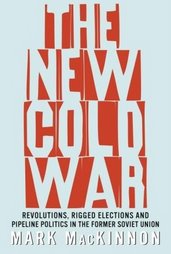
So I was sitting in the radio studio yesterday ready to record another interview promoting my book The New Cold War for the BBC/PRI program The World, when a pair of odd questions came over the line: are you ready to talk about thermobaric bombs and Viktor Zubkov?
You can hear my off-the-cuff remarks during my interview with Lisa Mullins here.
Even with an extra 24 hours to think about it, I still can't quite figure out what Putin's up to by appointing someone as unknown as Zubkov to the PM's post this close to the Duma and presidential elections.
I have three, admittedly incomplete, theories:
- Putin hasn't made up his mind yet between leading contenders Sergei Ivanov and Dmitriy Medvedev. Under this scenario, Zubkov is a third candidate that Putin wants the public to get to know before the presidential elections in the spring. Remember that Putin himself was a nobody when Boris Yeltsin made him prime minister back in 1999. (Zubkov himself said yesterday that he "does not rule out the possibility" of running for the big job next year.)
- Putin HAS decided on one of Ivanov or Medvedev (the smart money's on Ivanov, an ex-KGB man like Putin himself who has served as defense minister and deputy PM), and Zubov is that man's choice for prime minister. Putting Zubkov in now, the thinking goes, would allow a smooth transition between this administration and the next one.
- Putin's not going anywhere, and he's deliberately muddying the field to show how far he stands above any challengers to his throne.
It's too early to say which of these scenarios is right. We'll have to wait to hear more from Putin, and Zubkov himself.
As for the big blast in the desert, the Father of All Bombs was tested for one reason only - because it was bigger than the U.S.-produced Mother of All Bombs. Just another hello to the West from Russia's suddenly revived armed forces.
Tuesday, August 28, 2007
Who killed Anna Politkovskaya?

Just a quick post to highlight Novaya Gazeta's editorial today (it's here in imperfect English, which is nonetheless a first for NG) on the arrest of 10 suspects in connection with Anna Politkovskaya's murder last fall. It's a very carefully worded piece, one that takes pains to praise the police work, but one that also makes it clear that this story isn't over yet.
The newspaper has been conducting its own investigation of who killed their prominent reporter, and editor Dmitry Muratov confirmed that the 10 people arrested - a group that includes three members of a Chechen crime family as well as one FSB officer, one police major and three former police officers - were the same people that Novaya Gazeta's investigation was pointing towards. So the paper gives cautious kudos to Prosecutor-General Yury Chaika.
But the paper also says that it believes the 10 men arrested yesterday were contract killers. Charging them is half the prosecution's task here, the other half is to find out who hired them and to bring them to justice.
While noting that many people had reason to hold a grudge against Politkovskaya, whose tenacious and aggressive reporting work is said to have angered President Vladimir Putin and Chechen leader Ramzan Kadyrov among many others, the paper nonetheless suggests it knows who the contract killers' "clients" were.
Promising to reveal what it knows later, the paper hints quite strongly that charging the real perpetrators will require an act of bravery from Chaika and his investigators and could have an impact on the coming Duma and presidential elections:
It’s too early to talk about those who ordered this murder; the coming elections... may cause political special operations around the circumstances of Politkovskaya's murder. Besides, we don’t yet have any guarantees that the real clients’ names will be mentioned in the indictment. And that wouldn’t be investigation’s fault.
We have repeated many times that we don’t have claims against those who investigate the murder of Novaya Gazeta’s journalist. We are collaborating [with them], and the mutual opinion is that this collaboration is effective. We just want to be sure that “expediencies” that don’t relate to this matter directly, wouldn’t influence the outcome of our joint work. The outcome we need is clear. The killers, accomplices and real clients of this murder must be established and convicted.
Sounds like they're hoping another shoe will drop soon. I've read that Novaya Gazeta will go ahead and publish what it knows on Oct. 7, the anniversary of Politkovskaya's murder.
Robert Amsterdam, who as a member of Mikhail Khodorkovsky's defense team knows something about politically charged investigations in Russia, adds his own pessimistic analysis of the arrests here.
Sunday, August 26, 2007
Problematic Putin porn

So Vladimir Putin has a chiselled (if oddly hairless) chest. In the words of a presidential admirer who left their thoughts on the Komsolmolskaya Pravda website, it's one "vigorous torso."
To Vladimir Vladimirovich, I say congrats. It's likely not easy staying in shape whilst plotting your country's return to superpower status. The days, surely, are already filled with meetings about how to marginalize the pro-Western opposition, bring Ukraine to heel or what journalist to silence next. It's gotta be doubly tough when etiquette requires your attendance at myriad sour cream-laden banketi, which I know did nothing for my physique.
The question that comes to mind, though, is why are we being shown these pictures now. After all, Vladimir Vladimirovich is stepping down next year, heading into graceful retirement at age 55. Right? With presidential elections just half a year away, shouldn't we be pondering the pecs of Sergei Ivanov and Dmitriy Medvedev, Mikhail Kasyanov and Garry Kasparov?
Why is Komsomolskaya Pravda still telling kids to "Be Like Putin" on its front page? Is it because you're not going anywhere after all, Vladimir Vladimirovich?
Though I make no claim to being a political strategist (it's Mark McKinnon - no relation - who used to work for George W. Bush), I have to agree with Yevgenia Albats who worried aloud on her Эхо Москвы show that the pictures - which ominously were posted on the official Kremlin website - might be the strongest statement yet that Putin is planning on sticking around after his second term expires next year.
These photos are campaign material, pure and simple. They're meant to show the Russian public (and the world) that Putin is fit and ready to remain at Russia's helm past 2008, if he so chooses.
Vladimir Vladimirovich, of course, is constitutionally barred from running for a third consecutive term next year. But two of his closest allies, Alexander Lukashenko of Belarus and Nursultan Nazarbayev of Kazakhstan, have changed the rules in their neighbouring ex-Soviet republics so that they can run as often as they like. Nazarbayev recently urged Putin to follow suit in the interests of Russia's stability.
Sergei Markov, a Kremlin advisor, told the Associated Press that the pictures emphasized again that Vladimir Vladimirovich was "cool" - at least in the eyes of the Russian public. "That's been the image throughout the presidency, cool," Markov said.
Markov is one of those in the Kremlin's inner circle who's been tasked with finding a successor to Putin, be it Ivanov, Medvedev or one of the other siloviki. The decision to publish the Putin porn tells me they haven't yet found anyone "cooler" than Vladimir Vladimirovich and that "Operation Successor" as its known inside the Kremlin, may be morphing into "Operation Incumbent."
Tuesday, August 21, 2007
Election farce in Kazakhstan
Ninety-eight out of ninety-eight.
That's how many seats the suling Nur Otan party won in this weekend's parliamentary elections in Kazakhstan, which were held early in a bid to demonstrate the Central Asian nation's democractic progress and to bolster the President Nursultan Nazarbayev's effort to seek the chair of the 56-country Organization for Security and Cooperation in Europe in 2009.
By any standards, the election clearly demonstrated the opposite. OSCE monitors sent to observe the election found reported instances of multiple voting (for Nur Otan), falsified signatures (by Nur Otan) and votes cast for opposition parties counted that were counted for Nur Otan.
Officially, Nazarbayev's party won 88 per cent of the vote - which by my rough math makes him 18 per cent more autocratic than Vladimir Putin (who most opinion polls say has around 70 per cent support) and 11 per cent shy of Saddam Hussein in his salad days.
When Leonid Kuchma and Edurad Shevardnadze were found committing fraud on a far less audacious scale, the West refused to recognize the results of the votes and supported Ukrainians and Georgians as they overthrew their governments.
Not in Kazakhstan. There's far too much oil at stake here, and while Nazarbayev might not tolerate opposition parties or a free press, he does allow Western oil companies to operate as long as he gets a cut.
The biggest disgrace is that somewhere in all this both the U.S. State Department the OSCE election observer mission were able to find and laud "welcome progress" towards democracy in Kazakhstan. I'm embarrassed that a fellow Canadian, Senator Consiglio Di Nino, was able to say with a straight face that "notwithstanding the concerns contained in the report, the elections continue to move Kazakhstan forward in its evolution toward a democratic country."
Before spouting such nonsense, Sen. Di Nino should have pondered if he was seeing the complete picture, given the recent New York Times report on how Kazakh intelligence - at Nazarbayev's behest - conspired to mislead OSCE monitors during the 2005 presidential elections.
Perhaps the OSCE is indeed fit to have Kazakhstan as its chair.
That's how many seats the suling Nur Otan party won in this weekend's parliamentary elections in Kazakhstan, which were held early in a bid to demonstrate the Central Asian nation's democractic progress and to bolster the President Nursultan Nazarbayev's effort to seek the chair of the 56-country Organization for Security and Cooperation in Europe in 2009.
By any standards, the election clearly demonstrated the opposite. OSCE monitors sent to observe the election found reported instances of multiple voting (for Nur Otan), falsified signatures (by Nur Otan) and votes cast for opposition parties counted that were counted for Nur Otan.
Officially, Nazarbayev's party won 88 per cent of the vote - which by my rough math makes him 18 per cent more autocratic than Vladimir Putin (who most opinion polls say has around 70 per cent support) and 11 per cent shy of Saddam Hussein in his salad days.
When Leonid Kuchma and Edurad Shevardnadze were found committing fraud on a far less audacious scale, the West refused to recognize the results of the votes and supported Ukrainians and Georgians as they overthrew their governments.
Not in Kazakhstan. There's far too much oil at stake here, and while Nazarbayev might not tolerate opposition parties or a free press, he does allow Western oil companies to operate as long as he gets a cut.
The biggest disgrace is that somewhere in all this both the U.S. State Department the OSCE election observer mission were able to find and laud "welcome progress" towards democracy in Kazakhstan. I'm embarrassed that a fellow Canadian, Senator Consiglio Di Nino, was able to say with a straight face that "notwithstanding the concerns contained in the report, the elections continue to move Kazakhstan forward in its evolution toward a democratic country."
Before spouting such nonsense, Sen. Di Nino should have pondered if he was seeing the complete picture, given the recent New York Times report on how Kazakh intelligence - at Nazarbayev's behest - conspired to mislead OSCE monitors during the 2005 presidential elections.
Perhaps the OSCE is indeed fit to have Kazakhstan as its chair.
Sunday, August 19, 2007
The counter-revolution starts here

Two stories caught my eye today which might seem like separate issues but which in fact are thickly linked. One was a lengthy report in Moscow News Weekly about the summer camps being hosted by Nashi and the other pro-Kremlin youth groups.
The other was the Kremlin's paranoid decision to order the Russian edition of the BBC World Service off the FM dial.
The link? Both the Kremlin's bolstering of "patriotic" youth movements and its crackdown on non-state media outlets are moves directed at heading off any kind of Orange Revolution-inspired uprising in Russia around December's Duma elections and/or next year's presidential vote.
Kremlin strategists Gleb Pavlovsky, Sergei Markov and Vyacheslav Nikonov all gave speeches to the Nashi camp at Lake Seliger outside Moscow (as did, notably, leading Kremlin-backed presidential contenders Sergei Ivanov and Dmitriy Medvedev). Two years ago, following the uprising in Ukraine, Pavlovsky and co. were charged with making sure the orange tide never reached Red Square. One of the first things they did was establish Nashi - the name means "Ours" - to counter the pro-Western youth groups like Ukraine's Pora that formed the backbone of the revolutions that hit Serbia in 2000, Georgia in 2003 and Ukraine a year later.
At the first Nashi camp in the summer of 2005, Pavlovsky gave a speech that neatly summer up the role he expected the kids to play: "You must be ready to disperse fascist (a word Pavlovsky tried hard to attach to Ukrainian President Viktor Yushchenko and his supporters) rallies and physically oppose attempted anti-constitutional coups," he said. In other words, their job was to prevent Red Square from going Orange.
Nothing's changed. As MN reports, "[this summer's] camp's key note is political indoctrination." To that end, not only are the 10,000 Nashi members (as well as members of similar groups like Rossia Molodaya, or Young Russia, and Novye Lyudi or New People) indoctrinated about the values of patriotism and the evils of the West, they're lectured about the need to procreate as a way of reversing Russia's rapid population decline. They also get a talking-to about underwear.
The bizarre details, courtesy of MN:
The Seliger camp has its own TV network called Zyr, a radio station, news agency, and two newspapers. There is also a number of ongoing programs such as the School of Mass Action, the Institute of Entrepreneurship, the Schools of Animators, the Institute of Social Management, and the Antifa School, among others. One of this season's projects, Bashnya Gazproma (Gazprom Tower), offers successful contestants internship at the natural gas monopoly. Such projects as The Museum of Double Standards and Fat Man from Hell, are designed to show the pernicious effect of the Western lifestyle. A daily serial titled I Want Three encourages young families to have at least three children: thus, dozens of couples celebrated their weddings in the camp and were given separate tents. Dmitry Medvedev and Sergei Ivanov, two men who are widely seen as leading contenders to replace Putin next year, wore T-shirts with an emblazoned call to boost birth rates. A group of activists were urging girls to surrender their G-strings as a factor in female sterility, providing instead more conservative outfits and destroying the discarded G-strings in front of their former owners. Considering that a demographic revolution to the Seliger campers is an imperative at the behest of Vladimir Putin, G-strings have become a symbol of counterrevolution.
The BBC crackdown is linked because Pavlovsky, Markov and Nikonov understand that anti-government media - namely B-92 radio in Serbia, the Rustavi-2 television station in Georgia and Ukraine's Fifth Channel - were perhaps even more important than the youth groups in bringing Serbs, Georgians and Ukrainians into the streets. Having already taken direct or indirect control of all the country's major broadcasters, the Kremlin is now apparently turning its attention to the BBC.
While I'm quite cynical about the kind of "reporting" Fifth Channel did during the Orange Revolution - it wasn't so much as covering political events as inciting them - any efforts to squelch a media outlet is obviously an attack on free speech.
The BBC, in particular, has an unimpeachable reputation for reporting all sides of a news story. They really do. As a reporter myself, I can tell you that there are a lot of outlets who simply spew silly anti-Russian propaganda (or whatever the State Department's narrative of the day is), but the BBC isn't among them.
For the Kremlin to see the Beeb as an enemy only shows how paranoid they've become about the coming elections. And how far they'll go to keep control.
Friday, August 17, 2007
The darkest side of modern Russia
I still remember him. Tolessa was a young Ethiopian student attending Moscow's famous People's Friendship University, and one of the few I could find who would talk to a newspaper reporter about what it was like living as a foreigner - a black foreigner - in a time of rising Russian racism and xenophobia.
It was a life of violence and fear that he told me about. He and the other African students on campus were so terrified of Russia's notorious skinheads that they were afraid to leave their dorm rooms. When they did go out into the city around them, they went in groups.
Even at on-campus cafeteria, Tolessa was nervous and asked to sit at a table in the corner furthest from the windows. In the weeks before he and I had lunch, there had been eight arson attempts and several bomb threats directed at the dormitory where most of the African students were staying.
"We stay on the campus and, if we want to go anywhere, we have to organize a group. Maybe in a group they won't attack us," he told me. "This group, the skinheads, they are not small in number. In fact, I sometimes feel as though they are half the population of Moscow. People tell us to leave this country, that Russia is only for the Russians."
Russia for the Russians. It's a phrase that I hear more and more often. One of my friends - as white as the Russian snow - was punched out for speaking English in Moscow. My wife and I were physically threatened by a group of skinheads on the metro who drunkenly told us "Yankees go home."
The fact that Canada is a separate state was lost on him, so we got off at the next station even though it was nowhere near from our destination.
The Moscow police, Tolessa told me, were open admirers of the "Russia for the Russians" crowd. When an African student who was attacked called for help, the police would just as often join the beating as stop it. It wasn't just Africans. Anyone from the former Soviet republics of the Caucasus and Central Asia was liable to be targeted as chorniyy, or "black."
For too long, the Kremlin tolerated and manipulated the ultranationalist crowd, allowing people like Vladimir Zhirinovsky and Dmitry Rogozin to spew hatred because it suited their political aims. If the West was truly worried that a Zhirinovsky or a Rogozin might come to power, it would let up in its calls for more openness and democracy and perhaps come to see someone like Vladimir Putin as a least-bad option.
The strategy worked like a charm from a political point of view, but the monsters it created are now out of even the Kremlin's control. Take the grisly execution video that was first posted on the Russian Internet community livejournal last week.
The killing of two men - one identified in a caption as an ethnic Tajik, the other as a Dagestani - was horrifying and disturbing. One was beheaded, the other shot, while their murderers shouted "Glory to Russia!" and displayed a Nazi flag. The video is titled "Operation of the National-Socialist Party of Russia to arrest and execute two colonists from Dagestan and Tajikistan."
In a poorly attended press conference back in May, Alexander Brod of the Moscow Bureau for Human Rights warned that, in the past two years alone, the number of skinheads in Russia had risen from 50,000 to 70,000.
"Nowadays, they could be found in each regional center, they are emerging even in small towns and villages. In big cities, the attacks happen nearly each day and murders [are committed] weekly," he said.
In other words, the only thing truly remarkable about the livejournal video is that the perpetrators bothered to film it.
It was a life of violence and fear that he told me about. He and the other African students on campus were so terrified of Russia's notorious skinheads that they were afraid to leave their dorm rooms. When they did go out into the city around them, they went in groups.
Even at on-campus cafeteria, Tolessa was nervous and asked to sit at a table in the corner furthest from the windows. In the weeks before he and I had lunch, there had been eight arson attempts and several bomb threats directed at the dormitory where most of the African students were staying.
"We stay on the campus and, if we want to go anywhere, we have to organize a group. Maybe in a group they won't attack us," he told me. "This group, the skinheads, they are not small in number. In fact, I sometimes feel as though they are half the population of Moscow. People tell us to leave this country, that Russia is only for the Russians."
Russia for the Russians. It's a phrase that I hear more and more often. One of my friends - as white as the Russian snow - was punched out for speaking English in Moscow. My wife and I were physically threatened by a group of skinheads on the metro who drunkenly told us "Yankees go home."
The fact that Canada is a separate state was lost on him, so we got off at the next station even though it was nowhere near from our destination.
The Moscow police, Tolessa told me, were open admirers of the "Russia for the Russians" crowd. When an African student who was attacked called for help, the police would just as often join the beating as stop it. It wasn't just Africans. Anyone from the former Soviet republics of the Caucasus and Central Asia was liable to be targeted as chorniyy, or "black."
For too long, the Kremlin tolerated and manipulated the ultranationalist crowd, allowing people like Vladimir Zhirinovsky and Dmitry Rogozin to spew hatred because it suited their political aims. If the West was truly worried that a Zhirinovsky or a Rogozin might come to power, it would let up in its calls for more openness and democracy and perhaps come to see someone like Vladimir Putin as a least-bad option.
The strategy worked like a charm from a political point of view, but the monsters it created are now out of even the Kremlin's control. Take the grisly execution video that was first posted on the Russian Internet community livejournal last week.
The killing of two men - one identified in a caption as an ethnic Tajik, the other as a Dagestani - was horrifying and disturbing. One was beheaded, the other shot, while their murderers shouted "Glory to Russia!" and displayed a Nazi flag. The video is titled "Operation of the National-Socialist Party of Russia to arrest and execute two colonists from Dagestan and Tajikistan."
In a poorly attended press conference back in May, Alexander Brod of the Moscow Bureau for Human Rights warned that, in the past two years alone, the number of skinheads in Russia had risen from 50,000 to 70,000.
"Nowadays, they could be found in each regional center, they are emerging even in small towns and villages. In big cities, the attacks happen nearly each day and murders [are committed] weekly," he said.
In other words, the only thing truly remarkable about the livejournal video is that the perpetrators bothered to film it.
Subscribe to:
Posts (Atom)