Wednesday, September 28, 2011
Democracy, managed (po-russki!)
Мой анализ решение Путина вернуться в Кремль, которая была переведена на русский язык сайта "Открытая Уфа".


Sunday, September 25, 2011
Democracy, managed
 (My article below is now online - with a vibrant comments section - at The Globe and Mail)
Saturday afternoon, at a political rally in Moscow's Luzhniki Sports Palace, Russia's two-decade experiment with democracy came to an end. A different, more authoritarian, system with only a mirage of choice, is now firmly in place.
Russia's new political model is often called Putinism, after the man who built it and who will soon return as its unequivocal head. Elections are still to be held, and Putinism is far freer in most aspects than the totalitarianism that Russians lived under for most of the Soviet era. But it is a one-man show, completely dominated by Vladimir Putin, the man who served as Russia's president from 2000 to 2008, and who is now primed to return to the Kremlin after a token four years as prime minister.
Dmitry Medvedev, a longtime Putin aide who was drafted into the presidency in 2008 (when Mr. Putin stepped aside in deference to an annoying clause in the post-Soviet constitution that limits presidents to a maximum of two consecutive terms) told a gathering of the dominant United Russia party on Saturday that Mr. Putin should be their nominee in the presidential election scheduled for next March.
"I think it would be correct for the congress to support the candidacy of the party chairman, Vladimir Putin, to the post of president of the country," a stoic Mr. Medvedev said. Mr. Putin quickly accepted, and said it would be "a great honour" to take his old job back.
The announcement brought an end to hopes that Mr. Medvedev, who had shown a slightly more liberal side than Mr. Putin and who had occasionally flashed a willingness to challenge his former boss, would stand against Mr. Putin next spring and give Russians a real choice. In recent months, Mr. Medvedev and Mr. Putin had both fed speculation about a head-to-head race by refusing to answer questions about which of them would run for the presidency.
Instead, Mr. Medvedev - at Mr. Putin's suggestion - agreed to lead United Russia into December's parliamentary election, putting him on track to switch jobs with Mr. Putin and become prime minister. Mr. Putin told the party congress that the decision had been made "a long time ago, several years back."
The game of musical chairs will only affirm what most Russians believed about Medvedev's time in the Kremlin: the real power remained with Mr. Putin throughout, even while in the nominal No. 2 job.
(A key part of Mr. Medvedev's legacy is a constitutional change extending presidential terms from four to six years, starting with the 2012 election. The change makes it possible for Mr. Putin, 58, to remain Russia's president until he's 70.)
Other parties will contest the Duma elections in December and the Kremlin will ensure that other candidates will be found to run against Mr. Putin in the spring. The appearance of choice is an important facet of Putinism, or "managed democracy," as the system's creators prefer to call it.
But those other parties and candidates will face a host of obstacles - ranging from the Kremlin's near-complete control of the media to physical intimidation and ballot-stuffing - that will make an electoral upset close to impossible. As the cases of Mikhail Khodorkovsky, the former oligarch now serving his seventh year in a Siberian prison, and Anna Politkovskaya, the Kremlin critic who was murdered for her investigative journalism in 2006, have made all too clear, there's no tolerance for genuine threats to the system.
Ten days ago, billionaire Mikhail Prokhorov - one of the last figures who could have made Russia's election season somewhat interesting - bowed out in disgust, withdrawing as a candidate for a Kremlin-backed opposition group (another unique feature of Putinism). "We have a puppeteer in the country, who long ago privatized the political system," Mr. Prokhorov said, in remarks taken to refer to Vladislav Surkov, a political strategist who remained a key figure in both the Putin and Medvedev presidencies.
Few Russians seem to mind. Aided by national media he hammered into submission after coming to office, Mr. Putin - who has been shown on state television fighting forest fires, tracking tigers and flying fighter jets - is easily the country's most popular politician, credited with stabilizing the country's economy (which remains heavily reliant on energy exports) and restoring its international prestige, in part via the 2008 war against neighbouring Georgia, a former vassal.
Western-style democracy, which the country briefly experienced in the 1990s, when Boris Yeltsin was president, is associated with corruption, lawlessness and economic collapse.
The man who oversaw the end of the Soviet Union has warned that Russia is headed for disaster if Mr. Putin and his coterie insisted on clinging to power.
"The unwillingness to start reform or the desire to have partial change is often explained by the fear of losing power and the desire to prevent a new collapse of Russia," Mikhail Gorbachev wrote in an article carried this week by two Russian newspapers. "But it is the very absence of change which threatens to provoke instability and put the future of the country in question."
Tuesday, May 25, 2010
The revolution shall be tweeted

Bangkok - Once more, I'm in Bangkok, and once more The Globe and Mail has done me the favour of assembling a collection of some of what I posted before and during the Thai government's military crackdown on the Red Shirt protesters.
In case you missed them, here they are. As I mentioned in another article for The Globe, Twitter played an unprecedented role in the Thailand turmoil.
On the downside, it was a propaganda outlet for both sides and served to amplify the hatred and prejudice that exist in Thai society, arguably helping push the situation towards its bloody conclusion.
But it allowed hosted some top-notch reporting and, more importantly, allowed Bangkok residents to warn each other about what was happening in their neighbourhoods. In at least two occasions, one of which I was involved in inside the supposed sanctuary of the Wat Pathum temple, Twitter may have helped saved lives.
Here's how it went down (note these are not all my tweets from this period, but a selection chosen by editors at The Globe and Mail):
May 18, 2010
* 12:29 p.m. Thai media reporting govt has rejected Red ceasefire offer.
* 12:31 p.m. Bad news for peace fans - Thai government has extended "holiday" for rest of the week.
* 2:22 p.m. What blockade? Piles of fresh vegetables arrived today in Bangkok Red Shirt camp
* 3:06 p.m. Amnesty International slams Thailand's "reckless use of lethal force" against "unarmed people who posed no threat whatsoever".
* 4:29 p.m. Question of the Day: if Red uprising is about equality, why is there a VIP toilet? #thailand
* 6:41 p.m. East Bangkok, far from the Red Stage, supporters gather to watch latest speeches
* 11:39 p.m. Series of bangs heard from direction of Rama IV road, scene of much fighting in recent days. #thailand
* 11:41 p.m. Thai media reporting "strong rumours" of dawn crackdown in Bangkok standoff.
May 19, 2010
* 12:05 a.m. I should add to last tweet that if I had a baht for every crackdown rumour I've heard in recent weeks I could buy land in Rajprasong.
* 1:38 a.m. Thailand's tourism minister says number of arrivals at Bangkok airport has fallen from 30,000 to 20,000 a day because of crisis.
* 2:46 a.m. Another explosion in the distance. By now, I should have function key that types that sentence. #thailand
* 8:02 a.m. Breaking: Soldiers, armoured personnel carriers seen advancing towards main Red Shirt protest in Bangkok. Much gunfire.
* 9:07 a.m. New checkpoints sealing off military operation area. BBC's @aleithead says filmed Black Shirts firing back at soldiers.
* 9:30 a.m. "Thai troops open fire on protesters" - http://tinyurl.com/2953utq
* 9:59 a.m. Thai govt spokesman "we would like to reassure citizens of Bangkok... operations are designed to stabilize the area."
* 10:03 a.m. Thick smoke rising from Lumphini Park.
* 10:12 a.m. Thai govt spokesman says "operations designed to... provide security, safety to public at large." Will continue all day.
* 10:15 a.m. Thai Red Cross calling for urgent blood donations.
* 10:19 a.m. Thai media reporting military now controls Lumphini Park area. Red Cross calling for urgent blood donations.
* 10:43 a.m. Now at Chulalongkorn hospital. Heavy gunfire. Helicopters overhead
* 10:48 a.m. Thai troops advancing near Lumphini Park.
* 11:28 a.m. Closing in on Red stage at protest centre. As soldiers advance, Reds still defiantly sitting on ground, playing music. about 9 hours ago
* 11:29 a.m. Approaching Red stage. As army advances, Reds still defiantly sitting on ground, playing music. #thailand about 9 hours ago
* 11:34 a.m. Doctors and nurses prepare to receive casualties at Police Hospital in centre of Bangkok protest site.
* 11:48 a.m. At police hospital, 13 injured, six from gunshot wound. One dead, a foreign journalist killed at Sala Daeng.
* 11:55 a.m. Police Hospital adjacent to main protest stage says 13 injured so far, six from gunshot. One dead, a foreign journalist.
* 11:55 a.m. Hundreds of Red protesters gather at main stage as battle rages a few hundred metres south.
* 12:07 p.m. Praise my lovely wife who made me a medical kit with everything in. I just dressed a colleague's bullet wound. Shot in leg. All safe now.
* 12:08 p.m. Four dead, 50 injured across Bangkok in crackdown today, Thai media reporting.
* 12:27 p.m. Soldiers allowing Red Shirts to exit camp if they come forward with hands raised. Lt Col I talked to on way in said 10 surrendered to him.
* 12:33 p.m. Smoke rising from two locations north of main Red camp in central Bangkok. Din Daeng and one other area.
* 12:39 p.m. No Red leaders behind main stage when I visited. Reports some surrendering to police. Still thousands of protesters at main site.
* 12:58 p.m. Thai TV reporting that Red Shirts have occupied Bangkok's Century Park hotel. Years ago, in other Thailand, my cousin got married there...
* 1:25 p.m. Chidlom BTS station burning. Red shirts on tracks. Heavy explosions and gunfire.
* 1:31 p.m. Fire at Bangkok's Chidlom skytrain station. Heavy gunfire.
* 1:34 p.m. Al-Jazeera reporting Red Shirts stormed town hall in north Thailand. Could this spread?
* 1:52 p.m. Getting a bit dangerous now around Chidlom
* 1:56 p.m. Reuters reporting Canadian journalist injured in Bangkok clashes.
* 2:01 p.m. Massive fire now at Chidlom BTS. Something else burning besides tires.
* 2:33 p.m. As Red leaders surrender, hard-core elements reported to declare independence. Fighting coninues around Bangkok.
* 2:34 p.m. Canadian Embassy says avoid all travel to Bangkok, avoid non-essential travel to Thailand.
* 2:35 p.m. Thai military to impose curfew on Bangkok tonight.
* 2:36 p.m. Smoke rising from near Central World shopping mall in Bangkok. Reports that protesters tried to set it on fire.
* 3:05 p.m. Almost deserted. Rajprasong main Red stage. Now.
* 3:12 p.m. Rajprasong main red stage. Deserted. No sign of soldiers.
http://www.blogger.com/img/blank.gif
* 3:43 p.m. In Wat Patum Wanaram, with hundreds of civilians. All just ran deeper into temple area because of nearby gunfire.
* 3:45 p.m. Hundreds of civilians begginf for UN to protect Buddhist temple in middle of site.
* 3:51 p.m. Smoke rises from fire behind Buddhist temple sanctuary for civilians caught in Bangkok fighting.
* 3:59 p.m. Thais in temple offering us water and a place to sit. "We're only kind to foreigners, not to each other," woman says.
* 4:00 p.m. Gunfire, explosions close to temple where unarmed Red Shirts have taken sanctuary.
* 4:01 p.m. Colleague say "Black Shirts" with rifles battling soldiers outside temple.
* 4:31 p.m. Ambulance attendees take cover in alley outside Wat Patum,
* 5:17 p.m. Red Shirts gather abandoned food in anticipation of long stay in Wat Patum temple.
* 5:19 p.m. Smoke rises from Bangkok's burning Central World shopping mall.
* 5:37 p.m. Thais in temple begging me to take them out. "You can go, right? Take me!" Also "Is the UN coming?"
* 5:50 p.m. Sustained gunfire outside temple serving as sanctuary in middle of Bangkok. People moving further away from entrance.
* 5:56 p.m. More shooting, explosions outside Wat Patum.
* 6:03 p.m. Inside Wat Patum as firefight rages outside.
* 6:06 p.m. Firefight outside temple escalating. Hundreds of people still sheltering inside.
* 6:08 p.m. Air smells of fire. Twenty buildings around city said to be in fire, including Central World.
* 6:10 p.m. At least one person inside temple has bullet wound. No idea what happened. Gunfire escalating.
* 6:27 p.m. Fighting rages all around temple. Tear gas in the air. At least three shot, either inside or just outside sanctuary.
* 7:44 p.m. At least five wounded around me at makeshift medical centre in park behind Wat Patum temple, one a friend and colleague.. gunfire continuesm
* 7:54 p.m. Somehow we're the only corros left in temple. People around us terified. Red Cross can't get ambulance in to injured because of gunfire.
* 8:27 p.m. Medics around me say 7 dead 10 injured inside Wat Patum temple, which was supposed to be sanctuary. I'd guess 1500 to 2000 terrified ppl
* 8:49 p.m. Please RT. People around me are dying because they can't get to hospital across the road because of fighting
* 8:51 p.m. More people will die inside Wat Patum unless we get ceasefire to get to hospital across the road.
* 10:15 p.m. Wounded in ambulance leaving Wat Patum. Ceasefire negotiated to let wounded leave.
Sunday, April 25, 2010
One week in Bangkok

Bangkok - In case you've missed it, I've been covering the ongoing political crisis in Thailand live from the streets of Bangkok for The Globe and Mail.
You can read my newspaper reports on the standoff between the government and the Red Shirt protesters on the website, but here's a snapshot of the minute-by-minute stuff I filed via my Twitter account (www.twitter.com/@markmackinnon).
(Note, this isn't a complete transcript of what I sent to Twitter, just a selection of "greatest tweets" compiled by the staff of globeandmail.com. They've posted more of my photos over there too.)
Timestamps reflect local time in Bangkok...
April 17
• 10:38 a.m: Three more Bangkok malls shut by Red Shirt protest. Hyatt Erawan closed too RT @RichardBarrow SIAM PARAGON/SIAM CENTER/SIAM DISCOVERY closed
• 10:39 a.m: Thumping rain in Bangkok this morning has sent many Red Shirts running for cover. Protest site emptiest its been in days.
• 12:24 p.m: Bangkok Post: Thailand future "precarious." Thaksin party a threat to "revered institution," civil war possible: http://tinyurl.com/y2ydxkq
• 7:23 p.m: The waiter in the Japanese restaurant I'm in just blamed the lack of tuna on the Red Shirts. Thaksin, what have you done??
April 18:
• 10:16 a.m: Red Shirt leaders claim part of army would defend Reds if new crackdown. "Tanks would fire at one another."
• 12:51 p.m: Thai Red Shirt protestors plan move to Silom banking district, military says will block them. Silom "out of bounds."
• 4:48 p.m: Thailand "Red Shirts" plan mass rally Tuesday, call on supporters to withdraw savings from "symbol of the aristocrats" Bangkok Bank.
• 5:56 p.m: Thailand: Pro-government "Yellow Shirts" give military one week to end Red Shirt protests or will act "to preserve the nation and monarchy"
• 5:59 p.m: Thai army vows to block Red Shirts if they try to move protest to Silom financial district: http://tinyurl.com/y7npxy6
April 19
• 10:16 a.m: Thailand: Red Shirt leaders back away from clash with military, cancel plans to expand protest to Silom Road financial district.
• 12:57 p.m: Shoppers, Yellow Shirts and soldiers in riot gear mingling on Silom Road. Bizarre. Half of Bangkok still acting like place not falling apart
• 1:01 p.m: Army Humvee parked where the food inspector's car should be in front of KFC on Silom Road.
• 2:04 p.m: Barbed wire, soldiers on Silom Road, Bangkok
• 2:33 p.m: Red Shirts, not police, control Chitlom BTS station over demo site
• 7:58 p.m: Uh-oh. Intercontinental Hotel in centre of Red Shirt protests in Bangkok closing its doors, citing troop movements.
• 10:05 p.m: Sigh. Terrorists, terrorists, terrorists. I moved out of the Middle East to escape the word, now everyone in Thailand is using it.
April 20
• 10:22 a.m: is being evicted from my second hotel this week. You'd think I was throwing TVs out the window.
• 10:32 a.m: Red Shirts have erected black tarp over main stage area in central Bangkok. Will obscure both the sun and the view of anyone spying above.
• 11:59 a.m: Death toll from Qinghai earthquake now over 2,000. Another 200 still missing.
• 4:27 p.m: Mood still tense, Red Shirts on motorbikes patrolling beyond usual protest camp borders, some carrying bamboo poles.
• 10:05 p.m: Amnesty International: "All sides in Thailand’s widening political conflict should immediately commit to ending human rights abuses."
• 10:05 p.m: Amnesty "urges [Thai government] to provide accountability for any violations by security forces as well as abuses by violent protesters."
April 21
• 10:21 a.m:Thailand's Red Shirts preparing for new army move, building tire barriers at all six entrances to their central Bangkok protest site.
• 5:22 p.m: As both sides talk war, there are scattered reports that negotiations are finally taking place... #thailand
• 7:23 p.m: Extremely tense now at Silom front line. Hundreds of Yellows chanting "get out!" at Reds from behind line of soldiers.
• 7:24 p.m: Tuk-tuk backfired near front line between army, Reds, and everyone ducked. #thailand
• 8:32 p.m: Red Shirts have expanded positions north of Lumphini Park. Checking IDs of drivers before allowing them to pass. #thailand
• 8:33 p.m: As army defends Silom financial district, Reds slowly taking over other parts of Bangkok beyond long-time camp.
• 8:58 p.m: Police have moved in to break up clashes between Red Shirts and local residents near Silom intersection. Tense. #thailand
• 11:23 p.m: Helicopters in sky over Bangkok. Several loud bangs heard. Fireworks or flares.
• 11:34 p.m: Orange flares all over the sky as helicopter buzzes over Bangkok Red Shirt protests.
April 22
• 3:12 a.m: Anyone thinking about upsides, downsides of Twitter shld check #thailand tag. Up-to-the-second updates blended with vitriolic hate speech.
• 11:54 a.m: Several thousand Red Shirts marching today to United Nations office in Bangkok to request presence of peacekeeping force.
• 12:25 p.m: How charged is the rhetoric in Thailand? Government says Red leader Thaksin akin to Hitler and Stalin. Reds say PM Abhisit like Pol Pot.
April 23
• 7:24 p.m: Scene at Sala Daeng intersection more relaxed than yesterday. Pro-govt crowd is bigger, but police doing better job of keeping sides apart.
• 7:27 p.m: Police have parked five large trucks across intersection, which should prevent easy restarting of last night's clashes. #thailand
• 7:34 p.m: Yep, real-live Yellow Shirts have joined the crowd on Silom Road. Mood more festive here than at Red rally, but of course Reds on Day 41...
• 7:35 p.m: Army deployed to Silom to keep district's businesses from suffering fate of Rajprasong. But stores shutting down here anyway...
• 8:22 p.m: Two explosions heard in Bangkok's business district; at least one person wounded, Reuters reporting.
• 8:23 p.m: Was there and heard blasts. Thought little of them. #toomuchtimeinwarzones
• 8:28 p.m: What I saw/heard were fireworks fired from Red side over police barricade. Not M79s, as some reporting.
• 9:19 p.m: Situation tense on Red side of barricade after mystery explosions. Reds leaving 40 metre gap behind wall of bamboo and tires. Plan to light?
• 10:30 p.m: Helicopters flying over Red Shirt protest site, Reds target them with jeers, fireworks.
• 10:31 p.m: Man beside me with club assuring me it's still safe to travel in his hometown. "No trouble! just relax! Welcome!"
• 10:38 p.m: pro-govt supporters now thowing rocks, bottles over barricade. Reds respond with firework into crowd. police caught in middle...
• 10:44 p.m: series of small blasts at Silom intersection. police still holding back
• 10:44 p.m: police now withdrawing with shields raised. leave field open for street fight between yellow, red
• 11:02 p.m: Police withdrawing further away from ongoing clash. Handful of pro-govt types tossing bottles and rocks over. Reds replying with firecracker
• 11:12 p.m: Two tourists pulling rolling suitcases just ran through centre of Bangkok street fight.
• 11:16 p.m: street fight escalating. police unit I'm with retreating a block.
• 11:20 p.m: Men in motorcycle helmets advance toward Red barricade hurl projectiles over. Amazingly no effort by police to intervene.
• 11:16 p.m: street fight escalating. police unit I'm with retreating a block.
• 11:20 p.m: Men in motorcycle helmets advance toward Red barricade hurl projectiles over. Amazingly no effort by police to intervene.
• 11:29 p.m:Thai police hiding under overpass (with me) as fighting escalates (pictured)
• 11:38 p.m: riot cops finally moving in between two sides.
• 11:39 p.m: Reds cheering (Bronx cheer?) as riot cops move in
• 11:42 p.m: Riot police moving down Silom driving back pro-govt rioters. Reds playing music and dancing. If this the end, a victory for them.
• 11:58 p.m: Thai police making arrests on Yellow side of clash. Red rally continues
• 12:08 a.m: If it was this easy to end the fighting, the question needs to be asked why it wasn't done hours ago...
• 12:14 a.m: Yellows on Twitter talking of arming themselves because of government "weakness" in facing Red Shirts.
• 12:16 a.m: Reds bamboo fortress unbreached despite clashes
• 12:44 a.m: Battle of Silom Road over for now.Question is what next? Helicopters in the air now, Reds appear to be targeting them with fireworks...
Monday, January 18, 2010
Google and China go to war

The world’s most populous country and its best-known brand are in a new kind of war today, with the search engine formally opening hostilities after a series of incursions by the e-PLA.
Both sides have plenty to lose, with Google admitting it may have to withdraw from the potentially lucrative Chinese market – the world’s largest, with more than 300 million Internet users – and the Chinese government likely to lose international respectability over allegations that it participated in or tolerated the hacking of Gmail accounts belonging to Chinese human rights activists and others.
Another risk for the Communist Party is that it seems to be incurring the wrath of that same online community, which has already learned to live, grumpily, without sites such Facebook, Twitter and YouTube.
The Chinese Internet is abuzz today with news that Google will stop censoring searches on google.cn – and may soon withdraw from China completely; raising the possibility of a Chinese Internet that increasingly exists as a separate entity from the rest of the World Wide Web.
Here’s a quick sampling of some of what is being said (note: Baidu, which cooperates with Chinese government censors, is the most popular search engine in the country, with more than 60 per cent of the market):
“Alas, a huge country of 1.3 billion people and 9.6million square meters land can't accept a website, sad” – a netizen named “Han” from Beijing who posted at the news.qq.com site.
“I knew this day was coming. (With a slogan like) “Don’t be evil” Google, you can’t stay long here.” – “Liyuan” from Wuhan, also at news.qq.com
“How sad this news is indeed! A world with only Baidu’s rules is not what I want to see!” – “Tianlu” from Wuhu City at the same site
Tianlu’s post drew a reply from a netizen who gave their name as “Xiangmatou”: “This is what the people in power would like to see the most. It is easier and more convenient for them to rule people’s views and the direction control of information.”
The discussion at the Chinese website of the Global Times newspaper was tamer, with some openly doubting whether Google would carry through on its threats:
“Isn’t it a hype? China is such a big market. How can Google be willing to give up such a big cake? But if it is true, it is a loss for us, because Google has more sources than Baidu. It’ll be a pity!” was one representative reader post.
(Interestingly, the state-run Xinhua news service took a similar line, suggesting that Google’s decision was not yet final and that the government was “seeking clarity” on the Internet giant’s intentions.
The U.S.-based China Digital Times, meanwhile, has been translating and compiling some of the reaction to the Google-China spat on Twitter (which can be accessed in China by those able to reach a Virtual Private Network. Some of the most interesting:
@hecaitou: After Google leaves China, the world’s top three websites on Alexa —Google, Facebook and Youtube are all blocked in China. This is not an issue of Google abandoning China, but one of China abandoning the world.
@mranti Withdrawal of Google means: 1 Scaling the wall is now an essential tool 2 Techies, you should immigrate
@lysosome On campus discussion forums Google tag has been removed
@Fenng Ten years online has turned me from an optimist into a pessimist
Speaking of Twitter, I’m regularly “tweeting” on this (and other topics) over at http://twitter.com/markmackinnon
Monday, December 14, 2009
A victory for Beijing in the New Great Game
Beijing: A few hours ago, in a place called Samadepe on the rarely visited border between the Central Asian states of Turkmenistan and Uzbekistan, the global balance of power tilted ever so slightly.
Flanked by the leaders of Turkmenistan, Uzbekistan and Kazakhstan, Chinese President Hu Jintao today turned a symbolic wheel as oil started flowing into a new 1,833-kilometre pipeline that snakes east from Turkmenistan and across Central Asia to Xinjiang in the far west of China, where it will connect with China’s own pipeline network.
Russian Prime Minister Vladimir Putin has insisted that Russia is not bothered by the opening of the pipeline, but that’s difficult to believe. Mr. Putin’s nine years in power (the first eight as president) have been spent trying to reestablish Russia as a global force. Key to that effort has been its role as one of the world’s biggest producers of natural gas, a position that was strengthened by its effective monopoly over the pipelines coming out of the former Soviet states of Central Asia.
That monopoly has now been broken. The Turkmenistan-Xinjiang pipeline is the first that will transport gas from Turkmenistan, the world’s fourth-largest producer, to market without going through Russian territory. When it reaches full capacity in another three years, it will pump up to 40 billion cubic metres annually, feeding China’s rapidly-growing and energy-starved economy, meeting half of the country’s current demand.
In building the new pipeline, China can also claim victory in a race with both the United States and Europe. Both have sought for years to establish a route to bring Turkmen gas west without going through Russia, efforts that were repeatedly thwarted by interference from Moscow as well as Iran, which blocked efforts to build a pipeline underneath the Caspian Sea.
Though Mr. Hu was characteristically understated about the importance of the moment his new partners were effusive in welcoming Beijing to centre stage in Central Asia.
“This project not only has commercial or economic value. It is also political,” Turkmen Presidnet Kurbanguly Berdymukhamedov told reporters. “China, through its wise and farsighted policy has become one of the key guarantors of global security.”
It’s a change that happened slowly. Russia has seen its already waning influence over its former backyard plummet since the onset of the global recession, which has hit the Kremlin’s coffers – and thus its ability to speak the language the Central Asia’s kleptocrats prefer – hard. The United States and Europe, meanwhile, have danced back and forth between courting the region’s leaders and condemning them, occasionally breaking ties completely, over human-rights abuses.
In the meantime, China, a late joiner to struggle for influence in Central Asia (dubbed “The Great Game” in the 19th Century as Russia and Britain jostled there), has quietly used its financial clout to make fast friends in the region, handing out massive loans and building the pipeline connecting Kazakhstan to Xinjiang. China’s Communist leaders, naturally, have no qualms about doing business with the unelected “presidents-for-life” who rule Turkmenistan, Kazakhstan and Uzbekistan.
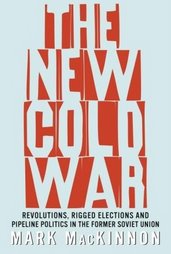
Last year, I was invited to the city of Almaty in Kazakhstan to address the Eurasian Media Forum on the theme of a “new Cold War” between Russia and the West, sitting on a panel alongside such combatants as former U.S. National Security Advisor Zbigniew Brzezinski and Kremlin spin doctor Gleb Pavlovsky.
When the Americans and the Russians took a break from verbally attacking each other, an audience member asked a Chinese panelist where Beijing stood in the escalating dispute. His response came back to me today as I watched the television footage from Turkmenistan.
“We leave matters of war and peace to the Americans and the Russians,” he said, adding that China preferred to focus on building up economic relations with its neighbours.
The audience, made up of Central Asia’s business and political elite, gratefully applauded.
Flanked by the leaders of Turkmenistan, Uzbekistan and Kazakhstan, Chinese President Hu Jintao today turned a symbolic wheel as oil started flowing into a new 1,833-kilometre pipeline that snakes east from Turkmenistan and across Central Asia to Xinjiang in the far west of China, where it will connect with China’s own pipeline network.
Russian Prime Minister Vladimir Putin has insisted that Russia is not bothered by the opening of the pipeline, but that’s difficult to believe. Mr. Putin’s nine years in power (the first eight as president) have been spent trying to reestablish Russia as a global force. Key to that effort has been its role as one of the world’s biggest producers of natural gas, a position that was strengthened by its effective monopoly over the pipelines coming out of the former Soviet states of Central Asia.
That monopoly has now been broken. The Turkmenistan-Xinjiang pipeline is the first that will transport gas from Turkmenistan, the world’s fourth-largest producer, to market without going through Russian territory. When it reaches full capacity in another three years, it will pump up to 40 billion cubic metres annually, feeding China’s rapidly-growing and energy-starved economy, meeting half of the country’s current demand.
In building the new pipeline, China can also claim victory in a race with both the United States and Europe. Both have sought for years to establish a route to bring Turkmen gas west without going through Russia, efforts that were repeatedly thwarted by interference from Moscow as well as Iran, which blocked efforts to build a pipeline underneath the Caspian Sea.
Though Mr. Hu was characteristically understated about the importance of the moment his new partners were effusive in welcoming Beijing to centre stage in Central Asia.
“This project not only has commercial or economic value. It is also political,” Turkmen Presidnet Kurbanguly Berdymukhamedov told reporters. “China, through its wise and farsighted policy has become one of the key guarantors of global security.”
It’s a change that happened slowly. Russia has seen its already waning influence over its former backyard plummet since the onset of the global recession, which has hit the Kremlin’s coffers – and thus its ability to speak the language the Central Asia’s kleptocrats prefer – hard. The United States and Europe, meanwhile, have danced back and forth between courting the region’s leaders and condemning them, occasionally breaking ties completely, over human-rights abuses.
In the meantime, China, a late joiner to struggle for influence in Central Asia (dubbed “The Great Game” in the 19th Century as Russia and Britain jostled there), has quietly used its financial clout to make fast friends in the region, handing out massive loans and building the pipeline connecting Kazakhstan to Xinjiang. China’s Communist leaders, naturally, have no qualms about doing business with the unelected “presidents-for-life” who rule Turkmenistan, Kazakhstan and Uzbekistan.
Last year, I was invited to the city of Almaty in Kazakhstan to address the Eurasian Media Forum on the theme of a “new Cold War” between Russia and the West, sitting on a panel alongside such combatants as former U.S. National Security Advisor Zbigniew Brzezinski and Kremlin spin doctor Gleb Pavlovsky.
When the Americans and the Russians took a break from verbally attacking each other, an audience member asked a Chinese panelist where Beijing stood in the escalating dispute. His response came back to me today as I watched the television footage from Turkmenistan.
“We leave matters of war and peace to the Americans and the Russians,” he said, adding that China preferred to focus on building up economic relations with its neighbours.
The audience, made up of Central Asia’s business and political elite, gratefully applauded.
Thursday, November 26, 2009
Face to face with Comrade Duch

Phnom Penh: At first, I was going to rush outside with everyone else in the courtroom, to gulp some fresh air and a plastic cup of water after a morning of listening to prosecutor William Smith list off the crimes committed by Kaing Guek Eav, the murderous Khmer Rouge jailor better known as Comrade Duch.
But then I remembered that I had surreptitiously stuffed my Blackberry in my blazer pocket on the way in to the court (mobile phones aren't allowed in court but I had been reluctant to hand it over to an unknown fate with the security guards outside). I had snuck it through security once, but trying again might be pushing my luck. I decided to stretch my legs by wandering around the courtroom instead.
As the courtroom rapidly emptied. I realized there was someone else doing the same thing: Comrade Duch.
I couldn't help but stare. Here was the man who stands accused of - and has confessed to an indirect role in - the deaths of more than 12,000 people while he ran Phnom Penh's notorious S-21 torture and interrogation centre.
Just two days before, I had visited S-21 which, other than the gallows and the graves that stand in front of it, still looks from the outside like the high school it was before the Khmer Rouge arrived in 1975. It's a haunted place, filled with room after room of black-and-white photographs of those who spent their final days there.
Some stare at the camera with anger or defiance, others with fear plain on their faces. But most wear no expression at all, as if they've had all emotion beaten out of them. They look as though they no longer cared whether they lived or died.
Watching Duch pace around the courtroom - separated from the audience area where I stood by a pane of bulletproof glass to prevent revenge attacks - it was difficult to imagine this small, ordinary looking 67-year-old as the same man who oversaw a place where men were forced to eat human feces, women were raped and babies were bashed to death against trees.
Hands thrust deep in his pockets as he paced, perhaps thinking about the final statement and apology he would deliver to the court in a few minutes time, he looked like what he should have been: a retired mathematics teacher. Someone's grandfather. With nearly parted grey hair and a crisp white shirt, he looked exactly like a man I had seen outside Phnom Penh's disused train station earlier that morning.
As I pondered this, Duch turned and faced the almost-empty auditorium. His slightly watery eyes scanned the seats as if looking for someone. Eventually, they met mine.
A moment passed quietly as I uncomfortably returned his gaze. I don't know what he was searching for - a smile? a wave? - but I think I was hoping to catch a glimpse of the inner monster, the thing that separated him from the rest of us and made him capable of doing such horrible things. Or maybe a hint that he is, as he says, tormented by "excruciating" remorse over what he'd done.
In Duch's blank eyes, I saw neither. Just an old man in a cage looking out curiously at those looking in.
The courtroom started to fill back up again. Duch turned to consult with his lawyers.
A few minutes later, he stood and told the court again how sorry he was.
I had no idea whether to believe him.
Subscribe to:
Posts (Atom)