A Russian delegate at the summit of gas-exporting nations in Doha, Qatar has just declared that an OPEC-style price-setting cartel for natural gas is a "necessity." See the Ria Novosti report here.
Since Russia, which controls by far the largest share of global production (21.6%, compared to just over 3 % each for runners-up Algeria and Iran), looks set to play a leading role in any such organization, that's got to be disquieting news for anyone in Europe who remembers the famous Gazprom cutoffs to Ukraine, Belarus and Georgia.
Robert Amsterdam, a Canadian lawyer who defended Yukos founder Mikhail Khodorkovsky in his spectacle/show trial a few years back, has some nice analysis on his blog.
For those wondering where Khodorkovsky's case is at, the man who was once Russia's richest man (until he challenged the Kremlin) is two years into a nine-year sentence that he's serving at a Siberian labour camp known as YaG-14/10.
Monday, April 9, 2007


Orange Square?
Ever since the orange-waving crowds took over the streets of Kiev in the winter of 2004, Kremlin strategists like Gleb Pavlovsky have openly worried about a repeat revolt on the streets of Moscow. The fact that they admit they're concerned is as close as Pavlovsky and his ilk have come to recognizing the critical flaws contained in the system of "managed democracy" (which could be defined as giving people the appearance of choice, while clearing the political landscape so that they have nothing to choose between) that they have constructed in Russia over the past seven years.
Whether or not a "coloured revolution" is possible in Russia is very debatable, given the country immense size and the logistical nightmares involved with coordinating an uprising across 11 timezones. And how do you tell people about it when the Kremlin controls the airwaves?
That said, nervousness is clearly rising ahead of the Duma elections this December and the presidential vote scheduled for next spring. Check out Nabi Abdullaev's report in The Moscow Times on the latest Kremlin-sponsored demonstration here.
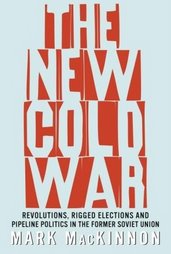
While researching my book, I interviewed pro-Western opposition figure Boris Nemtsov and hard-line rightist Dmitry Rogozin about the prospects of an Orange Revolution repeat in Moscow.
Both said they expected people to take to the streets to show their displeasure this election season. While both said they expected Vladimir Putin, or a hand-picked successor, to maintain control, they agreed that if the Kremlin did lose its grip, those that seized control just as easily be fascist brown as pro-Western orange.
Whether or not a "coloured revolution" is possible in Russia is very debatable, given the country immense size and the logistical nightmares involved with coordinating an uprising across 11 timezones. And how do you tell people about it when the Kremlin controls the airwaves?
That said, nervousness is clearly rising ahead of the Duma elections this December and the presidential vote scheduled for next spring. Check out Nabi Abdullaev's report in The Moscow Times on the latest Kremlin-sponsored demonstration here.
While researching my book, I interviewed pro-Western opposition figure Boris Nemtsov and hard-line rightist Dmitry Rogozin about the prospects of an Orange Revolution repeat in Moscow.
Both said they expected people to take to the streets to show their displeasure this election season. While both said they expected Vladimir Putin, or a hand-picked successor, to maintain control, they agreed that if the Kremlin did lose its grip, those that seized control just as easily be fascist brown as pro-Western orange.
Friday, April 6, 2007
Yulia Tymoshenko interview

Hi all - for anyone who missed it, I did an interview with opposition leader Yulia Tymoshenko for The Globe and Mail. You can read it here.
Let me know what you think. In case it looks like we're taking sides, it should be noted that we also asked Viktor Yushchenko and Viktor Yanukovich for interviews, The Braided One was just the first to respond.
Thursday, April 5, 2007
Revolution Inc.
So the blue-red-pink (Viktor Yanukovich's Party of Regions, plus the Communists and the Socialists) demonstrations continue in the centre of Kiev, growing in size if not in enthusiasm. There are now several thousand people (maybe 10,000?) on the streets, though the protest remains lifeless other than the loud pop music from the stage. One band actually played The Beatles' "Back in the USSR" to the delight of those waving the hammer-and-sickle.
Still, you have to give Yanukovich's advisors credit for learning some of the lessons of 2004. They've occupied not only Independence Square, but also every conceivable spot that the "orange" forces might use as an alternate rallying point. There are blue tents outside the Rada, the cabinet of ministers and the presidential administration.
Interestingly, Pora, the pro-Western youth group that formed the backbone of the 2004 protests that became the Orange Revolution, has reappeared in recent days. They've set up their own tent camp, forming a thin yellow line protecting Viktor Yushchenko's besieged office.
I also saw a single young man walk through the sea of blue on Independence Square brandinshing an orange flag. He ignored the threatening glares from some rather sizeable Yanukovich supporters and said his solo protest was "a scream of my soul."
Still, you have to give Yanukovich's advisors credit for learning some of the lessons of 2004. They've occupied not only Independence Square, but also every conceivable spot that the "orange" forces might use as an alternate rallying point. There are blue tents outside the Rada, the cabinet of ministers and the presidential administration.
Interestingly, Pora, the pro-Western youth group that formed the backbone of the 2004 protests that became the Orange Revolution, has reappeared in recent days. They've set up their own tent camp, forming a thin yellow line protecting Viktor Yushchenko's besieged office.
I also saw a single young man walk through the sea of blue on Independence Square brandinshing an orange flag. He ignored the threatening glares from some rather sizeable Yanukovich supporters and said his solo protest was "a scream of my soul."
Tuesday, April 3, 2007
The Blue Revolution?

It looked like it for a while this morning anyway. A few thousand people, waving the blue flags of Prime Minister Viktor Yanukovich's Party of Regions, plus a few thousand more waving red Communist and Socialist banners, showed up on Kiev's Independence Square - the very site of the Orange Revolution in 2004. They're protesting President Viktor Yushchenko's controversial decision to dissolve parliament and call fresh elections in the face of alleged efforts by Yanukovich to bribe opposition lawmakers to join his coalition. They're pitching tents and promising to stay indefinitely.
For a while it looked like something remarkable was happening, but so far it's a lifeless demo. Try asking people why they're there, and the answers lack conviction. Maybe that's because they really don't believe in the cause they're protesting for. One woman told me she was there because she'd been paid 50 hrivnya (about $10 US) to stand on the square and wave a blue flag.
But the news services are reporting that thousands more Yanukovich supporters are headed for the capital from his power base in the Russified east of the country. Meanwhile, the pro-Western Yushchenko and his fiery ally Yulia Tymoshenko are said to be planning protests of their own. Could it be 2004 all over again?
We'll see. More later.
Here we go again...
Ukrainian President Viktor Yushchenko just dissolved parliament and is calling for fresh elections.
Prime Minister Viktor Yanukovich is fighting the move as unconstitutional and calling for his supporters to take to the streets. And it's all happening on my second day in Kiev, a few hours after I was walking around the city feeling nostalgic for the snowy days of the Orange Revolution.
Sometimes I feel like Forrest Gump. I was in Georgia for the Rose Revolution (on purpose), in Ukraine for the Orange Revolution (on a hunch), in Lebanon for the Cedar Revolution (entirely by accident). Now, more demos on the streets of Kiev?
I'm filing a report for tomorrow's edition of The Globe and Mail. Give it a read and tell me what you think. If things get hot in Ukraine, check back here for updates.
Prime Minister Viktor Yanukovich is fighting the move as unconstitutional and calling for his supporters to take to the streets. And it's all happening on my second day in Kiev, a few hours after I was walking around the city feeling nostalgic for the snowy days of the Orange Revolution.
Sometimes I feel like Forrest Gump. I was in Georgia for the Rose Revolution (on purpose), in Ukraine for the Orange Revolution (on a hunch), in Lebanon for the Cedar Revolution (entirely by accident). Now, more demos on the streets of Kiev?
I'm filing a report for tomorrow's edition of The Globe and Mail. Give it a read and tell me what you think. If things get hot in Ukraine, check back here for updates.
Sunday, April 1, 2007
Will he or won't he?
Vladimir Putin continues to swear that he'll leave office when his term ends in 12 months' time. Constitutionally, he's barred from running for a third term in the 2008 presidential elections, and he says he has no intention of amending the constitution to change that.
But reading the Russian media, you have to wonder how final that decision is. Top Putin allies continue to propose ways of keeping Putin in power. Most recently it was Sergei Mironov, the head of the upper house of Russia's parliament, the Federation Council, who suggested that presidential term limits should be eliminated.
Opinion polls continue to show that Putin is wildly popular (usually with 70 per cent support) and that the quiet campaigns of his would-be successors - Putin allies like Defense Minister Sergei Ivanov and Deputy Prime Minister Dmitriy Medvedev, as well as opponents such as ex-prime minister Mikhail Kasyanov and chessmaster Garry Kasparov - have yet to generate any excitement.
In fact, the majority of Russians would probably prefer an unconstitutional prolongation of Putin's term to a constitutional power struggle that would threaten to plunge the country back into the uncertainty of the 1990s.
To the West - and it's no longer clear how much anyone in the Kremlin cares what Washington and Brussels think - any move to remain in office past 2008 would confirm suspicions that Putin is an autocrat bent on rebuilding the USSR.
But in Russia - maybe not in liberal Moscow and St. Petersburg, but in most of the rest of the country - such a move would likely be welcomed. Many Russians are just beginning to benefit from Russia's economic recovery under Putin; seeing their salaries and pensions continue to rise is far more important to them than respecting the letter of the constitution.
The bottom line is that if Putin wants to stay he can. And if the public supports him (insert caveats here about state control over the media), it's hard to argue that it's entirely undemocratic.
But reading the Russian media, you have to wonder how final that decision is. Top Putin allies continue to propose ways of keeping Putin in power. Most recently it was Sergei Mironov, the head of the upper house of Russia's parliament, the Federation Council, who suggested that presidential term limits should be eliminated.
Opinion polls continue to show that Putin is wildly popular (usually with 70 per cent support) and that the quiet campaigns of his would-be successors - Putin allies like Defense Minister Sergei Ivanov and Deputy Prime Minister Dmitriy Medvedev, as well as opponents such as ex-prime minister Mikhail Kasyanov and chessmaster Garry Kasparov - have yet to generate any excitement.
In fact, the majority of Russians would probably prefer an unconstitutional prolongation of Putin's term to a constitutional power struggle that would threaten to plunge the country back into the uncertainty of the 1990s.
To the West - and it's no longer clear how much anyone in the Kremlin cares what Washington and Brussels think - any move to remain in office past 2008 would confirm suspicions that Putin is an autocrat bent on rebuilding the USSR.
But in Russia - maybe not in liberal Moscow and St. Petersburg, but in most of the rest of the country - such a move would likely be welcomed. Many Russians are just beginning to benefit from Russia's economic recovery under Putin; seeing their salaries and pensions continue to rise is far more important to them than respecting the letter of the constitution.
The bottom line is that if Putin wants to stay he can. And if the public supports him (insert caveats here about state control over the media), it's hard to argue that it's entirely undemocratic.
Subscribe to:
Posts (Atom)