Twitter Updates

    follow me on Twitter
    Showing posts with label yulia tymoshenko. Show all posts
    Showing posts with label yulia tymoshenko. Show all posts

    Friday, April 10, 2009

    What colour for Chisinau?


    Tbilisi: As I write this, students have just been evicted from the parliament building in the former Soviet republic of Moldova, a day after storming it to show their despair at the idea of four more years of Communist rule there.

    I’ve seen a few such popular revolts in my time (Georgia, Ukraine, Lebanon), and happen to have spent last week hopping through the post-revolutionary capitals of Kiev and Tbilisi on vacation.

    The simple conclusion: these uprisings, even when they’re successful, rarely mark a wholesale change from the past.

    In Ukraine, tents still occupy part of the Maidan (otherwise known as Independence Square), just as they have almost continuously since the Orange Revolution in late 2004. But the politicians the world fell in love with back then – the brave Viktor Yushchenko, with his face bearing the scars of a poisoning attack, and the glamorous Yulia Tymoshenko, with her golden Princess Leia-like braids – quickly turned on each other after the people put them in power, and politics quickly returned to the dirty old status quo in Kiev.

    What looked like a popular revolution back then (albeit one with plenty of outside support) turned out to be more about one clan of oligarchs ousting the other.

    My closest Ukrainian friends, who five years ago were heavily politicized and energized by what had happened on the streets of Kiev, were disheartened and interested in talking about anything but Ukrainian politics when we had dinner last week. On the Maidan, you can still buy KGB T-shirts and Lenin paraphernalia, but not one vendor bothers to sell anything orange anymore. There’s just no interest, not even from tourists.

    Other than a single column in front of the main post office – which has been encased in plexiglass to protect the revolutionary graffiti painted there five years ago – it’s as if the Orange Revolution never happened.

    Georgia, despite last year’s disheartening war with Russia, provides more reason for optimism. Tbilisi in 2009 is a completely different place than the city I first visited back in the fall of 2002.

    Collapsing buildings in the historic Old Town have been replaced by sidewalk cafés and jazz bars. The old Intourist hotel – which for more than a decade had been overflowing with refugees from the early 1990s war in Abkhazia – is now an almost-complete five-star Radisson. (The refugees were given compensation to move elsewhere in town.)

    But, like Moldova, the country is held back because large chunks of Georgian territory are de facto Russian protectorates. Last summer’s war over South Ossetia proved a disastrous miscalculation by President Mikhail Saakashvili (that's him looking alternately frazzled and amorous in the posters I saw in downtown Tbilisi), and now tens of thousands of Georgians are back on the streets demanding that he step down, just as he forced Eduard Shevardnadze aside back in 2003. (Check out reporting from the scene by my longtime friend Michael Mainville of Dowling, Ont. – now the Caucasus bureau chief for Agence France-Presse.)

    Neither the Rose Revolution in Georgia nor the Orange Revolution in Ukraine brought the people on the streets the change they were seeking. The change in governments only began a whole new cycle of instability and overt Russian intervention in both countries.

    That’s something the angry students in Chisinau should probably keep in mind.

    Tuesday, December 18, 2007

    A tale of two prime ministers

    It's fitting that Yulia Tymoshenko should finally become prime minister of Ukraine one day after Vladimir Putin declared he would be Russia's prime minister under a President Dmitry Medvedev.

    Both have been prime minister before, Tymoshenko for a short and tumultuous period in 2005 before she was fired by President Viktor Yushchenko, Putin for a controversial six months in 1999 before Boris Yeltsin stepped aside to hand him the presidency. They have open distaste for each other stemming from the long and ongoing Russia-versus-the West struggle for Ukraine's soul, in which Tymoshenko has played (at least in the Western media) Princess Leia to Putin's Darth Vader.

    The way the two old foes were named to the PM's chair this time around says much about the comparative state of democracy in their respective countries today.

    For all Ukraine's instability, Tymoshenko's dramatic return to power - establishing herself as a third power centre beyond both President Yushchenko and his rival Viktor Yanukovich - shows how vibrant and pluralistic Ukraine's political scene now is. Yes, all of the main parties are tinged with corruption and are too close to big business, but Tymoshenko's election victory two months ago stands as proof that no politician can rule Ukraine without the consent of the people.

    More good news: even though her party emerged as the de facto winner of the Sept. 30 elections, Tymoshenko only became prime minister after a long process of bartering and coalition-making. No one force can dominate Ukraine on its own anymore, as Leonid Kuchma and his allies did until the 2004 Orange Revolution.

    None of the above can be said about Russia. Vladimir Putin stands alone in Russia as the sole centre of power. If he says the unheralded Dmirty Medvedev shall be president, then Mr. Medvedev it will be. If Putin says he wants to be PM, only a fool would bet against him achieving that aim.

    As I have frequently pointed out in the past, Putin does all this largely with the consent of the Russian people. But that doesn't make it any more democratic. The institutions needed to make and keep Russia great - a free media, serious opposition and a real parliament - have been systematically eliminated during his eight years in power. For all its oil-fuelled economic growth and new swagger on the international stage, the country is inherently weaker as a result.

    Today may look like a triumph for Putin and Putinism. But one day, when he's gone, Russians will come to rue the system they watched him build.

    In the meantime, at least future summits between the Russian and Ukrainian prime ministers will have a touch of drama to them.

    Friday, October 26, 2007

    Reflections from a land (almost) without wireless

    I've been unable to blog for almost two weeks now, hit by the double-whammy of being busy reporting on the crisis along the Iraq-Turkey border (as always, you can find my latest reports at The Globe and Mail website) and the fact that Turkey's telecommunications sector has gone on strike, making Internet access scarce in some of the places I've been the last little while.

    To catch up quickly, short notes on a few things that caught my eye this week:

    New rhetorical heights: Putin is banging the drum lounder than ever today, warning the United States (and Poland and the Czech Republic) against the planned missile defense system for Europe. This time he's comparing the situation to the Cuban Missile Crisis that almost started a nuclear war between the U.S. and the USSR back in 1962. "I would remind you how relations were developing in an analogous situation in the middle of the 1960s," Putin said in a press conference at the end of today's Russia-EU summit. "Analogous actions by the Soviet Union when it deployed rockets on Cuba provoked the Cuban missile crisis.... For us, technologically, the situation is very similar."

    An overstatement, perhaps, given that the Soviet Union was deploying offensive weapons in the Carribean back in 1962, while the White House is contemplating a defensive shield today. But Putin's point is valid: George W. Bush's provocative plan to set up a missile defense network in in Eastern Europe, like Nikita Khrushchev's decision to sneak missiles into Cuba, would have the effect of changing the nuclear balance-of-power. Russia, as Putin has repeatedly made clear, would have to do something to counter that, likely by restarting the Cold War arms race and developing new missiles and warheads that could overwhelm any system the U.S. builds.

    Does the world need this? Given that any Iranian nuclear threat is still theoretical at this stage, why is Bush so determined to go ahead with the shield plan when it delivers few strategic benefits and is so provocative to the Kremlin?

    If a vote is cast in Siberia and nobody monitors it, is anybody elected? The Moscow Times has an interesting front-page report today on the troubles international election monitors are facing getting registered ahead of the looming Duma elections.

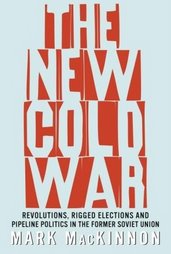
    No surprise here - you can argue (as I do in my book) that without international monitors from the OSCE and other organizations, the authorities in Georgia and Ukraine would have gotten away with their election tampering and there would have been no Rose or Orange Revolution.

    When Kremlin aide Sergei Yastrzhembsky says "we do not want to listen to any lectures," he's hinting at what everybody already knows will happen:

    1) there will be electoral manipulation (either through physical means at the ballot box, or through the use of "administrative resources" to tilt the playing field before voting day) to ensure that Putin and United Russia win by an acceptably large margin.

    2) the West, and more specifically monitors from the OSCE and other groups, will complain about it, providing fuel to those who are planning to take to the streets on and after election day.

    Election monitors provided a causus belli and the moral high ground to pro-Western demonstrators in Belgrade in 2000, Tbilisi in 2003 and Kiev in 2004. The Kremlin is doing everything it can to ensure that it doesn't happen in Moscow in 2007.

    Prepare the way for PM Yulia, Take 2: Ukraine's High Administrative Court has finally validated the results of the Sept. 30 election, meaning that an already negotiated power-sharing deal between on-again Orange Revolution allies Yulia Tymoshenko and President Viktor Yushchenko can finally kick in. Tymoshenko will be prime minister, while the cabinet posts will be split between her party and Yushchenko's Our Ukraine movement.

    When I interviewed The Braided One back in April at her Kiev office, I asked her why the Orange team deserved another chance after she and Yushchenko squandered the mandate the people gave them back in 2004, spending more time publicly dquabbling over the spoils of power than they did tackling the country's endemic problems. Yushchenko eventually fired her, setting the stage for Viktor Yanukovich's startling political comeback.

    Tymoshenko correctly predicted that the reformed Orange team would win the vote, and promised that the pro-Westerners had learned from their mistakes and deserved another chance to govern. "I firmly believe that ... these early elections will give us a new chance that we will not misuse or lose," she told me.

    I hope so.

    Alisher Saipov, 1981-2007: Another journalist brutally murdered, this time an Uzbek reporter who had recently founded a newspaper called Siyosat. The paper's name means "Politics" - a dangerous thing to report on in that part of the world. Saipov also reported for the Institute for War and Peace Reporting, as well as the Uzbek-language services of Voice of America and Radio Liberty.

    No question it was an assassination: he was shot three times as he walked the main street of Osh, in southern Kyrgzstan, on Wednesday night.

    Read the IWPR's tribute to Saipov here.

    Thursday, August 16, 2007

    Ukrainian déjà-vu


    Another Ukrainian election campaign, another farce.

    The Central Election Commission - perhaps Ukraine's least-respected institution after being caught aiding Viktor Yanukovich's attempted theft of the 2004 presidential elections - started the 2007 parliamentary campaign in ignominious style last week by refusing register candidates from Bloc Yulia Tymoshenko.

    Their reasoning was as scurrilous as anything offered up three years ago: Tymoshenko's slate of candidates, the CEC said, was illegitimate because while they had submitted the names of their home towns to the registrars, they hadn't given their actual street addresses. It somehow escaped the noble commission's attention that BYuT had registered its candidates the exact same way during last year's parliamentary elections and nobody saw a problem then.

    While the CEC yesterday backed down from its decision and registered BYuT - which polls suggest is the No. 1 contender to Yanukovich's front-running Party of Regions - the early chicanery doesn't exactly inspire hopes that this will be a free and fair election. Instead, it's looking more and more likely that the 2007 parliamentary elections will be a carbon copy of the 2004 presidential vote - a tooth-and-nails, anything-goes struggle for power between the Kremlin-backed Yanukovich and the Western-friendly team of Tymoshenko and President Viktor Yushchenko, whose Our Ukraine movement is currently running third.

    (A recent poll by the Socioizmerenie research centre suggested that the Party of Regions had 26.3 per cent of the vote, compared to 21.4 for BYut and 14.1 for Our Ukraine. The Communist Party, which usually lines up with the pro-Kremlin Yanukovich, trailed at 4.7 per cent.)

    As Nina Khrushcheva wrote in a column that appeared in Lebanon's Daily Star newspaper, we could be heading for an Orange Revolution re-run:

    By seeking to cling to power by hook or by crook, Yanukovich is likely to bring on the deluge. In Ukraine that means not only violent unrest, but economic decline and renewed repression. At the end of the day it could lead to the sort of huge street protests that marked the Orange Revolution, and their attempted violent suppression. Recent history is replete with alarming examples of dictators and would-be dictators who refuse to recognise when their time has run out.


    The truth is that both sides - the pro-Kremlin bloc and the off-again, on-again Yushchenko-Tymoshenko alliance - have the support of about 30 per cent of the public, which is the reason neither group has been able to vanquish the other during a decade of political quarrelling. The hundreds of millions of dollars spent by the Kremlin and the White House in recent years to promote their favoured candidates has done little to solve the perpetual gridlock.

    The elections, I'll be so bold as to predict now, won't be decided at the ballot box on Sept. 30, but in the streets of Kyiv in the days that follow.

    The people I truly feel sad for are the 40 per cent of Ukrainians who are caught in the middle, badly disillusioned with both sides and fed up with the disputed elections and street theatre that have kept the country captive almost since the day it won independence 16 years ago.

    But with Moscow and Washington now openly antagonistic towards each other, Ukraine looks doomed once more to serve as their battleground.

    Friday, April 6, 2007

    Yulia Tymoshenko interview


    Hi all - for anyone who missed it, I did an interview with opposition leader Yulia Tymoshenko for The Globe and Mail. You can read it here.

    Let me know what you think. In case it looks like we're taking sides, it should be noted that we also asked Viktor Yushchenko and Viktor Yanukovich for interviews, The Braided One was just the first to respond.