Twitter Updates

    follow me on Twitter
    Showing posts with label vladimir putin. Show all posts
    Showing posts with label vladimir putin. Show all posts

    Tuesday, November 15, 2011

    Vladimir Putin wins 2011 Confucius Peace Prize


    Beijing: Vladimir Putin, man of peace?

    Mr. Putin, the former and future President of Russia who is currently doing an internship as the country’s prime minister, has been called many things. Supporters have written pop songs about wanting “a man like Putin” in their lives, while his detractors think the precise opposite of the former KGB agent accused of demolishing Russian democracy and restoring parts of the old Soviet system.

    One imagines that even Vladimir Vladimirovich himself would have been surprised by Tuesday’s news that he had been named this year’s winner of something called the Confucius Peace Prize. Mr. Putin is, after all, a man who shot to power by crushing the Chechen separatist movement with brute military force, famously vowing to hunt down the “terrorists” behind a series of mysterious Moscow bombings and to kill them “in the outhouse” if necessary.

    Mr. Putin beat out a field that also included South African President Jacob Zuma, whom many see as tainted by allegations of rape and corruption, and Gyaltsen Norbu, the Tibetan whom Beijing controversially named the Panchen Lama after the 6-year-old boy identified by the Dalai Lama as the real 11th Panchen Lama disappeared in China in 1995. Other nominees reportedly included Bill Gates and Kofi Annan.

    The inaugural Confucius Peace Prize was awarded last year in response to the somewhat more reputable Nobel Peace Prize being given to Chinese dissident Liu Xiaobo, who is currently sitting in jail for his role in drafting a pro-democracy manifesto known as Charter 08.

    That first Confucius prize went to Lien Chan, a Taiwanese politician who said he’d never heard of the award, and who didn’t bother to pick it up. The prize – a glass statuette – was instead received at a Beijing ceremony by a baffled young girl (pictured) with no apparent connection to Mr. Lien.

    “China is a symbol of peace…. With over one billion people, it should have a greater voice on the issue of world peace,” the prize committee explained on its website at the time.

    Nobel Peace Prize host Norway, meanwhile, was dismissed as “only a small country with scarce land area and population” thereby unqualified “to represent the viewpoint of most people.”

    This year’s prize will be again handed out on Dec. 9, one day before the Nobel Peace Prize ceremony in Oslo.

    The award has evidently embarrassed China’s Ministry of Culture, which once backed the Confucius Prize, but earlier this year disavowed it and set out to establish its own Confucius World Peace Prize. That trophy is also scheduled to be handed out on Dec. 9, though a winner has yet to be named.

    The announcement of Mr. Putin’s award was only briefly available on Chinese news websites Tuesday before those webpages disappeared. The choice was considered a jaw-dropping one by those who saw the news before it was censored.

    “This prize is insulting to Confucius,” was one commonly expressed sentiment on the popular sina.com web portal, where the news was briefly available.

    “If it goes on for another two years, Ahmadinejad will be the next winner, and then will be [Hugo] Chavez and Kim II [Kim Jong-il]. What a pity that Gaddafi died too early, otherwise he would have had a turn too,” wrote another commentator.

    Gaddafi may indeed have had a chance. One of the reasons the Hong Kong-based China International Peace Research Centre said it chose Mr. Putin was his push to prevent NATO from intervening in Libya’s civil war. Though Russia decided against using its United Nations Security Council veto to prevent military action – and Moscow later switched its support to the rebels when it became clear that Gaddafi’s regime was nearing an end – Mr. Putin’s efforts were deemed “outstanding in keeping world peace.”

    Meanwhile, Liu Xiaobo remains in a prison in northeast China. He has another nine years to go on his sentence.

    Sunday, September 25, 2011

    Democracy, managed

    (My article below is now online - with a vibrant comments section - at The Globe and Mail)

    Saturday afternoon, at a political rally in Moscow's Luzhniki Sports Palace, Russia's two-decade experiment with democracy came to an end. A different, more authoritarian, system with only a mirage of choice, is now firmly in place.

    Russia's new political model is often called Putinism, after the man who built it and who will soon return as its unequivocal head. Elections are still to be held, and Putinism is far freer in most aspects than the totalitarianism that Russians lived under for most of the Soviet era. But it is a one-man show, completely dominated by Vladimir Putin, the man who served as Russia's president from 2000 to 2008, and who is now primed to return to the Kremlin after a token four years as prime minister.

    Dmitry Medvedev, a longtime Putin aide who was drafted into the presidency in 2008 (when Mr. Putin stepped aside in deference to an annoying clause in the post-Soviet constitution that limits presidents to a maximum of two consecutive terms) told a gathering of the dominant United Russia party on Saturday that Mr. Putin should be their nominee in the presidential election scheduled for next March.

    "I think it would be correct for the congress to support the candidacy of the party chairman, Vladimir Putin, to the post of president of the country," a stoic Mr. Medvedev said. Mr. Putin quickly accepted, and said it would be "a great honour" to take his old job back.

    The announcement brought an end to hopes that Mr. Medvedev, who had shown a slightly more liberal side than Mr. Putin and who had occasionally flashed a willingness to challenge his former boss, would stand against Mr. Putin next spring and give Russians a real choice. In recent months, Mr. Medvedev and Mr. Putin had both fed speculation about a head-to-head race by refusing to answer questions about which of them would run for the presidency.

    Instead, Mr. Medvedev - at Mr. Putin's suggestion - agreed to lead United Russia into December's parliamentary election, putting him on track to switch jobs with Mr. Putin and become prime minister. Mr. Putin told the party congress that the decision had been made "a long time ago, several years back."

    The game of musical chairs will only affirm what most Russians believed about Medvedev's time in the Kremlin: the real power remained with Mr. Putin throughout, even while in the nominal No. 2 job.

    (A key part of Mr. Medvedev's legacy is a constitutional change extending presidential terms from four to six years, starting with the 2012 election. The change makes it possible for Mr. Putin, 58, to remain Russia's president until he's 70.)

    Other parties will contest the Duma elections in December and the Kremlin will ensure that other candidates will be found to run against Mr. Putin in the spring. The appearance of choice is an important facet of Putinism, or "managed democracy," as the system's creators prefer to call it.

    But those other parties and candidates will face a host of obstacles - ranging from the Kremlin's near-complete control of the media to physical intimidation and ballot-stuffing - that will make an electoral upset close to impossible. As the cases of Mikhail Khodorkovsky, the former oligarch now serving his seventh year in a Siberian prison, and Anna Politkovskaya, the Kremlin critic who was murdered for her investigative journalism in 2006, have made all too clear, there's no tolerance for genuine threats to the system.

    Ten days ago, billionaire Mikhail Prokhorov - one of the last figures who could have made Russia's election season somewhat interesting - bowed out in disgust, withdrawing as a candidate for a Kremlin-backed opposition group (another unique feature of Putinism). "We have a puppeteer in the country, who long ago privatized the political system," Mr. Prokhorov said, in remarks taken to refer to Vladislav Surkov, a political strategist who remained a key figure in both the Putin and Medvedev presidencies.

    Few Russians seem to mind. Aided by national media he hammered into submission after coming to office, Mr. Putin - who has been shown on state television fighting forest fires, tracking tigers and flying fighter jets - is easily the country's most popular politician, credited with stabilizing the country's economy (which remains heavily reliant on energy exports) and restoring its international prestige, in part via the 2008 war against neighbouring Georgia, a former vassal.

    Western-style democracy, which the country briefly experienced in the 1990s, when Boris Yeltsin was president, is associated with corruption, lawlessness and economic collapse.

    The man who oversaw the end of the Soviet Union has warned that Russia is headed for disaster if Mr. Putin and his coterie insisted on clinging to power.

    "The unwillingness to start reform or the desire to have partial change is often explained by the fear of losing power and the desire to prevent a new collapse of Russia," Mikhail Gorbachev wrote in an article carried this week by two Russian newspapers. "But it is the very absence of change which threatens to provoke instability and put the future of the country in question."

    Thursday, May 8, 2008

    Dima and Volodya look East


    Amidst all the commentary about the inauguration of President Dmitriy Medvedev and his boss/subordinate Prime Minister (as of a few minutes ago) Vladimir Putin, the bit that struck me as most interesting was President Dima's announcement that he would head east on his first foreign trip, to Kazakhstan and China.

    It makes sense. Arguably no country has closer ties with the Kremlin than Nursultan Nazarbayev's Kazakhstan, something that was plain to all of us who took part in the Eurasian Media Forum in Almaty last month - where the few Westerners in the room were repeatedly scolded by a crowd that clearly shared the Kremlin's worldview. Meanwhile, Russia and China have rapidly expanding trade, and last year conducted a large-scale joint military operation. The Shanghai Cooperation Organization looks increasingly like it could be the authoritarian east's military answer to NATO.

    There are few places where President Dima would get a warmer reception than Astana and Beijing.

    Still, it's worth recalling here that eight years ago, the newly inaugurated and "westward-looking" President Putin chose the United Kingdom for his first trip (after a brief and telling stop in Belarus). Back then, he was accorded the red-carpet treatment by someone named Tony Blair, and was famously received by Queen Elizabeth II.

    Eight years on, the dream of Russia joining the West appears dead - buried by Chechnya, NATO expansion, Kosovo, colour revolutions, missile defense and the Alexander Litvinenko saga.

    So Dima and Volodya are looking the other way for friends.

    Wednesday, April 23, 2008

    Why the Kremlin is pulling for Hillary


    Who do Russians want to see in the White House? What do the looming changes in leadership, both in Moscow and Washington, likely mean for the increasingly confrontational relatioship between the Kremlin and the West?

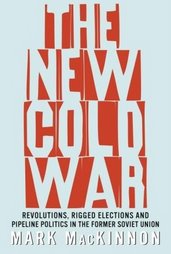
    Both questions were put to me by an astute and concerned audience in London this week who came out to hear me chat about The New Cold War during a pleasant night at The Gallery in Farringdon. Both issues will again be hotly debated at the Eurasian Media Forum, which begins tomorrow here in Almaty, Kazakhstan.

    The short answer to the first question is that none of the remaining U.S. presidential contenders are particularly palatable to the Kremlin.

    Broadly speaking, most Russians would prefer to see a Democrat in the White House. But neither Hillary Clinton nor Barrack Obama comes without baggage on the Russia front.

    Clinton, who would likely win the Russia primary if the world were given a chance to vote, reminds Russians, of course, of her husband Bill's era. While Mr. Clinton was personally popular - his extramarital shenanigans played much better in laissez-faire Russia than they did back home - Russians also harbour resentment at him for the way he ignored Moscow's concerns during the last Kosovo crisis and the 1999 bombing campaign against Serbia.

    Ms. Clinton also embarrassed herself when she tried, and failed, repeatedly to remember the name of Russia's president-elect ("Meh, uh, Medevedeva - whatever"). Like presumptive Republican nominee John McCain, Clinton has dismissed Medvedev on the campaign trail as a Putin puppet and been harsh in her condemnation of Russia's sitting president, saying that as a KGB agent, Putin "by definition he doesn’t have a soul."

    Harsh words that will hardly serve to defrost relations if Clinton suprises pundits and manages to win the presidency. But to the Kremlin, she's someone they feel they know and understand - thereby easier to deal with than either Barrack Obama or John McCain.

    It's not just the Kremlin - an opinion poll conducted in February by the All-Russian Public Opinion Research Center (better known by its Russian acronym, VTsIOM) found that if they were given a chance to vote in the Democratic primary, Russians would choose Clinton over Obama by a nearly five-to-one margin.

    Part of that, sadly, can likely be chalked up to rampant racism in Russian society. Very few Russians could fathom a chorniy, a black, being the most powerful person on the planet.

    Obama has actually said little about what his Russia policy might be, but we can draw conclusions from the company he's decided to keep. His top Russia advisor is Michael McFaul, a respected Stanford University academic and a harsh critic of both Vladimir Putin and the system of "managed democracy" the Kremlin has installed over the past eight years.

    On the other hand, he's called for Russia to be included in NATO as a way of resolving trans-Atlantic tension. On that point, I think he's ahead of his time.

    More ominous, to many Russians, is the presence of Zbigniew Brzezinski, Jimmy Carter's former National Security Advisor, on Obama's foreign policy team. Brzezinski is an Old Cold Warrior who was among the first to call for the West to confront Putin. He also played a key role in both promoting the Baku-Tbilisi-Ceyhan pipeline (which expensively serves the sole purpose of getting Caspian Sea crude to markets in the West without ever crossing Russian soil) and in rallying diplomatic support for Ukraine's pro-Western Orange Revolution in 2004.

    But even the presence of Brzezinski doesn't mean Obama will necessarily abandon his pledge to be a less confrontational U.S. president than the outgoing George W. Bush. In fact, both Democrats have made clear that they favour diplomacy over confrontation when it comes to Russia.

    John McCain promises to take the opposite tack. In fact, he's frequently been critical of the Bush Administration for being too soft on Russia.

    “I looked into Putin’s eyes, and I saw three things, a “K’ a “G’ and a “B,’” is a line McCain has pulled out more than once during his push for the presidency. It's a pointed jab at Bush's palsy relationship with Putin, and Bush's famous remark after his first meeting with the Russian leader that after looking in Putin's eyes he "got a sense of his soul."

    While in the Senate, McCain was the most outspoken U.S. politician in calling for the West to confront Putin and Putinism. He also headed the USAid-funded International Republican Institute at a time when it played a key background role supporting both the 2003 Rose Revolution in Georgia and Ukraine's popular uprising a year later. (That's him in the picture with buddy Joe Lieberman sporting orange scarves during the Orange Revolution. Hillary seems to have forgotten hers. At least she's not wearing blue...)

    McCain, who has called for Russia to be expelled from the G-8, was charateristically harsh after Medvedev handily won the March 2 presidential elections:

    "In an election that was uncontested, where opposition candidates were either suppressed or arrested, where the result was foreordained by the manipulations of a corrupt and undemocratic regime, the one thing that was never in doubt was the result. It is a tragedy of history that at this moment, when the democratic tide has reached more nations than ever before, the Russian people be again deprived of the opportunity to choose their leaders in a free and open contest," McCain said in the statement.

    "It is obviously an election that did not pass the smell test … These elections were clearly rigged."


    Can't argue with much of that. But you have to wonder how that first McCain-Medvedev summit would go. The Moscow News suggests that a McCain presidency would mean "the end of U.S.-Russian diplomatic niceties."

    (As an aside, McCain's speechwriter is Robert Kagan, one of the architects of the argument for invading Iraq. How do these people manage to stick around after being so monumentally, disastrously, wrong?)

    So the Kremlin, if it had a ballot, would vote for Hillary, and would take Obama over McCain.

    The other side of the equation, of course, is Medvedev. What kind of president would he be, and how might he alter the course of Russian-American relations?

    Analyst Andrei Piontkovsky, who I have a lot of respect for, believes that the fact Medvedev was chosen to succeed Putin over the more hawkish Sergei Ivanov, means that "we have reached the end of the latest negative confrontational cycle."

    I'm less sure. It seems to me that Putin - who in addition to becoming Medvedev's prime minister has "agreed" to take over the leadership of the United Russia party - has now made it abundantly clear that he will remain the real authority. Medvedev's reported pro-Western bent will mean nothing if Putin and the siloviki are maintaining control of foreign and defense policy as the Vedomosti newspaper recently speculated.

    Gleb Pavlovsky, who as one of the architects of managed democracy is in a position to know, suggested that the new Russian power system will be a trifecta of the presidency, the parliament and the cabinet of ministers. I don't think it escaped him that Putin controls two of those three power centres to Medvedev's one.

    So the odds are that, no matter who wins the White House, we'll see the same escalating confrontationalism that has marked the past eight years.

    Incidentally, I'm sharing the stage with both Brzezinski and Pavlovsky tomorrow morning at the Eurasian Media Forum. I'll let you know if I get a word in edgewise...

    Friday, February 29, 2008

    The elusive 72 per cent


    Stop the presses! The Guardian is reporting the shocking news that the Kremlin is planning to tamper with the results of Sunday's election.

    The Guardian (Tom Parfitt, one of the story's authors, is a friend and a hell of a reporter) quotes election officials around the country who say they've been told that they need to deliver anywhere from 65 per cent to 88 per cent of the vote to Dmitriy Medvedev, with the overall national figure landing somewhere around 72 per cent for Vladimir Putin's sidekick.

    For months, ever since Putin announced that he was backing his long-time aide Medvedev to succeed him, the only question about the election was how big a margin President Medvedev would win by. Now we know.

    Bizarrely, the target is exactly the same as the one the Kremlin set in 2004. After Vladimir Vladimirovich won a second term with a resounding 71.3 per cent of the vote, several of his spin doctors confirmed to me that the 72 per cent had been the officially mandated target (tsk-tsk to those who let down the nation by failing to deliver the additional 0.7 per cent).

    Why? Because it was a wide enough win to make clear to the Kremlin's enemies at home and abroad that Putin was a juggernaut: 72 per cent made it clear that Putin embodied the will of the nation, and those who opposed him were unpatriotic. The lunatic fringe.

    But quietly conscious of criticisms that Russia was sliding away from democracy, the puppet masters (Gleb Pavlovsky, Marat Gelman, Vyacheslav Nikonov, Sergei Markov et al) determined that a higher figure - Putin had been flirting with 80 per cent in some pre-election polls - would seem improbable.

    To their minds, 72 per cent would show the world that a real vote had taken place, and the Kremlin's man had defeated his weak and divided opponents. Eighty per cent smacked of the bad old days where there was only one name on the ballot.

    I'm impressed the Kremlin is still working this hard to try and pretend that democracy is alive and well in its realm.

    My question is, what happens if Medvedev does reach 72 per cent, or (gasp!) 71.4? Does that mean he's more popular than aspiring Prime Minister Putin? Is that allowed?

    A nation holds its breath.

    Thursday, December 20, 2007

    Person of the Year?


    So the illustrious Time Magazine has named Vladimir Putin its Person of the Year, adding him to a list of winners that includes a few people he admires (his role model, Yuri Andropov, shared the title with Ronald Reagan in 1983), a few people Putin has never quite seen eye-to-eye with (George W. Bush and Lech Walesa, to name a couple) and, well, me.

    Does he deserve the prize? As Time notes in its explanation, the honour is not a popularity contest, nor an endorsement. Here's the offered explanation:

    At its best, it is a clear-eyed recognition of the world as it is and of the most powerful individuals and forces shaping that world—for better or for worse. It is ultimately about leadership — bold, earth-changing leadership. Putin is not a boy scout. He is not a democrat in any way that the West would define it. He is not a paragon of free speech. He stands, above all, for stability — stability before freedom, stability before choice, stability in a country that has hardly seen it for a hundred years. Whether he becomes more like the man for whom his grandfather prepared blinis (Stalin) — who himself was twice TIME's Person of the Year — or like Peter the Great, the historical figure he most admires; whether he proves to be a reformer or an autocrat who takes Russia back to an era of repression — this we will know only over the next decade. At significant cost to the principles and ideas that free nations prize, he has performed an extraordinary feat of leadership in imposing stability on a nation that has rarely known it and brought Russia back to the table of world power.


    Putting judgements aside, as Time has, it's hard to argue that Putin hasn't transformed Russia in a very short period of time. Eight years ago, he inherited a nearly failed state and now Russia, while it still has dangerous internal problems, is a force to be reckoned with on the international stage again.

    A test of Putin and the new Russia looms next in Kosovo, where Serbs are looking to Putin as the only person willing to stand up for them as the West throws its weight behind the Kosovar Albanian leadership as it moves towards declaring full independence. More on that later...

    Tuesday, December 18, 2007

    A tale of two prime ministers

    It's fitting that Yulia Tymoshenko should finally become prime minister of Ukraine one day after Vladimir Putin declared he would be Russia's prime minister under a President Dmitry Medvedev.

    Both have been prime minister before, Tymoshenko for a short and tumultuous period in 2005 before she was fired by President Viktor Yushchenko, Putin for a controversial six months in 1999 before Boris Yeltsin stepped aside to hand him the presidency. They have open distaste for each other stemming from the long and ongoing Russia-versus-the West struggle for Ukraine's soul, in which Tymoshenko has played (at least in the Western media) Princess Leia to Putin's Darth Vader.

    The way the two old foes were named to the PM's chair this time around says much about the comparative state of democracy in their respective countries today.

    For all Ukraine's instability, Tymoshenko's dramatic return to power - establishing herself as a third power centre beyond both President Yushchenko and his rival Viktor Yanukovich - shows how vibrant and pluralistic Ukraine's political scene now is. Yes, all of the main parties are tinged with corruption and are too close to big business, but Tymoshenko's election victory two months ago stands as proof that no politician can rule Ukraine without the consent of the people.

    More good news: even though her party emerged as the de facto winner of the Sept. 30 elections, Tymoshenko only became prime minister after a long process of bartering and coalition-making. No one force can dominate Ukraine on its own anymore, as Leonid Kuchma and his allies did until the 2004 Orange Revolution.

    None of the above can be said about Russia. Vladimir Putin stands alone in Russia as the sole centre of power. If he says the unheralded Dmirty Medvedev shall be president, then Mr. Medvedev it will be. If Putin says he wants to be PM, only a fool would bet against him achieving that aim.

    As I have frequently pointed out in the past, Putin does all this largely with the consent of the Russian people. But that doesn't make it any more democratic. The institutions needed to make and keep Russia great - a free media, serious opposition and a real parliament - have been systematically eliminated during his eight years in power. For all its oil-fuelled economic growth and new swagger on the international stage, the country is inherently weaker as a result.

    Today may look like a triumph for Putin and Putinism. But one day, when he's gone, Russians will come to rue the system they watched him build.

    In the meantime, at least future summits between the Russian and Ukrainian prime ministers will have a touch of drama to them.

    Monday, December 10, 2007

    President Dmitry Medvedev


    So now we know. It will be Dmitry Medvedev, not Sergei Ivanov (and not Vladimir Putin) who succeeds Vladimir Putin. Putin, it's just been announced, "fully supports" Medvedev's candidacy to replace him when he leaves office after his second term expires in the spring.

    So all hail President Dmitry. There is, of course, the small matter of elections to be sorted out, but you can be sure that the Kremlin - unless this decision creates a major rift behind the red walls - will make sure Putin's man is elected. The liberal opposition is self-destructing anyway, choosing not one, but three candidates to run for the presidency in April.

    So what can be deduced from this, in these first minutes after Putin's announcement? To me, it says that Putin, instead of choosing someone else from inside the siloviki, the cadre of security service veterans who run the country, has chosen someone personally loyal to him. Medvedev is not a chekist (ex-KGB agent) like Putin and Ivanov, he's a Putinist.

    Medvedev has been at Putin's side since the early 1990s, when Putin was chief of staff to St. Petersburg mayor Anatoliy Sobchak and Medvedev was a foreign affairs advisor.

    As Putin rose to power, Medvedev followed. First he was chief of staff to Putin after he was appointed prime minister in 1999 by Boris Yeltsin. Then he ran Putin's 2000 presidential election campaign and afterwards became deputy chief of staff to President Vladimir. Next he was installed as chairman of the board at Gazprom, the giant gas company that Putin has turned into the Kremlin's most effective foreign policy tool.

    When Alexander Voloshin quit as Putin's chief of staff over the sordid Mikhail Khodorkovsky affair in 2003, Medvedev was brought in to replace him and get the Kremlin back on course. Two years ago, in the first hint that this moment might eventually come, he was made First Deputy Prime Minister (along with Ivanov).

    What does all this mean? Two things.

    The first is relations between Russia and the West may yet recover some. The 42-year-old Medvedev is seen as more liberal and pro-Western than the hardline Ivanov. Ivanov was the tough guy you always saw in military fatigues noddling gravely at the testing of new Russian military hardware. Medvedev was the mild-mannered man in the suit that you rarely saw at all until he was made deputy PM in an effort to build up his public persona (although he was theoretically also the guy who made the decision to turn off Gazprom's taps to Ukraine and Belarus when those countries bucked the Kremlin's will...).

    The second is that real power will remain in the hands of our old friend, Vladimir Vladimirovich. Putin's choice was between a man unquestionably loyal to him (Medvedev) and a man unquestionably loyal to the system (Ivanov). He chose the former.

    Medvedev owes Putin everything. If Putin asks him to do something - to make him prime minister, or even to relinquish the presidency because Vladimir Vladimirovich misses the comforts of the Kremlin - he'll do it.

    Monday, December 3, 2007

    Russia chooses authoritarianism


    It was, as Vladimir Putin has proclaimed the morning after, a "doubtless success." According to official results, his United Russia party won upwards of 64 per cent of the vote in yesterday's Duma elections. According to Vladimir Vladimirovich himself, that translates into 315 of the 450 seats in parliament.

    That two-thirds majority in the Duma allows Putin and his acolytes to alter the constitution. They can abolish term limits so that Putin can run again in the presidential vote this spring. They can rename the country Putinistan.

    There's no question now that Vladimir Putin will continue to dominate the Russian political scene after his term ends next year. If he doesn't find a way to retain the presidency (and I remain convinced that he will), he'll be the most powerful prime minister Russians have had since the post was created. If he's neither president nor PM, he'll be the man who yanks the strings on both.

    It all seems so anti-democratic. And yet, yesterday's election results - and the passivity with which Russians went to the ballot boxes to lend their endorsement to what's going on - reminds us again that Putin has done all this with the consent of the vast majority of Russia's 142 million citizens.

    Never mind the weak protests from the OSCE and American-backed NGOs like Golos. The West can kick and scream all it wants (with justification) about media manipulation and suppression of dissent under Putin. But take a drive 100 kilometres outside of Moscow - or better yet, fly to any city east of the Ural Mountains - and you'll see that the liberal elite whose rights we're so concerned with don't represent more than a tiny minority of Russians.

    The masses voted for Putin yesterday - and will again if he finds a way to run for president - because their lives are far better now than they were under the Western-sponsored "freedom" and "democracy" of the Boris Yeltsin years. They, like the country, are back on their feet again economically after the economic chaos of the 1990s, and they give Putin nearly all the credit for the turnaround.

    (A recent Kommersant examination of the Putin era found that "the country’s history has hardly seen another period when the prosperity of the population improved at such a fast rate." The newspaper reported that Russians' real incomes had grown from 6,087 rubles a year in 2000, the year he took office, to 11,425 in 2006.)

    That Putin could preside over eight years that included the Kursk submarine disaster, the Nord-Ost theatre siege debacle and the Beslan school massacre and still be seen as a "stability" president speaks to how disastrous the Yeltsin years - and Western policy towards Russia immediately after the end of the Cold War - really were.

    Much has been made of the Kremlin's near-complete control over the airwaves, and rightly so. The fact that most of the country gets little news beyond what they see on state-controlled television has definitely warped the Russian political map in Putin's favour. But whenever I travelled in Siberia and suggested as much to the reputedly brainwashed people who lived in the Russian heartland, they'd scoff indignantly. They're not stupid, was the reply. After decades of living in the Soviet Union, they know when they're being told the truth and when they're not. Better than any Westerner, they can spot propaganda when they see it.

    My argument here is not that the elections were "free and fair." I've written just last week about what a fraudulent process this election is. No one can or should believe that 99 per cent of Chechens voted for United Russia, as Ramzan Kadyrov and his thugocrats are claiming.

    What I'm saying is that Russians aren't fooled as easily as many seem to think. Rather than rising up and demanding better, they went to the polls yesterday and cast their ballots. By doing so, whether they voted for United Russia or not, they tacitly backed what Putin's been doing, and whatever he'll do next.

    Yes, there were instances of intimidation, but so far such reports are few and far between. With far more thought and experience than most outsiders give them credit for, the majority of Russians have chosen resoundingly chosen to back Putin's vision for their country's course.

    They've chosen security and oil-fuelled economic growth over freedom and democracy. Likewise, they've backed an independent, often anti-Western course on the international scene rather than bowing to Washington's leadership.

    A day after Putin's "doubtless success," it's time the West accepted that, together with all its many implications.

    (For more on this theme, Mikhail Gorbachev, in a fascinating interview with the Wall Street Journal, said he supports Putin and the "transitional democracy" he believes Putin is creating. Gorbachev also claims Dick Cheney once admitted to him that the West wanted to keep Russia on his knees. For those without a WSJ account, lawyer-blogger Robert Amsterdam has posted a full transcript here.)

    Monday, November 26, 2007

    Master and Margarita elections, part two


    This is Behemoth, or at least an unknown artist's conception of the fast-talking, hell-raising black cat who was the hero (at least in my reading) of Mikhail Bulgakov's classic novel The Master and Margarita.

    The book revolves a visit by the devil himself (in the company of his nefarious furry friend) to officially atheist Soviet Russia. Following his arrival, a Moscow that doesn't believe in the devil's existence rapidly descends into surrealist chaos, a place where Satan wows the crowd with magic shows and naked witches fly over the city.

    Marat Gelman, the spin doctor who was involved in both bringing Vladimir Putin to power and making sure he stayed there, once told me that the 2003 Duma elections that marked the rise of United Russia and the 2004 presidential campaign that secured Putin's second term were, in his mind, Russia's "Master and Margarita elections."

    Gelman called them that because he understood well the kind of system he had helped to create. He had been personally responsible for shaping the message on state-run television - hailing Putin and United Russia while either ignoring the oppoistion completely or portraying them as dangerous extremists - and knew the goal was never to test the public's support for what was going on.

    Putin was always going to win a landslide with something close to 70 per cent support, not too much more but certainly nothing less (he ended up with 71.3 per cent). United Russia was going to emerge as the first party to completely dominate the country since the Communist Party of the Soviet Union.

    In the system Gelman and his colleagues would come to call "managed democracy," there would be elections every four years, but no real chance that anyone but a Kremlin-appointed candidate could win. The appearance of choice, but no one to choose between.

    "After the elections, our politicians stopped being able to influence anything. There remained only one politician in the country - Putin," Gelman told me when I visited him afterwards at the art gallery he runs in Moscow's trendy Zamoskvareche neighbourhood. The elections, he said, marked "the end of politics" in post-Soviet Russia.

    But shortly afterwards, even Gelman and his colleagues started to question the stability of the system they had helped to build. The Orange Revolution in neighbouring Ukraine jolted that country out of its semi-authoritarian stupor, and many were wondering whether the same thing couldn't happen in Russia itself.

    The "democracy promoters" funded by the U.S. State Department began to investigate the possibility, and opposition leaders like Boris Nemtsov and Garry Kasparov began investing their hopes in the idea that the wave of pro-Western uprisings that had washed over Belgrade, Kiev and Tbilisi in recent years could eventually hit Red Square too.

    But the three years since the Orange Revolution have given the Kremlin plenty of time to prepare. First we saw the rise of groups like Nashi and now Zaputina, which serve the purpose of imitating and confronting the pro-Western civil society that was so critical to mobilizing popular opinion in Serbia, Georgia and Ukraine.

    More dangerously, we've seen the complete suppression of the media and nearly all dissent, as evidenced again by the heavy handed police response to this weekend's marches by The Other Russia opposition movement.

    I used to argue with my friends over whether the revolutions in Georgia and Ukraine were good news for Russia's democrats. They believed in the "wave of freedom" theory, and thought Russia too would eventually be hit by it.

    Perhaps. But my fear was always that the pro-American non-government organizations who helped fund and fuel those uprisings were so partisan in their behaviour (it's a "free and fair election" if Washington's candidate wins, a disturbing backslide on the country's commitment to democracy if they don't) that the response in Russia and other post-Soviet countries that were already tipping towards authoritarianism would be to tighten the screws on the things that made the "colour revolutions" possible - namely free media and civil society.

    In 2003, with the exception of the Baltic States, Eduard Shevardnadze's Georgia and Leonid Kuchma's Ukraine were the freest and most open of the states that emerged from the collapse of the USSR. By using the political space that Shevardnadze and Kuchma gave to their opponents and critics to push for rapid radical upheavals, the revolution-makers scared the bejesus out of the authorities in other former Soviet republics.

    The lesson people like Belarus's Alexander Lukashenko and Uzbekistan's Islam Karimov took away from the Rose and Orange revolutions was that Shevardnadze and Kuchma had spent too much time worrying about where they ranked on the Freedom House list, and it had cost them control of their countries. Better to crack down fast and hard, take the international tsk-tsking that comes with a "not free" rating from Washington, and keep your job and all the loot that comes with it.

    Putin, it's now very clear, has drawn the same conclusion. Who cares what the Organization for Security and Co-operation in Europe election monitors have to say? They're all tools of the State Department, after all. The opposition? They're all dangerous thugs who belong in jail. The media? Some die, some live. It's really not worth investigating why that is.

    So here comes another round of elections without a choice. Behemoth walks the streets of Moscow again.

    Thursday, November 22, 2007

    The cult of personality, evolving


    Yesterday's "Za Putina" (For Putin) rally at Luzhniki Stadium was disturbing to watch.

    On one level, it was little different than an American political rally - all banner waving and adulation for the leader. Except the man they were saluting wasn't some new candidate on the rise, but an outgoing president at the end of his constitutionally mandated eight years in office.

    What was most remarkable (other than Putin's attacks on the opposition as "jackals" who beg for money at foreign embassies and desperately want to keep Russia weak) was that this was Putin, actually campaigning.

    He spurned such rallies during both the 2000 and 2004 presidential elections, arguing he was too busy handling the affairs of the nation for such silliness. It was an effective tactic that was aided in large part by the Kremlin's control over the media, which reported on his every move so fawningly that he didn't need to stoop to debates and campaign speeches.

    So - and I keep coming back to this - why is he doing this now? Because he's concerned that United Russia might not cross the 70 per cent barrier in the Duma elections? (The latest poll from VTsIOM has them at 63.8 per cent, with the Communists the only other party to cross, barely, the 7 per cent barrier needed to win seats in parliament.)

    Unlikely. This is still about the presidency and creating the impression that the people are wild about Putin (sadly true) and don't want to see him go. Having him as prime minister won't satiate these Putinmaniacs. They want him, need him as the country's uncontested leader.

    Putting aside the niceties of the constitution, how can Vladimir Vladimirovich not answer such rabid public demand? My feeling is that the Kremlin is creating a scenario where he'll seem to have no choice but to give the public what they want. I think Putin's time out of the Kremlin will be measured in days, not years.

    As Vladimir Vladimirovich himself obliquely told the crowd at Luzhniki: "If there is a victory in December (the Duma elections), then there will be a victory next March (the presidential vote) as well."

    If you want to read more about the rally yesterday, check out Andrey Kolesnikov's coverage in Kommersant. It's laugh-out-loud, sigh-in-despair brilliant.

    (There. Since I've linked to Kommersant, I can justify swiping the photo above... gotta love leopard print.)

    Sunday, November 18, 2007

    Could Putin run for a third term after all?

    Why, suddenly, are so many people talking (again) about the possibility of Vladimir Putin seeking a third term as Russian president?

    The idea - which many thought had gone away when Vladimir Vladimirovich started mumbling about how neat he thought the prime minister's job would be - has shot back to the forefront in recent days after Alexander Shokhin, the head of the powerful Russian Union of Industrialists and Entrepreneurs, told Itogi magazine that it was "quite possible" for Putin to legally run for a third term, despite an apparent constitutional ban on him doing so.

    The plan, which was later expanded on in the Nezavisimaya Gazeta newspaper (the Jamestown Foundation has an analysis here), would see Putin run at the head of the United Russia ticket in next month's Duma elections, then resign from the Kremlin to assume his seat in parliament. An interim president would be appointed and, since Putin would no longer be seeking a third "consecutive" term, Vladimir Vladimirovich would be free to run for his old job in the March 2 presidential vote after just a couple of months out of office.

    Could Putin be this cynical? I was actually somewhat relieved when he started talking about the PM's job, since it at least preserved the idea that the constitution should mean something in the Russian Federation, even if it currently does not. At the very least, there would be the faint possibility that the next president might occasionally disagree with PM Putin, ensuring he alone wouldn't completely dominate the political scene.

    Abusing a consitutional loophole to run for a third term - a blatant bending of the state's basic law by the president - would make it clear that concepts such as the rule of law and democracy now mean absolutely nothing in modern Russia. It's a short walk from democracy to autocracy, an even shorter one from there to outright dictatorship.

    Any hope that the Russian people will oppose this in large numbers is rapidly fading. A group calling itself simply "Pro-Putin" claims to have collected 30 million signatures urging VVP to stay on. That seems inflated, but there's a definitely an effort foot to at least create the perception of public support for the initiative. The zaputina ("For Putin") website has collected upwards of 63,000 signatures calling for their beloved president to stay on.

    No wonder the Organization for Security and Cooperation in Europe has withdrawn its monitoring mission for the Duma elections. It's becoming quite clear that there's going to be nothing like a real election to observe.

    Friday, October 26, 2007

    Reflections from a land (almost) without wireless

    I've been unable to blog for almost two weeks now, hit by the double-whammy of being busy reporting on the crisis along the Iraq-Turkey border (as always, you can find my latest reports at The Globe and Mail website) and the fact that Turkey's telecommunications sector has gone on strike, making Internet access scarce in some of the places I've been the last little while.

    To catch up quickly, short notes on a few things that caught my eye this week:

    New rhetorical heights: Putin is banging the drum lounder than ever today, warning the United States (and Poland and the Czech Republic) against the planned missile defense system for Europe. This time he's comparing the situation to the Cuban Missile Crisis that almost started a nuclear war between the U.S. and the USSR back in 1962. "I would remind you how relations were developing in an analogous situation in the middle of the 1960s," Putin said in a press conference at the end of today's Russia-EU summit. "Analogous actions by the Soviet Union when it deployed rockets on Cuba provoked the Cuban missile crisis.... For us, technologically, the situation is very similar."

    An overstatement, perhaps, given that the Soviet Union was deploying offensive weapons in the Carribean back in 1962, while the White House is contemplating a defensive shield today. But Putin's point is valid: George W. Bush's provocative plan to set up a missile defense network in in Eastern Europe, like Nikita Khrushchev's decision to sneak missiles into Cuba, would have the effect of changing the nuclear balance-of-power. Russia, as Putin has repeatedly made clear, would have to do something to counter that, likely by restarting the Cold War arms race and developing new missiles and warheads that could overwhelm any system the U.S. builds.

    Does the world need this? Given that any Iranian nuclear threat is still theoretical at this stage, why is Bush so determined to go ahead with the shield plan when it delivers few strategic benefits and is so provocative to the Kremlin?

    If a vote is cast in Siberia and nobody monitors it, is anybody elected? The Moscow Times has an interesting front-page report today on the troubles international election monitors are facing getting registered ahead of the looming Duma elections.

    No surprise here - you can argue (as I do in my book) that without international monitors from the OSCE and other organizations, the authorities in Georgia and Ukraine would have gotten away with their election tampering and there would have been no Rose or Orange Revolution.

    When Kremlin aide Sergei Yastrzhembsky says "we do not want to listen to any lectures," he's hinting at what everybody already knows will happen:

    1) there will be electoral manipulation (either through physical means at the ballot box, or through the use of "administrative resources" to tilt the playing field before voting day) to ensure that Putin and United Russia win by an acceptably large margin.

    2) the West, and more specifically monitors from the OSCE and other groups, will complain about it, providing fuel to those who are planning to take to the streets on and after election day.

    Election monitors provided a causus belli and the moral high ground to pro-Western demonstrators in Belgrade in 2000, Tbilisi in 2003 and Kiev in 2004. The Kremlin is doing everything it can to ensure that it doesn't happen in Moscow in 2007.

    Prepare the way for PM Yulia, Take 2: Ukraine's High Administrative Court has finally validated the results of the Sept. 30 election, meaning that an already negotiated power-sharing deal between on-again Orange Revolution allies Yulia Tymoshenko and President Viktor Yushchenko can finally kick in. Tymoshenko will be prime minister, while the cabinet posts will be split between her party and Yushchenko's Our Ukraine movement.

    When I interviewed The Braided One back in April at her Kiev office, I asked her why the Orange team deserved another chance after she and Yushchenko squandered the mandate the people gave them back in 2004, spending more time publicly dquabbling over the spoils of power than they did tackling the country's endemic problems. Yushchenko eventually fired her, setting the stage for Viktor Yanukovich's startling political comeback.

    Tymoshenko correctly predicted that the reformed Orange team would win the vote, and promised that the pro-Westerners had learned from their mistakes and deserved another chance to govern. "I firmly believe that ... these early elections will give us a new chance that we will not misuse or lose," she told me.

    I hope so.

    Alisher Saipov, 1981-2007: Another journalist brutally murdered, this time an Uzbek reporter who had recently founded a newspaper called Siyosat. The paper's name means "Politics" - a dangerous thing to report on in that part of the world. Saipov also reported for the Institute for War and Peace Reporting, as well as the Uzbek-language services of Voice of America and Radio Liberty.

    No question it was an assassination: he was shot three times as he walked the main street of Osh, in southern Kyrgzstan, on Wednesday night.

    Read the IWPR's tribute to Saipov here.

    Tuesday, October 2, 2007

    The other shoe drops: Putin wants to be PM


    Well a three-year-old guessing game appears to be coming to an end. Ever since Vladimir Putin cruised to a second term in the 2004 presidential election, the question has been inevitable: what will Putin do when the term is over and the constitution forbids him from running again?

    Today, Putin pretty much put an end to the speculation, strongly suggesting that when he leaves the Kremlin, his new office will only be a short drive a way down Kutuzovsky Prospekt to prime minister's office, the White House.

    Addressing the congress of the United Russia movement - a party he oversaw the creation of, and that has little ideology beyond loyalty to Putin - Vladimir Vladimirovich said it was "entirely realistic" that he could end up as prime minister after his term as president ends next year.

    Putin, who previously had not been an official party member, said he will head the United Russia list into the December elections for the Duma.

    He set two conditions for taking the job, both of which should be easily met:

    - United Russia must win the December elections. Given the state of the opposition, it would be a shock if they didn't. (United Russia currently controls 305 of the 450 seats in the Duma, giving it the the two-thirds majority necessary to amend the constitution.)

    - The next president must be someone Putin feels he can work with. Given that he's hard at work hand-choosing his successor, that too seems likely to be the case.

    (As an aside, The Moscow Times reported today that the Other Russia opposition movement has nominated chessmaster Garry Kasparov as its leader. That would be interesting news if two other pro-Western liberals, ex-prime minister Mikhail Kasyanov and perennial loser Grigoriy Yavlinsky, hadn't already thrown their hats in the ring. With all three siphoning votes off from each other, Putin's man - be it Sergei Ivanov or someone else - should coast to an easy victory)

    Putin's hint about the PM job doesn't end the guessing over who will be the next president, but it does lessen the importance of the question. It's now clear that Putin will retain much of the real power.

    Right now the presidency is far more powerful than the PM's job. I'm not sure Putin, after eight years as top banana on the tree, is interested in playing second mango. Now the fun shifts to watching out for moves between now and the presidential elections next spring that suggest an effort to pass powers from the presidency to the prime minister and his cabinet.

    It's all very constitutional and very clever.

    By the way, there's no limit on how many terms someone can serve as prime minister of the Russian Federation. Oh, and the prime minister is also first in line for the presidency should the president resign or somehow become incapacitated.

    Sunday, August 26, 2007

    Problematic Putin porn


    So Vladimir Putin has a chiselled (if oddly hairless) chest. In the words of a presidential admirer who left their thoughts on the Komsolmolskaya Pravda website, it's one "vigorous torso."

    To Vladimir Vladimirovich, I say congrats. It's likely not easy staying in shape whilst plotting your country's return to superpower status. The days, surely, are already filled with meetings about how to marginalize the pro-Western opposition, bring Ukraine to heel or what journalist to silence next. It's gotta be doubly tough when etiquette requires your attendance at myriad sour cream-laden banketi, which I know did nothing for my physique.

    The question that comes to mind, though, is why are we being shown these pictures now. After all, Vladimir Vladimirovich is stepping down next year, heading into graceful retirement at age 55. Right? With presidential elections just half a year away, shouldn't we be pondering the pecs of Sergei Ivanov and Dmitriy Medvedev, Mikhail Kasyanov and Garry Kasparov?

    Why is Komsomolskaya Pravda still telling kids to "Be Like Putin" on its front page? Is it because you're not going anywhere after all, Vladimir Vladimirovich?

    Though I make no claim to being a political strategist (it's Mark McKinnon - no relation - who used to work for George W. Bush), I have to agree with Yevgenia Albats who worried aloud on her Эхо Москвы show that the pictures - which ominously were posted on the official Kremlin website - might be the strongest statement yet that Putin is planning on sticking around after his second term expires next year.

    These photos are campaign material, pure and simple. They're meant to show the Russian public (and the world) that Putin is fit and ready to remain at Russia's helm past 2008, if he so chooses.

    Vladimir Vladimirovich, of course, is constitutionally barred from running for a third consecutive term next year. But two of his closest allies, Alexander Lukashenko of Belarus and Nursultan Nazarbayev of Kazakhstan, have changed the rules in their neighbouring ex-Soviet republics so that they can run as often as they like. Nazarbayev recently urged Putin to follow suit in the interests of Russia's stability.

    Sergei Markov, a Kremlin advisor, told the Associated Press that the pictures emphasized again that Vladimir Vladimirovich was "cool" - at least in the eyes of the Russian public. "That's been the image throughout the presidency, cool," Markov said.

    Markov is one of those in the Kremlin's inner circle who's been tasked with finding a successor to Putin, be it Ivanov, Medvedev or one of the other siloviki. The decision to publish the Putin porn tells me they haven't yet found anyone "cooler" than Vladimir Vladimirovich and that "Operation Successor" as its known inside the Kremlin, may be morphing into "Operation Incumbent."