Twitter Updates

    follow me on Twitter
    Showing posts with label 2008 russian elections. Show all posts
    Showing posts with label 2008 russian elections. Show all posts

    Friday, February 29, 2008

    The elusive 72 per cent


    Stop the presses! The Guardian is reporting the shocking news that the Kremlin is planning to tamper with the results of Sunday's election.

    The Guardian (Tom Parfitt, one of the story's authors, is a friend and a hell of a reporter) quotes election officials around the country who say they've been told that they need to deliver anywhere from 65 per cent to 88 per cent of the vote to Dmitriy Medvedev, with the overall national figure landing somewhere around 72 per cent for Vladimir Putin's sidekick.

    For months, ever since Putin announced that he was backing his long-time aide Medvedev to succeed him, the only question about the election was how big a margin President Medvedev would win by. Now we know.

    Bizarrely, the target is exactly the same as the one the Kremlin set in 2004. After Vladimir Vladimirovich won a second term with a resounding 71.3 per cent of the vote, several of his spin doctors confirmed to me that the 72 per cent had been the officially mandated target (tsk-tsk to those who let down the nation by failing to deliver the additional 0.7 per cent).

    Why? Because it was a wide enough win to make clear to the Kremlin's enemies at home and abroad that Putin was a juggernaut: 72 per cent made it clear that Putin embodied the will of the nation, and those who opposed him were unpatriotic. The lunatic fringe.

    But quietly conscious of criticisms that Russia was sliding away from democracy, the puppet masters (Gleb Pavlovsky, Marat Gelman, Vyacheslav Nikonov, Sergei Markov et al) determined that a higher figure - Putin had been flirting with 80 per cent in some pre-election polls - would seem improbable.

    To their minds, 72 per cent would show the world that a real vote had taken place, and the Kremlin's man had defeated his weak and divided opponents. Eighty per cent smacked of the bad old days where there was only one name on the ballot.

    I'm impressed the Kremlin is still working this hard to try and pretend that democracy is alive and well in its realm.

    My question is, what happens if Medvedev does reach 72 per cent, or (gasp!) 71.4? Does that mean he's more popular than aspiring Prime Minister Putin? Is that allowed?

    A nation holds its breath.

    Sunday, January 27, 2008

    A sign of the falsified times

    Sigh.

    Predictably, former prime minister Mikhail Kasyanov has been disqualified from running for president by Russia's Central Elections Commission. The move clears the way for a nice smooth run for Vladimir Putin's chosen successor, Dmitriy Medvedev. He will now run virtually unopposed in the Russian Federation's fifth presidential elections since the fall of the Soviet Union.

    Yes, there will be opposition, but only of the token sort. Medvedev's remaining "opponents" are a pair of multi-time losers in Communist leader Gennady Zyuganov and ultranationalist Vladimir Zhirinovsky, as well as a virtual unknown, Andrey Bogdanov. Kasyanov was the only figure Russia's fractured liberal opposition could potentially have rallied around.

    Opinion polls showed him trailing badly with less than 2 per cent support (compared to somewhere between 60 and 82 per cent for Medvedev, if the numbers are to be believed), but Kasyanov and his supporters never expected to win power through the Kremlin-controlled ballot boxes.

    Though the odds were long, their aim was always to replicate Ukraine's Orange Revolution, with masses crowding Red Square on election day to peacefully protest a vote that everyone knows in advance will be deeply flawed. For that to have any chance of working, they needed a Viktor Yushchenko, a popular candidate to rally around.

    One by one the other potential Yushchenkos dropped out or were forced out of the race by the Kremlin: Garry Kasparov, Vladimir Bukovsky, Boris Nemtsov. Now Kasyanov's gone too. So, by and large, is any lingering hope of peaceful democratic change in Russia in the near future.

    (It's worth noting here that even Belarus's tyrannical Alexander Lukashenko at least allows an opposition candidate or two to run for president every five years... as did Putin in 2004 when he was confident of his personal popularity. It appears that despite the opinion polls, the Kremlin is less sure than it's letting on about Medvedev's real popular appeal.)

    The Kremlin understood the stakes, which is why it pulled out one of the most farcical excuses in their playbook: the falsified signatures charge.

    Anyone who doubts this is a canard only has to look back at how it's been used in Russia and across the former Soviet Union over the last 17 years. Either there's a very organized ring of international signature forgers at work (usually in league with those opposed to oppressive regimes) or the autocrats are scared to put their so-called popular support to a real test.

    Here's an incomplete list of the invalid signatures phenomenon in post-Soviet elections:

    November 1993: The Russian All-People's Union, which included elements of the old Communist Party, is barred from running in the first post-Soviet Duma elections due because of 20,000 falsified signatures.

    July 1995: Eight parties barred from Armenia's first post-Soviet parliamentary vote because of falsified signatures.

    March 2000: Konstantin Titov, Yevgeny Savostyanov, Ismail Tagi-Zade, and Umar Dzhabrailov are all barred from running for president over allegations of, well, falsified signatures. The elections, you may have heard, were eventually won by a Vladimir Putin.

    October 2000: Citing falsified signatures, Azerbaijan's Central Election Committee bans the National Democratic Party from taking part in parliamentary elections .

    September 2003: Malik Saidullayev disqualified from Chechnya's presidential elections over falsified signatures. Eventually all serious candidates are forced out of the race, clearing the way for the pro-Kremlin Akhmat Kadyrov (the deceased father of Ramzan) to run almost unopposed.

    July 2004: Belarussian human rights group Viasna-96 (or Spring-96) loses its legal standing over charges that it falsified signatures on its registration papers.

    December 2004: All opposition parties (all the real ones, anyway) in Uzbekistan are barred from parliamentary elections over signature issues.

    November 2006: Opposition candidate Andrei Safonov is barred from running for the post of "president" in Moldova's pro-Russian breakaway province of Transdniestria. Wanna guess the reason?

    March 2007: The liberal Yabloko party is barred from running in St. Petersburg municipal elections over falsified signatures.

    October 2007: Russia's Green Party, along with the People’s Union and the Party for Peace and Unity, is barred from running in Duma elections over illegal John Hancocks.

    January 2008: Kasyanov disqualified.

    The list speaks for itself. Managed democracy, indeed.

    Ah hell, why not take credit on this rare instance that it's due? As the Why Democracy? website notes in its weekly news roundup, "Canadian journalist Mark MacKinnon predicted Putin's falsified signatures approach a week ago." (See last post.)

    I wish it hadn't been so easy. Like I said at the start - sigh.

    Thursday, January 17, 2008

    S Novom Godom!


    Я желаю Вам хорошее здоровье, удачу и успех в новый год!

    Now back to business. I went silent for a little while. Very, very silent. Largely because my day job has been all-consuming of late, what with President Bush's tire-spinning visit to my current home, the Middle East.

    That said, I'm off to Baku tomorrow for a weekend of pure relaxation by the Caspian Sea. The thought of returning to even the edge of the old USSR has me thinking:

    Candidate Kasyanov - He's got the two million signatures. Does the Kremlin have the courage - and the barest commitment to democracy - to let him run against their man, Dmitriy Medvedev? Or are we going to see another "falsified signatures" charge in the coming days that will again prove that Russia is not inching towards democracy, but sliding back towards authoritarianism.

    While we're at it, will Yavlinsky, Nemtsov and co. have the good sense to put their egos aside and back the only man with a hope of giving the Kremlin machine a run for its oil money?

    Oleg Kozlovsky - His story is a warning, not only about fading freedom of speech in Russia, but about the biggest peril that many talented young Russians face - the draft. Many of my Russian friends spent most of their 20s doing anything - anything - to avoid being sucked into the dark and dangerous pit that is the Russian army. I've seen kids press-ganged off the streets of St. Petersburg while out walking with friends, and met soldiers in Chechnya whose parents didn't even know they were in the army, let alone stationed in Grozny. I'll wholeheartedly sign on to the Free Kozlovksy campaign, but add a note that there are thousands more like him, leading lower-profile lives, who also deserve our concern.

    Much More Misha - Four more years of Saakashvili starts off with his government laying charges against tycoon Badri Patarkatsishvili. Patarkatsishvili's no saint, but neither are Vladimir Gusinsky, Boris Berezovsky and Mikhail Khodorkovsky. If this was Putin laying charges against another oligarch, wouldn't we all be asking questions about whether the President isn't really just trying to quash all political opposition?

    British Council tomfoolery - If the Russian government thinks the British Council is a den of spies, it should produce the evidence and expel those it no longer wants in the country. Otherwise, it should sending spooks to follow Council staff around St. Petersburg. It's an embarrassing saga, and not for the British.

    Kosovo: I've asked the question before: why is the West so insistent that Serbia is divisible, but not Kosovo? (And not Georgia or Moldova?)

    Azerbaijan 2016 - C'mon, really? This what President Ilham Aliev wants to spend all the oil money on? An expensive, sure-to-fail Olympics bid? What about the hundreds of thousands of Azeris who live in poverty, just outside the Baku bubble?

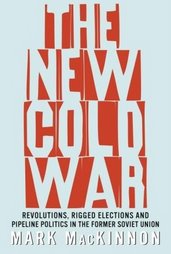
    February 5: If it was the $26.95 that was keeping you from buying The New Cold War, never fear. The paperback edition hits bookshelves Feb. 5.

    Tuesday, December 18, 2007

    A tale of two prime ministers

    It's fitting that Yulia Tymoshenko should finally become prime minister of Ukraine one day after Vladimir Putin declared he would be Russia's prime minister under a President Dmitry Medvedev.

    Both have been prime minister before, Tymoshenko for a short and tumultuous period in 2005 before she was fired by President Viktor Yushchenko, Putin for a controversial six months in 1999 before Boris Yeltsin stepped aside to hand him the presidency. They have open distaste for each other stemming from the long and ongoing Russia-versus-the West struggle for Ukraine's soul, in which Tymoshenko has played (at least in the Western media) Princess Leia to Putin's Darth Vader.

    The way the two old foes were named to the PM's chair this time around says much about the comparative state of democracy in their respective countries today.

    For all Ukraine's instability, Tymoshenko's dramatic return to power - establishing herself as a third power centre beyond both President Yushchenko and his rival Viktor Yanukovich - shows how vibrant and pluralistic Ukraine's political scene now is. Yes, all of the main parties are tinged with corruption and are too close to big business, but Tymoshenko's election victory two months ago stands as proof that no politician can rule Ukraine without the consent of the people.

    More good news: even though her party emerged as the de facto winner of the Sept. 30 elections, Tymoshenko only became prime minister after a long process of bartering and coalition-making. No one force can dominate Ukraine on its own anymore, as Leonid Kuchma and his allies did until the 2004 Orange Revolution.

    None of the above can be said about Russia. Vladimir Putin stands alone in Russia as the sole centre of power. If he says the unheralded Dmirty Medvedev shall be president, then Mr. Medvedev it will be. If Putin says he wants to be PM, only a fool would bet against him achieving that aim.

    As I have frequently pointed out in the past, Putin does all this largely with the consent of the Russian people. But that doesn't make it any more democratic. The institutions needed to make and keep Russia great - a free media, serious opposition and a real parliament - have been systematically eliminated during his eight years in power. For all its oil-fuelled economic growth and new swagger on the international stage, the country is inherently weaker as a result.

    Today may look like a triumph for Putin and Putinism. But one day, when he's gone, Russians will come to rue the system they watched him build.

    In the meantime, at least future summits between the Russian and Ukrainian prime ministers will have a touch of drama to them.

    Monday, December 10, 2007

    President Dmitry Medvedev


    So now we know. It will be Dmitry Medvedev, not Sergei Ivanov (and not Vladimir Putin) who succeeds Vladimir Putin. Putin, it's just been announced, "fully supports" Medvedev's candidacy to replace him when he leaves office after his second term expires in the spring.

    So all hail President Dmitry. There is, of course, the small matter of elections to be sorted out, but you can be sure that the Kremlin - unless this decision creates a major rift behind the red walls - will make sure Putin's man is elected. The liberal opposition is self-destructing anyway, choosing not one, but three candidates to run for the presidency in April.

    So what can be deduced from this, in these first minutes after Putin's announcement? To me, it says that Putin, instead of choosing someone else from inside the siloviki, the cadre of security service veterans who run the country, has chosen someone personally loyal to him. Medvedev is not a chekist (ex-KGB agent) like Putin and Ivanov, he's a Putinist.

    Medvedev has been at Putin's side since the early 1990s, when Putin was chief of staff to St. Petersburg mayor Anatoliy Sobchak and Medvedev was a foreign affairs advisor.

    As Putin rose to power, Medvedev followed. First he was chief of staff to Putin after he was appointed prime minister in 1999 by Boris Yeltsin. Then he ran Putin's 2000 presidential election campaign and afterwards became deputy chief of staff to President Vladimir. Next he was installed as chairman of the board at Gazprom, the giant gas company that Putin has turned into the Kremlin's most effective foreign policy tool.

    When Alexander Voloshin quit as Putin's chief of staff over the sordid Mikhail Khodorkovsky affair in 2003, Medvedev was brought in to replace him and get the Kremlin back on course. Two years ago, in the first hint that this moment might eventually come, he was made First Deputy Prime Minister (along with Ivanov).

    What does all this mean? Two things.

    The first is relations between Russia and the West may yet recover some. The 42-year-old Medvedev is seen as more liberal and pro-Western than the hardline Ivanov. Ivanov was the tough guy you always saw in military fatigues noddling gravely at the testing of new Russian military hardware. Medvedev was the mild-mannered man in the suit that you rarely saw at all until he was made deputy PM in an effort to build up his public persona (although he was theoretically also the guy who made the decision to turn off Gazprom's taps to Ukraine and Belarus when those countries bucked the Kremlin's will...).

    The second is that real power will remain in the hands of our old friend, Vladimir Vladimirovich. Putin's choice was between a man unquestionably loyal to him (Medvedev) and a man unquestionably loyal to the system (Ivanov). He chose the former.

    Medvedev owes Putin everything. If Putin asks him to do something - to make him prime minister, or even to relinquish the presidency because Vladimir Vladimirovich misses the comforts of the Kremlin - he'll do it.

    Monday, December 3, 2007

    Russia chooses authoritarianism


    It was, as Vladimir Putin has proclaimed the morning after, a "doubtless success." According to official results, his United Russia party won upwards of 64 per cent of the vote in yesterday's Duma elections. According to Vladimir Vladimirovich himself, that translates into 315 of the 450 seats in parliament.

    That two-thirds majority in the Duma allows Putin and his acolytes to alter the constitution. They can abolish term limits so that Putin can run again in the presidential vote this spring. They can rename the country Putinistan.

    There's no question now that Vladimir Putin will continue to dominate the Russian political scene after his term ends next year. If he doesn't find a way to retain the presidency (and I remain convinced that he will), he'll be the most powerful prime minister Russians have had since the post was created. If he's neither president nor PM, he'll be the man who yanks the strings on both.

    It all seems so anti-democratic. And yet, yesterday's election results - and the passivity with which Russians went to the ballot boxes to lend their endorsement to what's going on - reminds us again that Putin has done all this with the consent of the vast majority of Russia's 142 million citizens.

    Never mind the weak protests from the OSCE and American-backed NGOs like Golos. The West can kick and scream all it wants (with justification) about media manipulation and suppression of dissent under Putin. But take a drive 100 kilometres outside of Moscow - or better yet, fly to any city east of the Ural Mountains - and you'll see that the liberal elite whose rights we're so concerned with don't represent more than a tiny minority of Russians.

    The masses voted for Putin yesterday - and will again if he finds a way to run for president - because their lives are far better now than they were under the Western-sponsored "freedom" and "democracy" of the Boris Yeltsin years. They, like the country, are back on their feet again economically after the economic chaos of the 1990s, and they give Putin nearly all the credit for the turnaround.

    (A recent Kommersant examination of the Putin era found that "the country’s history has hardly seen another period when the prosperity of the population improved at such a fast rate." The newspaper reported that Russians' real incomes had grown from 6,087 rubles a year in 2000, the year he took office, to 11,425 in 2006.)

    That Putin could preside over eight years that included the Kursk submarine disaster, the Nord-Ost theatre siege debacle and the Beslan school massacre and still be seen as a "stability" president speaks to how disastrous the Yeltsin years - and Western policy towards Russia immediately after the end of the Cold War - really were.

    Much has been made of the Kremlin's near-complete control over the airwaves, and rightly so. The fact that most of the country gets little news beyond what they see on state-controlled television has definitely warped the Russian political map in Putin's favour. But whenever I travelled in Siberia and suggested as much to the reputedly brainwashed people who lived in the Russian heartland, they'd scoff indignantly. They're not stupid, was the reply. After decades of living in the Soviet Union, they know when they're being told the truth and when they're not. Better than any Westerner, they can spot propaganda when they see it.

    My argument here is not that the elections were "free and fair." I've written just last week about what a fraudulent process this election is. No one can or should believe that 99 per cent of Chechens voted for United Russia, as Ramzan Kadyrov and his thugocrats are claiming.

    What I'm saying is that Russians aren't fooled as easily as many seem to think. Rather than rising up and demanding better, they went to the polls yesterday and cast their ballots. By doing so, whether they voted for United Russia or not, they tacitly backed what Putin's been doing, and whatever he'll do next.

    Yes, there were instances of intimidation, but so far such reports are few and far between. With far more thought and experience than most outsiders give them credit for, the majority of Russians have chosen resoundingly chosen to back Putin's vision for their country's course.

    They've chosen security and oil-fuelled economic growth over freedom and democracy. Likewise, they've backed an independent, often anti-Western course on the international scene rather than bowing to Washington's leadership.

    A day after Putin's "doubtless success," it's time the West accepted that, together with all its many implications.

    (For more on this theme, Mikhail Gorbachev, in a fascinating interview with the Wall Street Journal, said he supports Putin and the "transitional democracy" he believes Putin is creating. Gorbachev also claims Dick Cheney once admitted to him that the West wanted to keep Russia on his knees. For those without a WSJ account, lawyer-blogger Robert Amsterdam has posted a full transcript here.)

    Monday, November 26, 2007

    Master and Margarita elections, part two


    This is Behemoth, or at least an unknown artist's conception of the fast-talking, hell-raising black cat who was the hero (at least in my reading) of Mikhail Bulgakov's classic novel The Master and Margarita.

    The book revolves a visit by the devil himself (in the company of his nefarious furry friend) to officially atheist Soviet Russia. Following his arrival, a Moscow that doesn't believe in the devil's existence rapidly descends into surrealist chaos, a place where Satan wows the crowd with magic shows and naked witches fly over the city.

    Marat Gelman, the spin doctor who was involved in both bringing Vladimir Putin to power and making sure he stayed there, once told me that the 2003 Duma elections that marked the rise of United Russia and the 2004 presidential campaign that secured Putin's second term were, in his mind, Russia's "Master and Margarita elections."

    Gelman called them that because he understood well the kind of system he had helped to create. He had been personally responsible for shaping the message on state-run television - hailing Putin and United Russia while either ignoring the oppoistion completely or portraying them as dangerous extremists - and knew the goal was never to test the public's support for what was going on.

    Putin was always going to win a landslide with something close to 70 per cent support, not too much more but certainly nothing less (he ended up with 71.3 per cent). United Russia was going to emerge as the first party to completely dominate the country since the Communist Party of the Soviet Union.

    In the system Gelman and his colleagues would come to call "managed democracy," there would be elections every four years, but no real chance that anyone but a Kremlin-appointed candidate could win. The appearance of choice, but no one to choose between.

    "After the elections, our politicians stopped being able to influence anything. There remained only one politician in the country - Putin," Gelman told me when I visited him afterwards at the art gallery he runs in Moscow's trendy Zamoskvareche neighbourhood. The elections, he said, marked "the end of politics" in post-Soviet Russia.

    But shortly afterwards, even Gelman and his colleagues started to question the stability of the system they had helped to build. The Orange Revolution in neighbouring Ukraine jolted that country out of its semi-authoritarian stupor, and many were wondering whether the same thing couldn't happen in Russia itself.

    The "democracy promoters" funded by the U.S. State Department began to investigate the possibility, and opposition leaders like Boris Nemtsov and Garry Kasparov began investing their hopes in the idea that the wave of pro-Western uprisings that had washed over Belgrade, Kiev and Tbilisi in recent years could eventually hit Red Square too.

    But the three years since the Orange Revolution have given the Kremlin plenty of time to prepare. First we saw the rise of groups like Nashi and now Zaputina, which serve the purpose of imitating and confronting the pro-Western civil society that was so critical to mobilizing popular opinion in Serbia, Georgia and Ukraine.

    More dangerously, we've seen the complete suppression of the media and nearly all dissent, as evidenced again by the heavy handed police response to this weekend's marches by The Other Russia opposition movement.

    I used to argue with my friends over whether the revolutions in Georgia and Ukraine were good news for Russia's democrats. They believed in the "wave of freedom" theory, and thought Russia too would eventually be hit by it.

    Perhaps. But my fear was always that the pro-American non-government organizations who helped fund and fuel those uprisings were so partisan in their behaviour (it's a "free and fair election" if Washington's candidate wins, a disturbing backslide on the country's commitment to democracy if they don't) that the response in Russia and other post-Soviet countries that were already tipping towards authoritarianism would be to tighten the screws on the things that made the "colour revolutions" possible - namely free media and civil society.

    In 2003, with the exception of the Baltic States, Eduard Shevardnadze's Georgia and Leonid Kuchma's Ukraine were the freest and most open of the states that emerged from the collapse of the USSR. By using the political space that Shevardnadze and Kuchma gave to their opponents and critics to push for rapid radical upheavals, the revolution-makers scared the bejesus out of the authorities in other former Soviet republics.

    The lesson people like Belarus's Alexander Lukashenko and Uzbekistan's Islam Karimov took away from the Rose and Orange revolutions was that Shevardnadze and Kuchma had spent too much time worrying about where they ranked on the Freedom House list, and it had cost them control of their countries. Better to crack down fast and hard, take the international tsk-tsking that comes with a "not free" rating from Washington, and keep your job and all the loot that comes with it.

    Putin, it's now very clear, has drawn the same conclusion. Who cares what the Organization for Security and Co-operation in Europe election monitors have to say? They're all tools of the State Department, after all. The opposition? They're all dangerous thugs who belong in jail. The media? Some die, some live. It's really not worth investigating why that is.

    So here comes another round of elections without a choice. Behemoth walks the streets of Moscow again.

    Thursday, November 22, 2007

    The cult of personality, evolving


    Yesterday's "Za Putina" (For Putin) rally at Luzhniki Stadium was disturbing to watch.

    On one level, it was little different than an American political rally - all banner waving and adulation for the leader. Except the man they were saluting wasn't some new candidate on the rise, but an outgoing president at the end of his constitutionally mandated eight years in office.

    What was most remarkable (other than Putin's attacks on the opposition as "jackals" who beg for money at foreign embassies and desperately want to keep Russia weak) was that this was Putin, actually campaigning.

    He spurned such rallies during both the 2000 and 2004 presidential elections, arguing he was too busy handling the affairs of the nation for such silliness. It was an effective tactic that was aided in large part by the Kremlin's control over the media, which reported on his every move so fawningly that he didn't need to stoop to debates and campaign speeches.

    So - and I keep coming back to this - why is he doing this now? Because he's concerned that United Russia might not cross the 70 per cent barrier in the Duma elections? (The latest poll from VTsIOM has them at 63.8 per cent, with the Communists the only other party to cross, barely, the 7 per cent barrier needed to win seats in parliament.)

    Unlikely. This is still about the presidency and creating the impression that the people are wild about Putin (sadly true) and don't want to see him go. Having him as prime minister won't satiate these Putinmaniacs. They want him, need him as the country's uncontested leader.

    Putting aside the niceties of the constitution, how can Vladimir Vladimirovich not answer such rabid public demand? My feeling is that the Kremlin is creating a scenario where he'll seem to have no choice but to give the public what they want. I think Putin's time out of the Kremlin will be measured in days, not years.

    As Vladimir Vladimirovich himself obliquely told the crowd at Luzhniki: "If there is a victory in December (the Duma elections), then there will be a victory next March (the presidential vote) as well."

    If you want to read more about the rally yesterday, check out Andrey Kolesnikov's coverage in Kommersant. It's laugh-out-loud, sigh-in-despair brilliant.

    (There. Since I've linked to Kommersant, I can justify swiping the photo above... gotta love leopard print.)

    Sunday, November 18, 2007

    Could Putin run for a third term after all?

    Why, suddenly, are so many people talking (again) about the possibility of Vladimir Putin seeking a third term as Russian president?

    The idea - which many thought had gone away when Vladimir Vladimirovich started mumbling about how neat he thought the prime minister's job would be - has shot back to the forefront in recent days after Alexander Shokhin, the head of the powerful Russian Union of Industrialists and Entrepreneurs, told Itogi magazine that it was "quite possible" for Putin to legally run for a third term, despite an apparent constitutional ban on him doing so.

    The plan, which was later expanded on in the Nezavisimaya Gazeta newspaper (the Jamestown Foundation has an analysis here), would see Putin run at the head of the United Russia ticket in next month's Duma elections, then resign from the Kremlin to assume his seat in parliament. An interim president would be appointed and, since Putin would no longer be seeking a third "consecutive" term, Vladimir Vladimirovich would be free to run for his old job in the March 2 presidential vote after just a couple of months out of office.

    Could Putin be this cynical? I was actually somewhat relieved when he started talking about the PM's job, since it at least preserved the idea that the constitution should mean something in the Russian Federation, even if it currently does not. At the very least, there would be the faint possibility that the next president might occasionally disagree with PM Putin, ensuring he alone wouldn't completely dominate the political scene.

    Abusing a consitutional loophole to run for a third term - a blatant bending of the state's basic law by the president - would make it clear that concepts such as the rule of law and democracy now mean absolutely nothing in modern Russia. It's a short walk from democracy to autocracy, an even shorter one from there to outright dictatorship.

    Any hope that the Russian people will oppose this in large numbers is rapidly fading. A group calling itself simply "Pro-Putin" claims to have collected 30 million signatures urging VVP to stay on. That seems inflated, but there's a definitely an effort foot to at least create the perception of public support for the initiative. The zaputina ("For Putin") website has collected upwards of 63,000 signatures calling for their beloved president to stay on.

    No wonder the Organization for Security and Cooperation in Europe has withdrawn its monitoring mission for the Duma elections. It's becoming quite clear that there's going to be nothing like a real election to observe.

    Friday, October 26, 2007

    Reflections from a land (almost) without wireless

    I've been unable to blog for almost two weeks now, hit by the double-whammy of being busy reporting on the crisis along the Iraq-Turkey border (as always, you can find my latest reports at The Globe and Mail website) and the fact that Turkey's telecommunications sector has gone on strike, making Internet access scarce in some of the places I've been the last little while.

    To catch up quickly, short notes on a few things that caught my eye this week:

    New rhetorical heights: Putin is banging the drum lounder than ever today, warning the United States (and Poland and the Czech Republic) against the planned missile defense system for Europe. This time he's comparing the situation to the Cuban Missile Crisis that almost started a nuclear war between the U.S. and the USSR back in 1962. "I would remind you how relations were developing in an analogous situation in the middle of the 1960s," Putin said in a press conference at the end of today's Russia-EU summit. "Analogous actions by the Soviet Union when it deployed rockets on Cuba provoked the Cuban missile crisis.... For us, technologically, the situation is very similar."

    An overstatement, perhaps, given that the Soviet Union was deploying offensive weapons in the Carribean back in 1962, while the White House is contemplating a defensive shield today. But Putin's point is valid: George W. Bush's provocative plan to set up a missile defense network in in Eastern Europe, like Nikita Khrushchev's decision to sneak missiles into Cuba, would have the effect of changing the nuclear balance-of-power. Russia, as Putin has repeatedly made clear, would have to do something to counter that, likely by restarting the Cold War arms race and developing new missiles and warheads that could overwhelm any system the U.S. builds.

    Does the world need this? Given that any Iranian nuclear threat is still theoretical at this stage, why is Bush so determined to go ahead with the shield plan when it delivers few strategic benefits and is so provocative to the Kremlin?

    If a vote is cast in Siberia and nobody monitors it, is anybody elected? The Moscow Times has an interesting front-page report today on the troubles international election monitors are facing getting registered ahead of the looming Duma elections.

    No surprise here - you can argue (as I do in my book) that without international monitors from the OSCE and other organizations, the authorities in Georgia and Ukraine would have gotten away with their election tampering and there would have been no Rose or Orange Revolution.

    When Kremlin aide Sergei Yastrzhembsky says "we do not want to listen to any lectures," he's hinting at what everybody already knows will happen:

    1) there will be electoral manipulation (either through physical means at the ballot box, or through the use of "administrative resources" to tilt the playing field before voting day) to ensure that Putin and United Russia win by an acceptably large margin.

    2) the West, and more specifically monitors from the OSCE and other groups, will complain about it, providing fuel to those who are planning to take to the streets on and after election day.

    Election monitors provided a causus belli and the moral high ground to pro-Western demonstrators in Belgrade in 2000, Tbilisi in 2003 and Kiev in 2004. The Kremlin is doing everything it can to ensure that it doesn't happen in Moscow in 2007.

    Prepare the way for PM Yulia, Take 2: Ukraine's High Administrative Court has finally validated the results of the Sept. 30 election, meaning that an already negotiated power-sharing deal between on-again Orange Revolution allies Yulia Tymoshenko and President Viktor Yushchenko can finally kick in. Tymoshenko will be prime minister, while the cabinet posts will be split between her party and Yushchenko's Our Ukraine movement.

    When I interviewed The Braided One back in April at her Kiev office, I asked her why the Orange team deserved another chance after she and Yushchenko squandered the mandate the people gave them back in 2004, spending more time publicly dquabbling over the spoils of power than they did tackling the country's endemic problems. Yushchenko eventually fired her, setting the stage for Viktor Yanukovich's startling political comeback.

    Tymoshenko correctly predicted that the reformed Orange team would win the vote, and promised that the pro-Westerners had learned from their mistakes and deserved another chance to govern. "I firmly believe that ... these early elections will give us a new chance that we will not misuse or lose," she told me.

    I hope so.

    Alisher Saipov, 1981-2007: Another journalist brutally murdered, this time an Uzbek reporter who had recently founded a newspaper called Siyosat. The paper's name means "Politics" - a dangerous thing to report on in that part of the world. Saipov also reported for the Institute for War and Peace Reporting, as well as the Uzbek-language services of Voice of America and Radio Liberty.

    No question it was an assassination: he was shot three times as he walked the main street of Osh, in southern Kyrgzstan, on Wednesday night.

    Read the IWPR's tribute to Saipov here.

    Tuesday, October 2, 2007

    The other shoe drops: Putin wants to be PM


    Well a three-year-old guessing game appears to be coming to an end. Ever since Vladimir Putin cruised to a second term in the 2004 presidential election, the question has been inevitable: what will Putin do when the term is over and the constitution forbids him from running again?

    Today, Putin pretty much put an end to the speculation, strongly suggesting that when he leaves the Kremlin, his new office will only be a short drive a way down Kutuzovsky Prospekt to prime minister's office, the White House.

    Addressing the congress of the United Russia movement - a party he oversaw the creation of, and that has little ideology beyond loyalty to Putin - Vladimir Vladimirovich said it was "entirely realistic" that he could end up as prime minister after his term as president ends next year.

    Putin, who previously had not been an official party member, said he will head the United Russia list into the December elections for the Duma.

    He set two conditions for taking the job, both of which should be easily met:

    - United Russia must win the December elections. Given the state of the opposition, it would be a shock if they didn't. (United Russia currently controls 305 of the 450 seats in the Duma, giving it the the two-thirds majority necessary to amend the constitution.)

    - The next president must be someone Putin feels he can work with. Given that he's hard at work hand-choosing his successor, that too seems likely to be the case.

    (As an aside, The Moscow Times reported today that the Other Russia opposition movement has nominated chessmaster Garry Kasparov as its leader. That would be interesting news if two other pro-Western liberals, ex-prime minister Mikhail Kasyanov and perennial loser Grigoriy Yavlinsky, hadn't already thrown their hats in the ring. With all three siphoning votes off from each other, Putin's man - be it Sergei Ivanov or someone else - should coast to an easy victory)

    Putin's hint about the PM job doesn't end the guessing over who will be the next president, but it does lessen the importance of the question. It's now clear that Putin will retain much of the real power.

    Right now the presidency is far more powerful than the PM's job. I'm not sure Putin, after eight years as top banana on the tree, is interested in playing second mango. Now the fun shifts to watching out for moves between now and the presidential elections next spring that suggest an effort to pass powers from the presidency to the prime minister and his cabinet.

    It's all very constitutional and very clever.

    By the way, there's no limit on how many terms someone can serve as prime minister of the Russian Federation. Oh, and the prime minister is also first in line for the presidency should the president resign or somehow become incapacitated.

    Wednesday, September 19, 2007

    The Putin years


    Kommersant has begun what we're told will be an eight-part series examining Vladimir Putin's legacy in office (based on Kommersant's assumption that "it would seem that he is in fact going to leave office"). The period of 2000-2008, the paper surmises, will be remembered as the Putin "era" - one that will be remembered primarily for such shocking events as the tragic sinking of the Kursk, the horrifying Beslan school siege and the Soviet echoes of the Yukos affair.

    All three were scandalously managed by the Kremlin. It's difficult to imagine any Western leader surviving one such debacle, let alone all three, with his or her popularity intact.

    And yet Putin did, his popularity never dipping below a stratospheric 70 per cent for a prolonged period of time. The rest of Part One of the Kommersant series goes a long way towards explaining why.

    (It should be noted here that despite being owned by Alisher Usmanov, a businessman with close ties to the Kremlin, Kommersant is still seen as a largely independent voice. Unlike most of the now-docile Russian media scene, the paper regularly prints articles that displease the authorities.)

    As they say in American politics, "it's the economy, stupid." The Kommersant series kicks off by looking at the social and economic progress made since 2008. The overall assessment is glowing:

    "During the eight years that Putin has been in office the income of Russians has grown quickly; the country’s history has hardly seen another period when the prosperity of the population improved at such a fast rate," the article reads. "The Kremlin can boldly state that as far as the population’s standard of living is concerned, he has succeeded in wiping out the consequences of the 'Yeltsin chaos' of the 1990s."

    The last line is one of the hardest truths for the liberal opposition in Russia to deal with: when they attack Putin (quite justifiably) for the systematic evaporation of freedoms during his "era," they have to be careful not to sound like they're calling for a restoration of the Yeltsin years. The West (and the oligarchs who unfortunately hover around the opposition) may remember that time as halcyon, but the ordinary Russian recalls only the chaos - and the poverty they were forced to endure in the name of "freedoms" and "democracy."

    As Kommersant explains, the Putin years saw more Russians emerge from the black market, more income from the private sector and more Russians reaching their own definition of "middle class."

    Though the black market is still bigger than the legal one in Russia - a massive problem for Putin and whoever succeeds him - legal earnings now make up 48 per cent of a Russian's income, up from 38 per cent at the start of the decade. The percentage of a family's income that comes from the legal private sector (as opposed to the black market or the government) grew from just 9.2 per cent in 2000 to 19.5 per cent by 2006.

    Perhaps most crucially, Kommersant notes that "the Russian middle class is made up of people who, because of their education and professional qualities were able to adapt to the market. According to the [Expert-Data] agency, this middle class made up 15% of the population in 2001 and 37% in 2005."

    But while the big numbers are all looking up (something many experts believe should be attributed more to rising oil prices than any policies of Putin's), Putin has clearly failed to reduce poverty, something he repeatedly identified as a government role. In fact, poverty levels remained stubbornly high during the Putin era, while income inequality grew.

    "The income of the richest 20% of households was 6 times richer than the poorest 20% of households. To compare, this factor was only 5.2 in 2005. Measured by expenditures, the split is even greater: a factor of 6.7 in 2005 and 8.9 in 2006. This spread points to a colossal difference in lifestyle – but not in terms of mansions and limousines. The best-off Russian families, compared to their poorest countrymen, spend 7.7 times more on fruits and vegetables, 10 times more on alcohol and 12.6 times more on meals outside the home.

    "The unevenness of income growth calls into question the possibility of ending poverty in Russia.... The poverty level ratings vary greatly depending on who you consider to be poor. According to Rosstat, in 2000 42.3% of Russians had incomes below the cost of living. In 2004 25.5% of Russians earned less than the cost of living. However, the percent of families who receive charity or help from relatives is growing steadily. Currently 29.9% of the population fits this category. In other words, whatever the statistics say, one third of families are poor enough to accept material support from those around them."

    It's a fascinating start to the series, which the paper promises will include future articles examining the state of the education system (my assessment: getting better, but with dark trends including politicization of the curriculum to whitewash Soviet and KGB history), governance (less open, less accountable than under Yeltsin) and the army (still decrepit, despite recent stunts intended to demonstrate otherwise).

    Last remark: the photo above (first noticed by Russian blogger Drugoi, which translates as "The Other") was taken last week on Moscow's Leninsky Prospekt, walking distance from my old home on Kaluzhskaya Ploschad. The billboard reads "Putin's Plan - The Victory of Russia!" Other bloggers say they've gone up all over the city.

    On his blog, Drugoi wonders if anyone knows what the plan is. My question is similar to one I've asked before - if Putin's really stepping down in six months (as he is constitutionally obligated to do), why are we still discussing "Putin's plan"? Why aren't we seeing billboards hailing the competing and contrasting plans of Sergei Ivanov, Dmitriy Medvedev, Mikhail Kasyanov or Viktor Zubkov?

    The only answer that makes sense is that some people in the know don't believe the Putin era really ends in 2008.

    Thursday, September 13, 2007

    Thermobaric bombs and Viktor Zubkov


    So I was sitting in the radio studio yesterday ready to record another interview promoting my book The New Cold War for the BBC/PRI program The World, when a pair of odd questions came over the line: are you ready to talk about thermobaric bombs and Viktor Zubkov?

    You can hear my off-the-cuff remarks during my interview with Lisa Mullins here.

    Even with an extra 24 hours to think about it, I still can't quite figure out what Putin's up to by appointing someone as unknown as Zubkov to the PM's post this close to the Duma and presidential elections.

    I have three, admittedly incomplete, theories:

    - Putin hasn't made up his mind yet between leading contenders Sergei Ivanov and Dmitriy Medvedev. Under this scenario, Zubkov is a third candidate that Putin wants the public to get to know before the presidential elections in the spring. Remember that Putin himself was a nobody when Boris Yeltsin made him prime minister back in 1999. (Zubkov himself said yesterday that he "does not rule out the possibility" of running for the big job next year.)

    - Putin HAS decided on one of Ivanov or Medvedev (the smart money's on Ivanov, an ex-KGB man like Putin himself who has served as defense minister and deputy PM), and Zubov is that man's choice for prime minister. Putting Zubkov in now, the thinking goes, would allow a smooth transition between this administration and the next one.

    - Putin's not going anywhere, and he's deliberately muddying the field to show how far he stands above any challengers to his throne.

    It's too early to say which of these scenarios is right. We'll have to wait to hear more from Putin, and Zubkov himself.

    As for the big blast in the desert, the Father of All Bombs was tested for one reason only - because it was bigger than the U.S.-produced Mother of All Bombs. Just another hello to the West from Russia's suddenly revived armed forces.

    Sunday, August 26, 2007

    Problematic Putin porn


    So Vladimir Putin has a chiselled (if oddly hairless) chest. In the words of a presidential admirer who left their thoughts on the Komsolmolskaya Pravda website, it's one "vigorous torso."

    To Vladimir Vladimirovich, I say congrats. It's likely not easy staying in shape whilst plotting your country's return to superpower status. The days, surely, are already filled with meetings about how to marginalize the pro-Western opposition, bring Ukraine to heel or what journalist to silence next. It's gotta be doubly tough when etiquette requires your attendance at myriad sour cream-laden banketi, which I know did nothing for my physique.

    The question that comes to mind, though, is why are we being shown these pictures now. After all, Vladimir Vladimirovich is stepping down next year, heading into graceful retirement at age 55. Right? With presidential elections just half a year away, shouldn't we be pondering the pecs of Sergei Ivanov and Dmitriy Medvedev, Mikhail Kasyanov and Garry Kasparov?

    Why is Komsomolskaya Pravda still telling kids to "Be Like Putin" on its front page? Is it because you're not going anywhere after all, Vladimir Vladimirovich?

    Though I make no claim to being a political strategist (it's Mark McKinnon - no relation - who used to work for George W. Bush), I have to agree with Yevgenia Albats who worried aloud on her Эхо Москвы show that the pictures - which ominously were posted on the official Kremlin website - might be the strongest statement yet that Putin is planning on sticking around after his second term expires next year.

    These photos are campaign material, pure and simple. They're meant to show the Russian public (and the world) that Putin is fit and ready to remain at Russia's helm past 2008, if he so chooses.

    Vladimir Vladimirovich, of course, is constitutionally barred from running for a third consecutive term next year. But two of his closest allies, Alexander Lukashenko of Belarus and Nursultan Nazarbayev of Kazakhstan, have changed the rules in their neighbouring ex-Soviet republics so that they can run as often as they like. Nazarbayev recently urged Putin to follow suit in the interests of Russia's stability.

    Sergei Markov, a Kremlin advisor, told the Associated Press that the pictures emphasized again that Vladimir Vladimirovich was "cool" - at least in the eyes of the Russian public. "That's been the image throughout the presidency, cool," Markov said.

    Markov is one of those in the Kremlin's inner circle who's been tasked with finding a successor to Putin, be it Ivanov, Medvedev or one of the other siloviki. The decision to publish the Putin porn tells me they haven't yet found anyone "cooler" than Vladimir Vladimirovich and that "Operation Successor" as its known inside the Kremlin, may be morphing into "Operation Incumbent."

    Sunday, August 19, 2007

    The counter-revolution starts here


    Two stories caught my eye today which might seem like separate issues but which in fact are thickly linked. One was a lengthy report in Moscow News Weekly about the summer camps being hosted by Nashi and the other pro-Kremlin youth groups.

    The other was the Kremlin's paranoid decision to order the Russian edition of the BBC World Service off the FM dial.

    The link? Both the Kremlin's bolstering of "patriotic" youth movements and its crackdown on non-state media outlets are moves directed at heading off any kind of Orange Revolution-inspired uprising in Russia around December's Duma elections and/or next year's presidential vote.

    Kremlin strategists Gleb Pavlovsky, Sergei Markov and Vyacheslav Nikonov all gave speeches to the Nashi camp at Lake Seliger outside Moscow (as did, notably, leading Kremlin-backed presidential contenders Sergei Ivanov and Dmitriy Medvedev). Two years ago, following the uprising in Ukraine, Pavlovsky and co. were charged with making sure the orange tide never reached Red Square. One of the first things they did was establish Nashi - the name means "Ours" - to counter the pro-Western youth groups like Ukraine's Pora that formed the backbone of the revolutions that hit Serbia in 2000, Georgia in 2003 and Ukraine a year later.

    At the first Nashi camp in the summer of 2005, Pavlovsky gave a speech that neatly summer up the role he expected the kids to play: "You must be ready to disperse fascist (a word Pavlovsky tried hard to attach to Ukrainian President Viktor Yushchenko and his supporters) rallies and physically oppose attempted anti-constitutional coups," he said. In other words, their job was to prevent Red Square from going Orange.

    Nothing's changed. As MN reports, "[this summer's] camp's key note is political indoctrination." To that end, not only are the 10,000 Nashi members (as well as members of similar groups like Rossia Molodaya, or Young Russia, and Novye Lyudi or New People) indoctrinated about the values of patriotism and the evils of the West, they're lectured about the need to procreate as a way of reversing Russia's rapid population decline. They also get a talking-to about underwear.

    The bizarre details, courtesy of MN:

    The Seliger camp has its own TV network called Zyr, a radio station, news agency, and two newspapers. There is also a number of ongoing programs such as the School of Mass Action, the Institute of Entrepreneurship, the Schools of Animators, the Institute of Social Management, and the Antifa School, among others. One of this season's projects, Bashnya Gazproma (Gazprom Tower), offers successful contestants internship at the natural gas monopoly. Such projects as The Museum of Double Standards and Fat Man from Hell, are designed to show the pernicious effect of the Western lifestyle. A daily serial titled I Want Three encourages young families to have at least three children: thus, dozens of couples celebrated their weddings in the camp and were given separate tents. Dmitry Medvedev and Sergei Ivanov, two men who are widely seen as leading contenders to replace Putin next year, wore T-shirts with an emblazoned call to boost birth rates. A group of activists were urging girls to surrender their G-strings as a factor in female sterility, providing instead more conservative outfits and destroying the discarded G-strings in front of their former owners. Considering that a demographic revolution to the Seliger campers is an imperative at the behest of Vladimir Putin, G-strings have become a symbol of counterrevolution.


    The BBC crackdown is linked because Pavlovsky, Markov and Nikonov understand that anti-government media - namely B-92 radio in Serbia, the Rustavi-2 television station in Georgia and Ukraine's Fifth Channel - were perhaps even more important than the youth groups in bringing Serbs, Georgians and Ukrainians into the streets. Having already taken direct or indirect control of all the country's major broadcasters, the Kremlin is now apparently turning its attention to the BBC.

    While I'm quite cynical about the kind of "reporting" Fifth Channel did during the Orange Revolution - it wasn't so much as covering political events as inciting them - any efforts to squelch a media outlet is obviously an attack on free speech.

    The BBC, in particular, has an unimpeachable reputation for reporting all sides of a news story. They really do. As a reporter myself, I can tell you that there are a lot of outlets who simply spew silly anti-Russian propaganda (or whatever the State Department's narrative of the day is), but the BBC isn't among them.

    For the Kremlin to see the Beeb as an enemy only shows how paranoid they've become about the coming elections. And how far they'll go to keep control.

    Saturday, July 14, 2007

    Back to the arms race?

    So Russia today officially suspended its participation in the Conventional Forces in Europe Treaty. It's been coming for a while now, but it's still stunning to contemplate: one of the agreements that brought an end to the Cold War has just been tossed out the window.

    Yes, the updated (1999) version of the treaty had never been ratified by NATO (Russophiles will highlight this part). Yes, Russia had never fulfilled its promises to remove its troops from breakaway regions of Georgia and Moldova (Russia-bashers will emphasize this). Yes, there's a 150-day window before the Kremlin's announcement comes into effect (cooler heads will note). But the fact that the withdrawal happened says a lot about how bad relations between Russia and the West have gotten in the past seven years, and is a stark warning about how bad they could get unless both sides find a common language to speak in.

    I for one can't wait until we get some new faces in both the Kremlin and the White House so that they can start undoing what the ex-KGB man and the son of the CIA boss have wrought. Today's announcement again makes plain how little friendly substance there was behind those phony smiles at last week's "lobster summit" at the Bush family residence in Kennebunkport.

    On another front, I don't need to repeat how dismayed I am that the effort to find a single liberal opposition candidate for the 2008 presidential elections has collapsed. But Viktor Andreyev's eyewitness report over at Robert Amsterdam's blog was particularly depressing. Someone tell Oborona that it's all for naught if Russia's dwindling number of pro-Western liberals can't even agree among themselves.

    I'll bet the revolution-makers, oops, democracy promoters over at the National Endowment for Democracy are in full panic mode just now.

    Monday, June 18, 2007

    The eternal (losing) candidate


    What is Grigoriy Yavlinsky thinking? Can he really be this vain and out of touch with reality?

    The Moscow Times is reporting today that Yavlinsky, who ran and lost (badly) for the presidency in 1996 and 2000 is planning another run in 2008.

    Just two weeks ago I was celebrating the fact that Russia's liberal opposition had finally got its act together and was apparently ready to throw its support behind a single candidate, former prime minister Mikhail Kasyanov. I tempered my enthusiasm by noting we hadn't yet heard from Yavlinsky, but assumed that even he wasn't blind enough to the best interests of the country to mess up what was clearly a good thing.

    The question Russians have to answer in the next election should be a clear one: "Is the country heading the right way under Putin and Putinism, or has too much been sacrificed in the name of stability?" A fair and open race that boiled down to the Kremlin's candidate (who increasingly appears to be deputy prime minister and ex-KGB man Sergei Ivanov) against Kasyanov, representing The Other Russia, would put that question provocatively before the public.

    (For more on Ivanov, see the profile in London's Sunday Times newspaper. It's written by Mark Franchetti, who is one of the best scribes in the Moscow-based foreign press corps.)

    Yavlinsky getting involved, however, will allow the Kremlin to get away with portraying the various liberal candidates (Yukos chairman Viktor Gerashchenko and Soviet-era dissident Vladimir Bukovsky are also both toying with the idea of candidacy) as a bunch of Yeltsin era rabble. Look for the Communists and the far right to be built up so that the Kremlin can once more convince the West that its Putinism or the real baddies.

    Yavlinsky, in his two presidential runs, has received 7.4 and 5.8 per cent of the vote. Those numbers will never make him president, but that support might mean the difference between Kasyanov getting into a second round against whoever the Kremlin puts forward.

    Yavlinsky is a decent man, who might have been Russian president if the Russian people admired him even half as much as the Western media did in the 1990s. Now, however, someone has to convince him that his moment is well past and it's time to put the country ahead of his ego.

    While I'm talking about the 2008 presidential race, I should note that Kommersant had an interesting piece over the weekend that suggested that it might not be Ivanov who ends up as the Kremlin's chosen one. The article quotes Kremlin aide Igor Shuvalov suggesting that "Operation Successor" may yet yield someone other than Ivanov or Dmitriy Medvedev, the other presumed frontrunner for Putin's blessing.

    "People are talking of two potential candidates, but my president might yet surprise everyone, and by the end of this year you might learn of yet another potential figure," Shuvalov said. "We have two active individuals - they are the senior deputy prime ministers, with different spheres of responsibility. Both are very liberal-minded, although one is a former KGB officer. Either of them could win. Personally, however, I think that yet another figure may emerge."

    Very interesting. Though I have to wonder if he isn't talking about Vladimir Vladimirovich himself.

    Tuesday, June 12, 2007

    Me and Viktor Andriyovych


    As promised, the full transcript of my interview yesterday with Ukrainian President Viktor Yushchenko (that's me on the far right in the photo, looking studious, courtesy of the presidential press service):

    MM: The question that a lot of people in the West are wondering is, do you believe Ukraine’s political crisis is now over, or is it on hold until the elections when it will begin again?

    VY: I’ll start with the following: the plan has already been adopted regarding all the issues to solve the political crisis.

    After the events that took place… in March, the political corruption, the only constitutional way to settle the crisis was early elections. All the political participants in the crisis acknowledged that, and all the political parties approved the date of Sept. 30 [for the elections]. All the decisions are made to hold the elections, from the standpoint of funding, as well as the amendments necessary to the legislation. So this is the essence of the answer: the political crisis is over.

    There was a way to settle it through means of early elections. On the basis of this concept, there is some occasional speculation [that elections will not be held], triggered by some political parties, for instance the Socialists and the Communists. The key task for them is to use the parliamentary tribune as much as possible.

    Even though they acknowledge the fact that it is an illegitimate parliament, they’re still ready to attend the sessions because this is the only way for them to keep at least some kind of support in Ukrainian society. And they are threatening, blackmailing the Party of Regions to leave the coalition [government] because they are against [early elections].

    I’ve sent a verbal note to embassies around the world that the parliament is invalid, and all its decisions are also invalid. It has no impact on domestic or international relations.

    This is only a political show, and nothing more.

    The main thing is that all Ukrainian politicians have managed to settle probably one of the most complicated political crises ever in Ukrainian history, in a democratic way. I think this is the main victory.

    MM: Why did you feel it was necessary, in the middle of this crisis, to take over the Interior Ministry’s troops?

    VY: I haven’t given a single instruction to reign in any internal troops beyond the demands of the current situation.

    At the end of May, Kyiv was celebrating City Day with activities that involved a lot of people in town, and also there was the Ukrainian soccer final the same day. As a rule, when such events take place, normally 2,000 to 3,000 Interior Ministry troops are brought into the city to maintain order.

    It’s normally done without the President, and this is done every single year. The fact that 2,000 troops was sent here to Kyiv was just due to that.

    But somebody started a rumour that it was the President’s instructions. You should know that all instructions from the President to the military forces should be in writing, and I have not taken any written decisions.

    The case was the following: I was meeting with law enforcement officers and military people almost every day, and persuaded them to keep their distance from any political events.

    My main goal was to use any kind of military resistance or any application of force. This is not the way to resolve the crisis, and there’s nothing to it. This was only political rumours and speculation.

    MM: In the elections on Sept. 30, what question is Ukraine facing? Is it similar to 2004, West versus East, or is it democracy versus something else?

    VY: I think the key issues will be around yesterday’s versus today’s politics…. In the essence of it, democratic values and the establishment of political order on democratic principles, this is the package that the democratic parties are going with.

    MM: And what’s the other side offering, in your mind?

    VY: The preservation of what exists, and what has been in the past. Untransparent markets and privatizations. The political control over the system of justice, and the prosecutor’s office. It’s also the politicization of the Central Elections Commission and the Constitutional Court. It’s the refusal of pro-Western policy.

    MM: Do you, in this struggle, still see the hand of Moscow, the hand of the Kremlin, behind the Communists, the Socialists and the Party of Regions, as in 2004?

    VY: I would say that the left forces, the left parties, are pretty much oriented to Moscow’s position. But in any case, this has already passed. Whether somebody wants to accept it or not, this is the old take.

    Moscow also needs a predictable Ukraine, and Ukraine’s future is not now decided by Socialists and Communists.

    Although, through activation of those forces you can break the process. But this has nothing to do with returning Ukraine back to what it was.

    MM: Do you think Moscow wants to break the process now? Or are they more hands-off than in the past?

    VY: I don’t exclude the fact that there are some political forces in Russia that want to keep the old political order in Ukraine…. But I emphasize that we are an independent state, a sovereign country. It is us who determine our domestic and foreign policies.
    We respect their international role and traditions, but this is actually our politics…. I’m all for building good neighbourly relations with Russia, on the basis of equality and respect for the sovereignty of the state.

    MM: Last week, our newspaper was one of those that met with President Putin in Moscow and he, among other things, threatened to target Europe with missiles in response to the American missile shield. Do you think these sort of comments should be taken seriously? Are they rhetoric? Are you worried about the new breach between Russia and the West?

    VY: I think the President of Russia is not kidding. But I wouldn’t like to make any further comment than that. It’s beyond my competence.

    I’d like to express my own position… The recent events, I think, show to everyone that we have quite a creaky security balance and this really triggers some concerns and could be really painful.

    It’s becoming more and more apparent that the best response to all the challenges regarding defense and security policy can only be given through a collective system of defense. And it’s becoming more apparent that leaders of states have to pay more attention to this fact, particularly building the common system of collective defense.

    MM: Just to be clear, are you speaking there of including Russia in this collective?

    VY: Frankly speaking, I would not exclude it, for this is only about the entrance of a certain country.

    I remember from history when the Soviet Union was applying to join the North Atlantic bloc. I think that any model that will have resistance behind it will trigger concerns. It will very hard to build any stability on such a basis.

    MM: Do you agree with the missile shield currently proposed for Eastern Europe, based in Poland and the Czech Republic, or would you rather see a system based in a place that includes Ukraine in the shield?

    VY: Our defense and security doctrine is formally determined in law. And a key aspect of this doctrine is to provide Ukraine’s accession to the European Union and the North Atlantic bloc.

    If there’s one thing it emphasizes, it’s Ukraine’s intention to be integrated into the collective security system within the framework of the North Atlantic bloc.

    MM: Are you worried about Russian objections to that? They, of course, view NATO as an anti-Russian alliance still.

    VY: I’m sure that Ukraine is ready to give all the necessary responses to any of the questions that might arrive, and to emphasize that this is a policy that is not against somebody, this is not a policy that is determining any threat.

    According to national legislation, this is the policy that is most suitable for the security and defense of this nation.

    MM: Next year, of course, there are presidential elections in both Russia and Ukraine. I guess I should first ask whether or not you intend to run again, and secondly if you have any contacts with like-minded politicians in Russia, like Mikhail Kasyanov and Garry Kasparov?

    VY: When speaking about the internal elections in Russia, both parliamentary and presidential, this is purely a domestic affair. It is the right of the people to choose which force they want to align their future with.

    For us, as neighbours, what’s important is that [the elections] are performed on a democratic basis and in public. This is the main thing. To preserve people’s right to vote…

    This process should go in a democratic way.

    MM: I was here, or course, during the Orange Revolution, and just speaking with colleagues and friends of mine who were among your supporters in the streets at the time, there’s a certain amount of disillusionment three years on. I’m wondering if you understand the people who feel they were let down, and where you put the blame for what hasn’t gone right?

    VY: Saying that Ukraine has not changed in the last two years is telling lies. Today we have the [fastest growth rate] in Europe. We didn’t have that before. As a whole we were in depression for 13 years.

    Today the GDP growth is estimated at 8 per cent. The industrial growth is 13. Agriculture growth is 6.

    For the past two years, Ukraine received $10-billion in [foreign direct investment]. More than the previous 15 years altogether. For the last two years, we’ve had our lowed unemployment rate ever.

    The real incomes of the population have increased by 21 and 18 per cent respectively. Salary growth is estimated at around 34 per cent. Every year, we’re creating a million new [jobs], and not a single social strike has taken place in the past two years.

    Ukrainian pensions are now higher than Russia, Belarus and Moldova. Three years ago it was a different case. We had the lowest salaries, the lowest pension out of all the [Commonwealth of Independent States] countries, except for Armenia and Uzbekistan.

    Speaking about social and economic indicators, we have just immense success in two years. It should be mentioned that the reserves of the Central Bank have doubled and now are estimated at $23-billion. We have a stable currency and stable prices. We have one of the most dynamic European economies at the moment, which is developing a lot faster than our neighbours’, including Russia.

    Speaking about the political agenda, there are still problems here. These problems are mainly related to the system of political power.

    I never had a pro-presidential majority in parliament while I’ve been President. I work in a regime where the political majority is on the other side. When this majority determines the law enforcement institutions, the prosecutor’s office…

    Among other issues, I can say that relations between democratic parties are very complicated as well. Uniting two political forces is not an easy task to do. When we were going to the parliament [elections] back in 2002, I had to make a joint bloc which contained 12 political parties. That makes keeping efficient dialogue very complex.

    In the course of the last parliamentary elections, if no betrayals took place, like [Socialist leader Oleksandr] Moroz’s, it would have been the first time in the history of Ukraine when the majority in parliament was [controlled] by democratic parties.

    It’s necessary to pay considerable attention to the dialogue of democratic forces, which is the biggest political challenge.

    I believe the biggest disappointment is related to this very fact. The last election to parliament was not won by the Party of Regions, it was lost by the democratic forces, because of their internal relations.

    The President is not always able to settle these issues. We’re speaking of inter-party cooperation, which has been quite complex…

    It’s not an easy task.

    MM: I have one last, very personal, question for you. One of my friends, again a supporter of yours, says that one of the big signs for him that things haven’t gone as he’d hoped, was that no one has been charged in your poisoning. Do you expect that will happen any time soon?

    VY: This is one of the problems, in the context of the political fight between the past and the future.

    Ukraine is just about to build an unpoliticized and independent prosecutor’s office…

    It has [caused] everyday fighting and disputes, but it is necessary to make the prosecutor-general’s office distant from power and political orders.

    Different very loud cases are being seized because of somebody’s wish. Unfortunately, this is the reality Ukraine has faced over the last 10-15 years.

    In this very case, I can tell you the following.

    There is certain progress in this case. The investigators have received sufficient data on how this poison works, and what’s the technology of its application. Where the poison could be produced, in which lab, and how it could be delivered to Ukraine.”

    All the chain is related to when the meals were put on the table, and the people who have done it are already determined.

    Right now there is an international search for those people. In my opinion, this case is promising.

    Friday, June 8, 2007

    The missing ingredient


    This post is published as part of the Russian media "Blog-Carnival" hosted by my friends at Krusenstern.

    Russia’s notoriously fractious opposition has finally settled on a single candidate for the 2008 elections in former prime minister Mikhail Kasyanov. As I wrote before, I think Kasyanov is the right choice – someone who can claim credit for some of the good done in terms of stabilizing the country during Vladimir Putin’s early years in office, while able to distance himself from the authoritarian slide that followed.

    Kasyanov’s nomination moves the opposition one step closer to their goal – which is not the electoral victory over Sergei Ivanov or Dmitriy Medvedev (or whomever the Kremlin puts forward next spring) that Kasyanov and friends claim to be seeking. With the Kremlin in full control of the electoral machine, and known to be willing to dump a few thousand ballots in a pit in Dagestan if it comes to that, no one expects the official results of the vote to yield anything other than a convincing victory for Vladimir Putin’s hand-picked successor. (If Putin goes at all, I should add here. See poll at bottom right.)

    The real aim is an Orange Revolution-style uprising on the streets of Moscow next spring, something that Kremlin strategists like Sergei Markov and opposition figures like Boris Nemtsov have told me both sides are actively preparing for.

    In preparing the country for such an uprising, putting aside pride and personal ambitions to rally around a single leader like Kasyanov is crucial for the opposition. The Orange Revolution would never have happened if Viktor Yushchenko and Yulia Tymoshenko hadn’t been prodded (by the USAID-backed National Democratic Institute, among others) into ignoring the fact they agreed on little else, and focusing on their shared desire to see the end of Leonid Kuchma and Russian tutelage in Ukraine. The same goes for Mikhail Saakashvili and Zhurab Zhvania in Georgia before that, as well as Vojislav Kostunica and Zoran Djindjic in Serbia back in 2000.

    This is no conspiracy theory, just the way politics works across the former Soviet Union in this new cold war between Russia and the West. Putin and his coterie see the ex-republics of the USSR as still being Russia’s sphere of influence, and invest heavily in leaders like Viktor Yanukovich and Nursultan Nazarbayev who share that worldview.

    The West – predominantly America, but increasingly Europe too – recognize that Russian meddling in the internal affairs of its neighbours has corrupted the politics of those countries, giving the Kremlin an unsettling amount of control over the energy basin of Central Asia and the Caspian Sea (which worries the White House far more than, say, the lack of democracy in Western-friendly Azerbaijan). Since the success of the Western-sponsored uprising against Slobodan Milosevic seven years ago, they’ve actively been trying to export the model that worked there to other countries in the region. It worked in Ukraine and Georgia, it’s failed twice in Belarus.

    What’s missing in the opposition's plan so far is an independent national broadcaster that can put the its message out across the vast Russian hinterland and rouse public anger with the authorities by letting ordinary Russians know that they’ve been deceived by the current Kremlin. B-92 in Serbia and Rustavi-2 television in Georgia (both supported by American billionaire George Soros) played key roles in popularizing the pro-Western opposition and demonizing the old authorities in those countries. Petro Porashenko’s 5th Channel rallied Ukrainians to Independence Square, and provided 24-hour coverage of the demonstrations that played a part in convincing Kuchma and Yanukovich not to disperse the crowd by force.

    Russia, under Putin, has no national broadcaster that can (or is willing to) play such a role. Himself partially a creation of the oligarchs and their media empires, Putin understood early on that he could just as quickly be undone by them, and in his first years in office he systematically brought all the main television channels under direct or indirect Kremlin control. Bringing the once feisty media to heel was a key step towards establishing the system that cynically came to be known as “managed democracy”: giving people the appearance of choice, with little in fact to choose between.

    Newspapers like Novaya Gazeta and the unmatched Echo of Moscow radio station continue to bravely buck the Kremlin, and thereby provide some outlet for the opposition and its message. But neither has national reach. No one in Chelyabinsk or Pskov or Perm is going to hear their coverage of Mikhail Kasyanov’s attacks on Ivanov/Medvedev, let alone reports about missing ballot boxes or the discrepancies between the official results and the Western-sponsored exit polls.

    Barring a major change in the political landscape, most Russians, just as they did during the 2004 elections, will receive only a single line from the Kremlin and its media outlets - one that will be mandated through government-issued “themes”, or temnyki sent to editors across the country. The essence will be: Ivanov/Medvedev is the choice of the people. The other candidates are an unpatriotic bunch of creeps. Everything is getting better. Trust us.

    Tight media control by Alexander Lukashenko’s regime in Belarus was one of the major reasons that attempted pro-Western uprisings have twice failed in Minsk (in 2001 and 2006). In Ukraine, the state’s use of temnyki turned half the population against the Orange Revolution before it even began.

    But all is not yet lost for the opposition, as demonstrated by how quickly government control of the media cracked in Ukraine in 2004 after a single, extremely symbolic act of defiance by Nataliya Dmytruk, a sign-language presenter at the state-run UT-1 television station.

    “The results announced by our Central Election Commission are rigged. Do not believe them,” she signed to her audience in the first days after the rigged presidential run-off between Yushchenko and Yanukovich, an orange ribbon rebelliously tied around her wrist.

    Her Ukrainian-language colleagues carried on with their coverage president-elect Yanukovich, unaware of Dmytruk's one-woman uprising. “Our president is Yushchenko," she went on. "I am very disappointed by the fact I had to interpret lies. I will not do it anymore. I do not know if you will see me again.”

    Within days, Dmytruk’s lone act of defiance had spread into a wider journalists’ revolt against the authorities and their temnyki. They started telling the truth to their audience and angry at the deception, thousands Ukrainians more joined the orange-waving crowds in the streets. It was a breakthrough that no amount of Western funding could have bought.

    These are dark days for the Russian media. The murder of Anna Politkovskaya made clear the risks that independent minded journalists run when they try to tell the truth about their country and the people who run it. According to Reporters sans frontières, she was the 21st journalist murdered in circumstances seen as likely related to her work since Putin came to power in 2000.

    The Russian opposition has its Yushchenko now in Mikhail Kasyanov. But what will determine the country’s future is whether it has enough Dmytruks and Politkovskayas to tell the country about him.

    One can't help but worry that too many have been scared into silence.

    Monday, June 4, 2007

    Candidate Kasyanov


    It's finally happened. The Russian opposition appear to have unified around a single candidate. Can it be?

    According to The Moscow Times, figures as disparate as Garry Kasparov, Boris Nemtsov and Eduard Limonov all spoke out in support of Kasyanov at a weekend conference in which The Candidate promised "better apartments for half the population and free health care for all." I'm a little unsettled that we haven't heard from Grigoriy Yavlinsky, but only a little.

    Mikhail Kasyanov, unquestionably, was the right person to choose. Putting aside his "Misha Two Percent" reputation - thus far unsubstantiated allegations that he asked for a 2 per cent cut on all business deals he oversaw as prime minister from 2000 to 2004 - he's the only opposition politician who both a) can claim democractic credentials and b) claim some credit for the popular stabilnost of the Putin years. In other words, he's not just some holdover from the Yeltsin years, he's someone who can say "I helped Putin, but he went too far." That's a message that actually might sell with Russian voters who see the Putin years as far better than Yeltsin's time, but are beginning to worry about just where the siloviki are going with all this.

    I once asked Marat Gellman, one of the spin doctors who created Putin and Putinism (though he now has his qualms about the monster he helped give birth to) about the possibility of Kasyanov eventually challenging the siloviki. “To answer that," he told me, "I need to know what kompromat [compromising material] there is against him.” Anyone who has been to the kompromat.ru website knows what he means.

    “I don’t know of any and I don’t think [Putin’s allies] know. I think it’s with the Family."

    In other words, the opposition just chose the right guy.